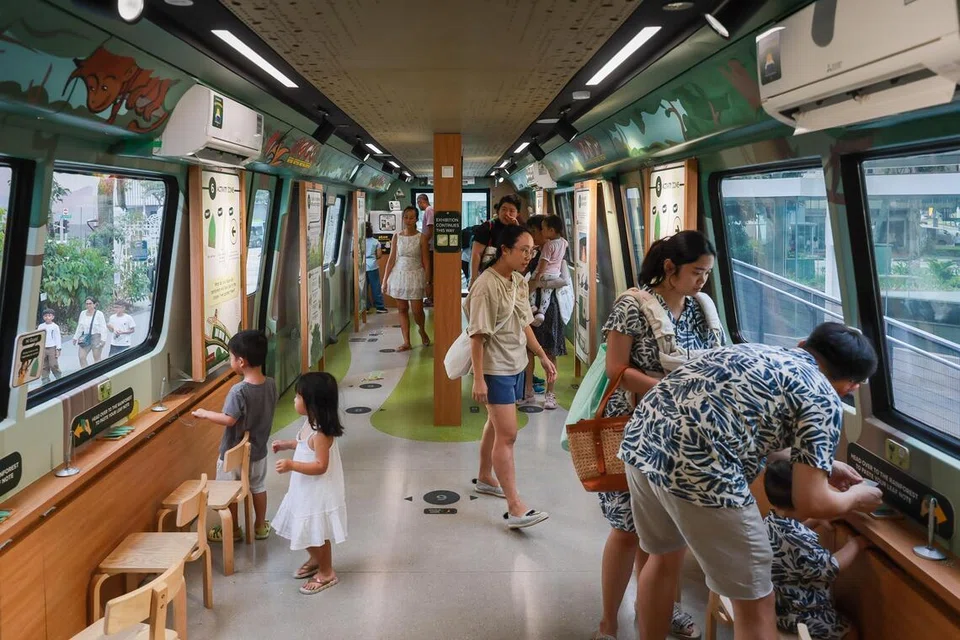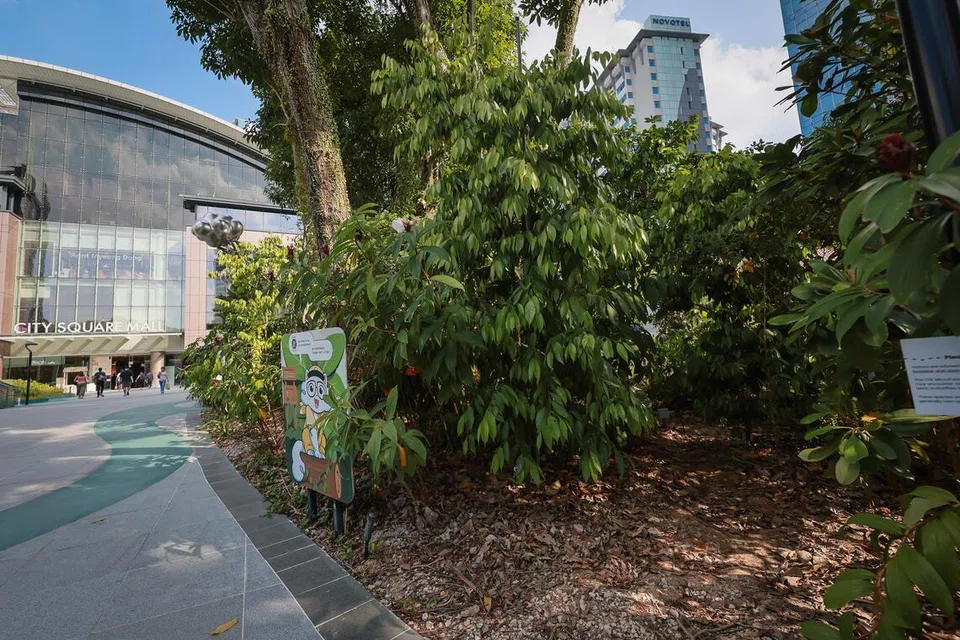
A microforest blooming outside City Square Mall in Little India has been expanded, after a study showed that the green refuge can help lower temperatures by up to 5 deg C compared with the surrounding urban areas, while also providing a home for native wildlife.
Originally measuring just 260 sq m, roughly half the size of a basketball court, the microforest was expanded to twice its size in January 2026.
The CDL MicroForest, developed by real estate company City Developments Limited (CDL) in collaboration with experts from the National University of Singapore, was officially launched in March 2025. It was also supported by the National Parks Board.
The findings of the year-long study conducted by NUS researchers were presented at a public forum on March 20 held at the Singapore Sustainability Academy at City Square Mall.
The study, which began in February 2025, also found that areas within 2m of the microforest’s edge recorded lowered temperatures compared with nearby urban surfaces farther away.
“Despite its compact footprint, the microforest at City Square Mall has been surprisingly effective as a green urban sanctuary,” said Associate Professor Adrian Loo, deputy director at NUS’ Centre for Nature-based Climate Solutions, who co-led the study.
He added: “It’s a timely reminder that forests can lower temperatures significantly, and there are many other cool benefits as well.”
Microforests refer to small, dense patches of greenery that mimic the layered structure and biodiversity of a tropical rainforest.
For the CDL MicroForest, experts scoured plant nurseries for various native shrubs and saplings of different heights, as well as fruiting trees to attract native fauna.
The study’s findings come at a time when Singapore is looking to help its residents build up resilience to rising temperatures driven by climate change. The Straits Times had previously reported that the country could face warmer weather from the second half of 2026, when the El Nino climate phenomenon is expected to return.
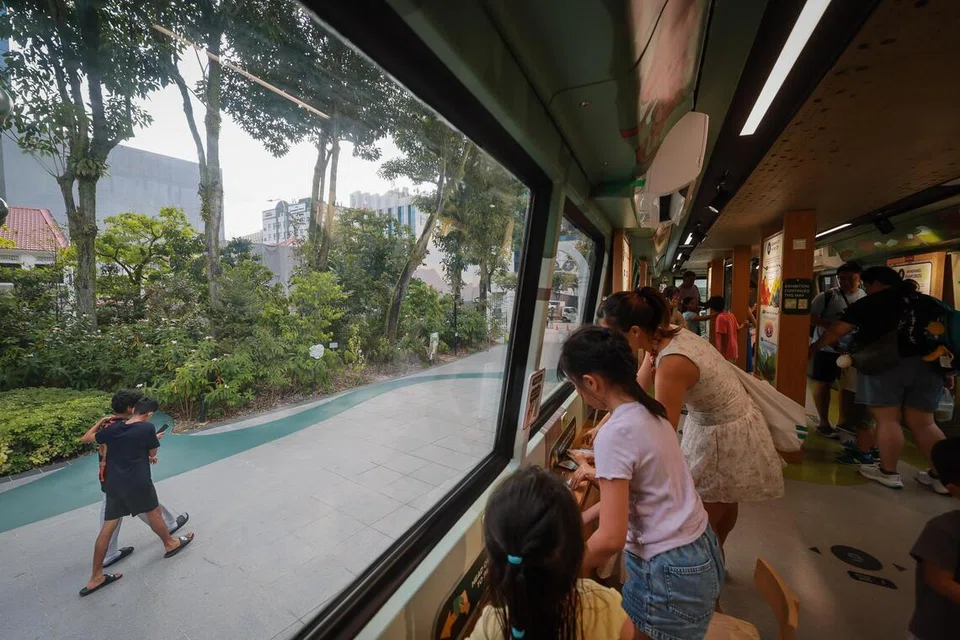
In addition to providing a refuge from the heat, the microforest is able to support more wildlife species. Acoustic instruments have recorded higher bird call activity within the microforest, compared with the surrounding areas.
Researchers also observed an increase in the number of bird species in the microforest, suggesting that more species have been using the green space over time. These include birds like the black-crowned night heron and Swinhoe’s white-eye.
Furthermore, environmental DNA sampling – which involves researchers collecting soil samples to detect different types of animal genetic material – found that 70 per cent more species were detected within the microforest, compared with another grass patch outside it.
Ecologically important organisms such as millipedes and springtails, which are tiny scavengers found in moist soil that serve as indicators of soil quality, were also found in the microforest.
“I think this is a good opportunity to study how patches of greenery like the microforest can support native biodiversity in a meaningful and measurable way,” said Prof Loo.
Professor Veera Sekaran from NUS’ Office of the President, who also led the research and development of the microforest, said that as there is limited space in Singapore’s built environment, these small pockets of land within urban developments such as retail malls provide an ideal opportunity to integrate green spaces.
Having these green areas can not only serve as a refuge for wildlife, but also create cooling spaces for people to escape the heat, offering a better alternative to lawns or ornamental vegetation, he added.
“Everyone wants to rest under a tree or in a place that’s cooler and more comfortable,” Prof Veera said. “It’s habitat creation, and habitat is not just for biodiversity but also for the people.”
Prof Veera added that NUS hopes to establish a guidebook on the proper deployment of microforests to ensure future projects taken up by others will not only have proper guidance, but also contribute meaningfully to enhancing biodiversity and heat reduction.
CDL’s chief sustainability officer Esther An said the company has at least two more microforest initiatives in the works, although further information on their locations could not yet be disclosed.
With many industrial developments such as data centres lacking green spaces, she hopes the study’s findings will encourage developers to adopt more initiatives such as microforests.
Said Ms An: “The CDL MicroForest was set up to prove that nature-based solutions can provide a living shield against the rising heat, cooling urban spaces through greening.
“The idea that greening can cool spaces is not particularly earth-shattering, but the real challenge is turning this common sense into action, measuring its impact and helping it scale up.”
Ms Kanegas Wari Kumar, who regularly visits City Square Mall with her seven-year-old daughter, said she appreciates having an outdoor refuge from the heat, rather than constantly relying on air-conditioned spaces.
“My daughter is asthmatic so I prefer for her to be outdoors, but the weather can get very hot,” said the 36-year-old. “These kinds of spaces really help the kids.”
The Straits Times