When Mr. Deepak left the United States in May with his wife and two children, he was effectively dismantling a life he had built over the last 15 years to return to India.
Even though he found another tech-related job shortly after he was laid off in October, Mr. Deepak ultimately decided to exchange the uncertainty triggered by President Donald Trump’s wide-ranging immigration crackdown for the relative certainty in his home country.
At least in India, he would not have to be anxious about his right to remain if he failed to secure another job within 60 days after getting laid off, like he was sweating over his H-1B temporary work visa in the US.
At a time when the Trump administration is only looking to further limit immigration, foreigners like Mr. Deepak have been thrown into limbo by these ever-changing and tightening regulations. Under Trump, it is also more expensive and cumbersome for American employers to recruit skilled foreigners.
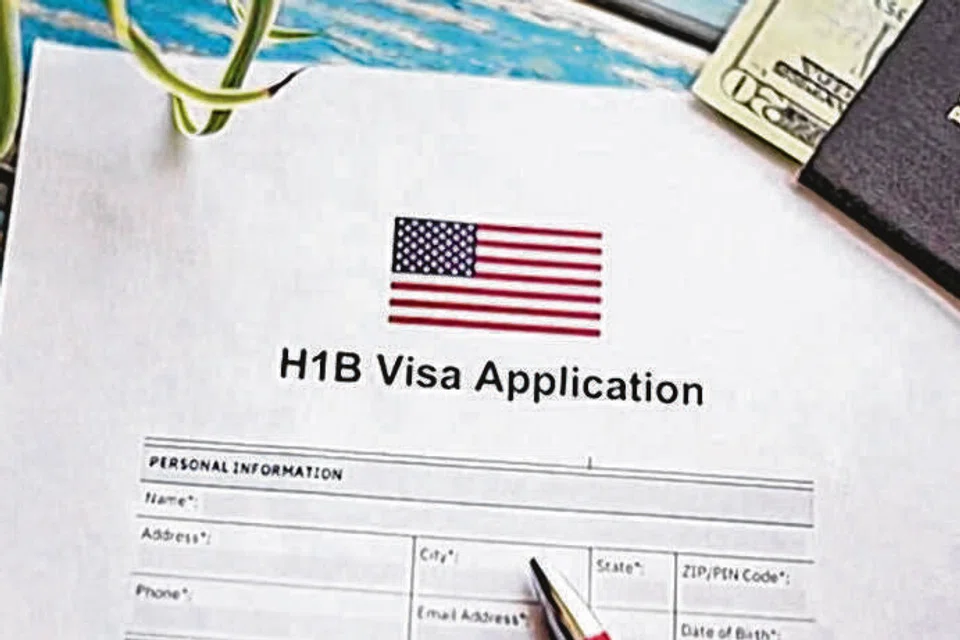
“When Trump announced the US$100,000 (S$128,000) application fee for new H-1B visas, it created a lot of confusion. Companies were not sure if it applied to renewals, transfers as well as new hires,” said Mr. Deepak, 44, who requested anonymity for fear of reprisals. Deepak is a pseudonym.
Eventually, it became clear that the proposed US$100,000 fee was for new H-1B applications, which would have been 25 times the prevailing fee. While a US federal judge struck down the policy as unlawful in June, the Trump administration has not relented.
It is actively making H-1B applications more onerous and has now proposed a separate US$4,000 surcharge from September for H-1B visa extensions and renewals.
American Big Tech firms are regularly the biggest sponsors of these temporary work visas for foreign workers with at least a bachelor’s degree. Most visa recipients are from. Renewable every three years, the H-1B is seen as a stepping stone to permanent residency in the US, more popularly referred to as the “green card”.
“It was nerve-racking and difficult. The anti-H-1B visa environment is strongly affecting the willingness of companies to hire Indians. There was no option but to leave America,” Mr. Deepak told The Straits Times. Faced with such uncertainty, he put his two houses in the US up for sale, sold off furniture and found new schools for the children in his home town. His family landed in the southern Indian state of Kerala with just five bags.
In 2025, around 15,100 Indian professionals returned to India compared with 9,800 in 2024. About 7,300 have already returned in 2026, according to Xpheno, a Bengaluru-based talent consulting firm.
A trifecta of factors
These trends are also corroborated by a decrease in the number of H-1B petition approvals.
For decades, US employers have relied on the H-1B visa for global talent with advanced skills and degrees. Waves of young science and technology talent have flocked to the US, drawn by cutting-edge innovation and pay cheques their home countries just could not match.
However, H-1B visa petitions approved for the top 100 employers like Amazon, TCS, Infosys, Apple and Microsoft in fiscal year 2026 are on track to drop more than 10 per cent compared with 2025, as calculated by The Straits Times using data from the US Citizenship and Immigration Services.
Furthermore, layoffs and hiring freezes are now common due to the poor job market and AI-based restructuring within companies. Meta, Visa, Amazon and several major tech companies have terminated thousands, including many Americans.
As a result, vacancies have shrunk while jobseekers have swelled, with foreign professionals increasingly squeezed out of the American workplace.
Indian nationals are among the largest groups of H-1B visa holders at about 70 per cent of the total pool, respectively. Most work in tech.
“The market is flooded with techies but only the super-skilled foreigners are making the cut, if at all,” a US-based professional in a major German software company told ST, requesting anonymity for fear of reprisals.
Social hostility and online racist attacks targeting Indians and Chinese, who are America’s largest, most educated and highest-earning immigrants, have intensified, according to reports by AAPI Equity Alliance.
“I am seeing a major uptick in people returning to India, more than ever. Despite the tougher visa rules, many thought they would stick it out, but the layoffs in the past years are compelling them to leave,” said Ms Nupur Dave, a Bengaluru-based consultant who has helped thousands of overseas Indian tech professionals plan and manage their move back to India.
Indian realities
Although hiring has dropped in IT services and outsourcing companies, co-founder of Xpheno Kamal Karanth said returnees may find jobs in the 2,000 or so Global Capability Centres (GCCs) in India, which have collectively hired 100,000 employees annually since 2023.
Xpheno’s research shows that the top 125 GCCs in India absorbed around 7,000 mid and senior tech professionals with more than 10 years’ experience in the past 12 months, including 2,800 who returned from the US.
According to Mr. Kamal, returning Indians are not valued more in the job market unless they have special data skills or AI expertise. Returnees would also have to contend with smaller pay packages.
Some returnees are taking advantage of the move to take a break.
Indian product manager Mr. Ram, 38, has been living off his savings since he returned with his wife and toddler to Bengaluru in early 2025 after nine years in Connecticut.
“I am not sure if I want to continue with product management, start my own business or become a farmer. I’ve never had this luxury of time and choice in the H-1B life, even though it did give me a comfortable, materially easy life,” said Mr. Ram, who requested ST use only his first name.
He decided to leave the US after he was laid off by a previous employer in late 2023 – a few weeks after the birth of his first child and a few weeks before he was eligible to file his “green card” application. With his path to permanent residence reset with the switch to a new employer and a souring climate towards migrants, Ram decided the risks were not worth taking.
“The overall sentiment towards legal immigrants on H-1B was becoming negative. While some Indians do commit visa fraud, all Indians are broadly being accused of taking white-collar jobs and undercutting salaries,” Mr. Ram said.
Mr. Deepak has started on his new job as the director of quality assurance in a local company in Bengaluru. While he bemoaned India’s left-hand drive, pollution and poor civic sense, he was also excited about the fresh start and being near family.
Moving back was “the best decision”, Mr. Deepak said. He is now left with only one abiding link to the US: his children aged 13 and eight are American citizens. THE STRAITS TIMES