
Food has always been part of the religious equation. Whether it is communion after church or the distribution of porridge during the holy month of Ramadan, there is a profound sanctity in how religion and food intertwine.
In Hindu temples, annadhanam (sacred offering of food) is served to devotees after they have completed their prayers. It can take the form of a humble vadai and a cup of coffee or a hearty South Indian-style thali of white rice and assorted vegetable dishes.
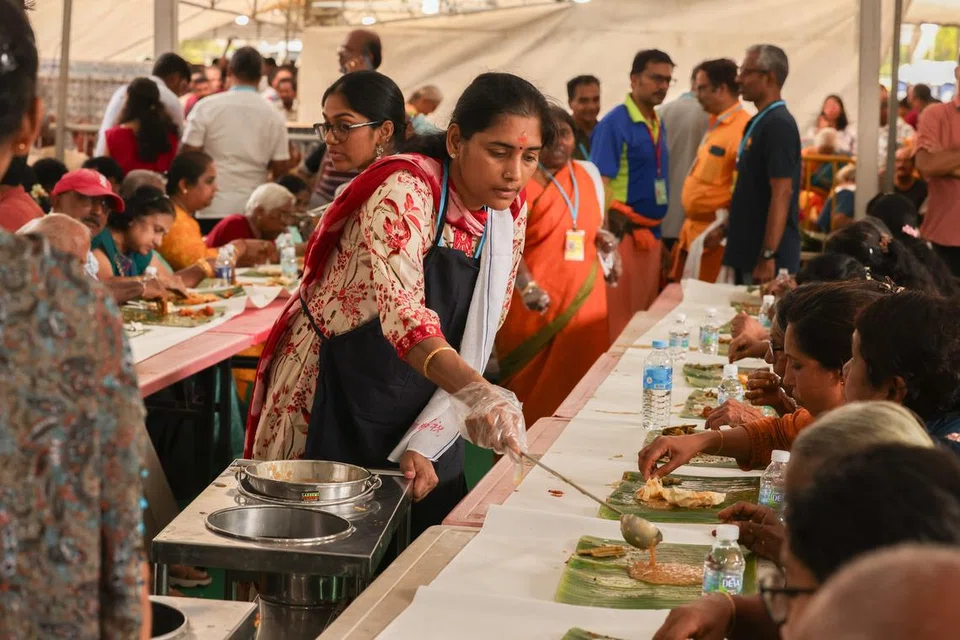
This Thaipusam, about 180 volunteers toiled tirelessly to provide annadhanam for an estimated 15,000 devotees at the Sri Thendayuthanpani Temple at Tank Road. The preparations began at midnight on Feb 1 as volunteers chopped up various vegetables and boiled gargantuan quantities of rice in large, industrial-sized pots.
With Thaipusam falling on a Sunday this year, the food preparations were scaled up in anticipation of a larger turnout, noted Sri Thendayuthapani Temple management committee member Selva Nachiappan.
“My family has served annadhanam for generations. I myself started out when I was six years old, and remember cooking over wood-fired stoves,” the 69-year-old said.
At noon sharp, lunch was served, but many devotees had already started queuing up around 11.30am. It is a rite of passage, both to serve and to receive an annadhanam. For the uninitiated, the guidelines are simple.
First, a freshly washed blade of banana leaf is placed before you. This is followed by heaps of steaming white rice. Next, each volunteer comes by with a bucket in hand – each containing a different type of vegetable dish, and plops a scoop onto the banana leaf.
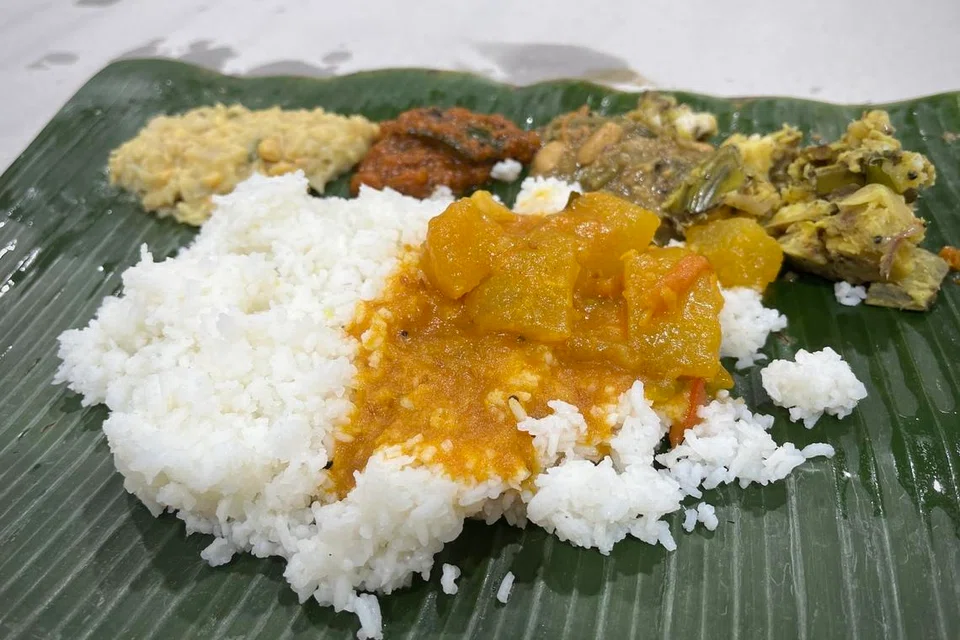
This year’s offerings featured a medley of savoury pumpkin stew, creamy cabbage kootu, tangy vegetable mandi, and a spiced raw banana poriyal, which together provided a heavenly symphony of flavours.
The final composition is four medium-sized circles above an elongated island of white rice. A pro move is to create a crater in the mound of rice with your fingers as a strong-armed volunteer walks over with a pail of sambar.
A sense of awe builds up as you witness the ladle of thick, lentil-laden sambar being poured over the rice. The tapestry of colours and textures whets your appetite as you strategise how to tackle the culinary panorama spread before you.
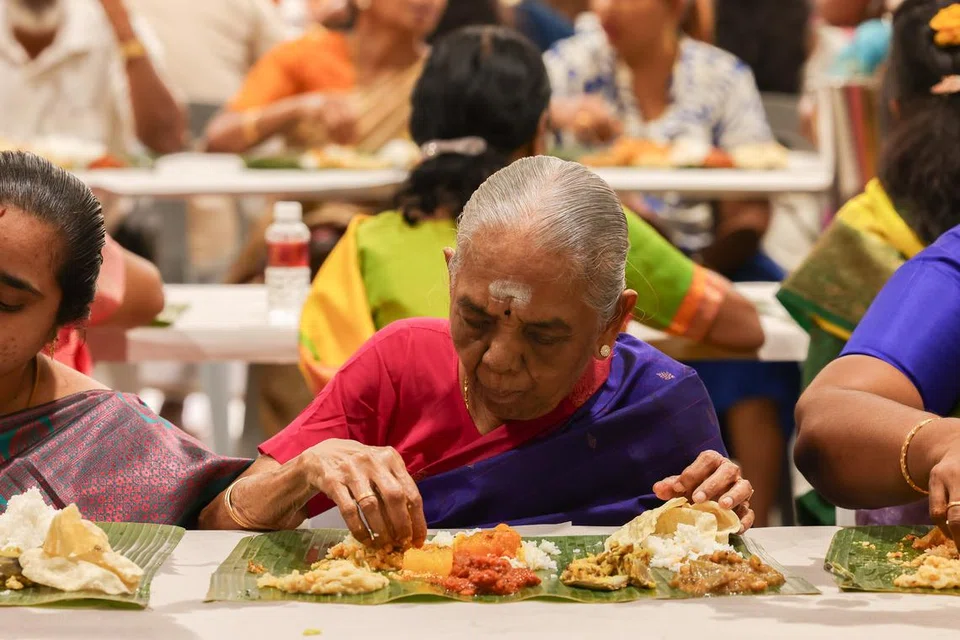
There are two types of people in this world: One who eats dish by dish, and those who mix up all the dishes together with the rice. I recommend the former if you are pressed for time, and the latter if you want a gastronomical experience.
Once you are done with your meal, another volunteer goes around with a bucket of payasam – a milk-based pudding made with vermicelli. It is best consumed with a spongy vadai to soak up the sweet sauce or a crisp appalam to add some crunch to the silky soft payasam.
One of the devotees who ate the annadhanam was 11-year-old Kavin Krishnasamy. “The dishes were all really yummy, and the volunteers who served did a great job,” he said.