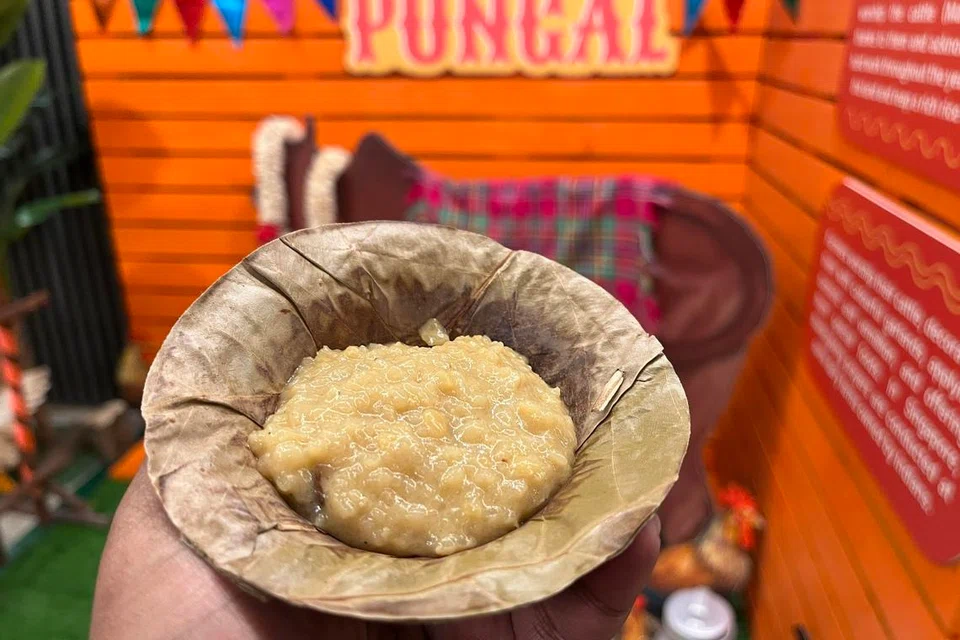

The sweet aroma of boiled jaggery and rice would have filled up many households in Singapore and across the world on Jan 15, which marked the second day of the traditional four-day harvest festival celebrated by Tamils known as Pongal.
The word “pongal” means “to boil over”, a literal description of the ritual that produces the festival’s namesake dish made of ghee, milk, rice, and moong dal, which is conventionally cooked in a clay pot as the sun rises.
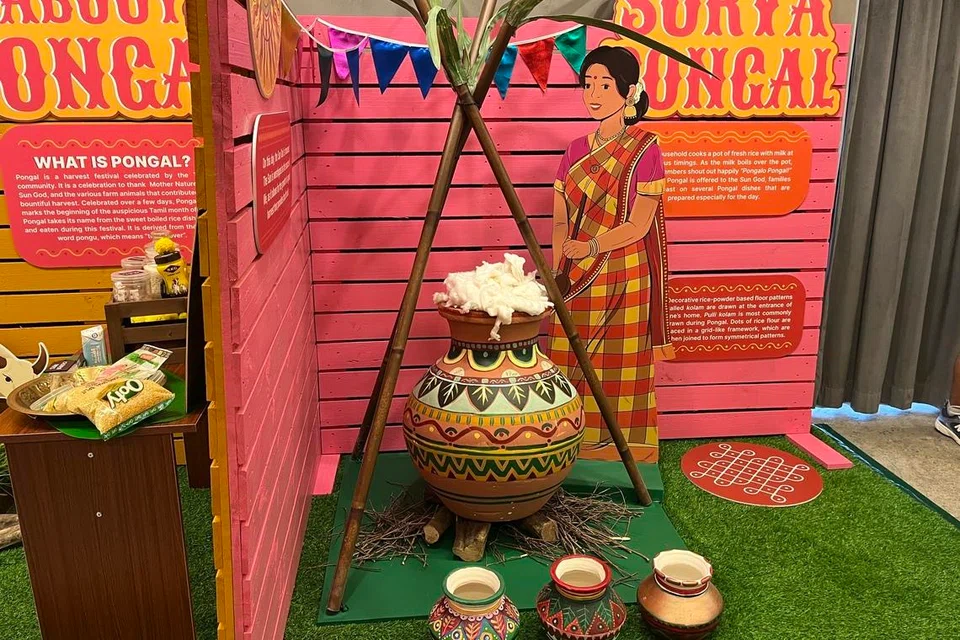
As part of its Pongal Open House festivities, the Indian Heritage Centre held a live cooking demo for the public on Jan 10 and 11 to share pongal-making tips and techniques.
The sessions were conducted by Mrs Remapaarvathy Subramanian, 48, a MOE-registered vendor and teacher from Jai Arts & Culture. She noted that the base recipe for sakkarai (sweet) pongal follows a ratio of one cup of white rice to a quarter cup of moong dal.
“In India, pongal is traditionally prepared using newly harvested rice from crops planted in July or the Tamil month of Aadi. It serves as a symbolic thank you for a bountiful harvest,” Mrs Rema explained.
To attain the creamy, congee-like consistency that pongal is renowned for, you would need two cups of water and two cups of milk for one cup of rice.
For sweet tooths, the ideal ratio is two cups of jaggery, but for the health-conscious, you can adjust the amount to your preferred level of sweetness.
Mrs Rema suggested using brown rice or whole grains as healthier alternatives. She also observed that Singaporeans typically use red sugar, a refined sugar that gives the pongal a bright orange hue.
She opted for jaggery, an unrefined sugar, which she grated into a coarse powder that imbued the pongal with an earthy, complex sweetness and a distinctive light brown colour.
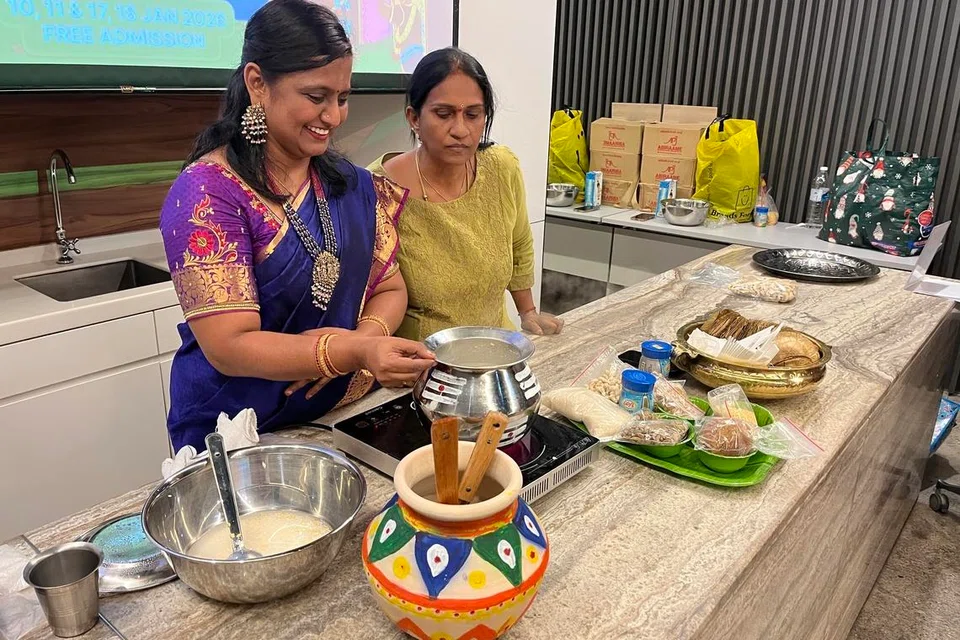
The recipe is easy to follow, thanks to Mrs Rema’s demo. She first poured the milk and water into a metal pot over an induction stove and turned the heat to high. As the milk neared the boiling point, she added the moong dal, which shortened the time it took for the mixture to reach the frothy crescendo that gives Pongal its name.
She then added the rice, jaggery, and a pinch of salt, allowing the ingredients to simmer together for some time until they melded into a rich, velvety porridge. Mrs Rema advised not to leave the pongal unattended as it requires constant stirring to ensure it does not char.
The pot was taken off the stove, and in its place was a frying pan with several tablespoons of ghee to temper the cashews, raisins, and cardamoms. The pongal was then topped with the toasted ghee mixture to achieve a risotto-like finish.
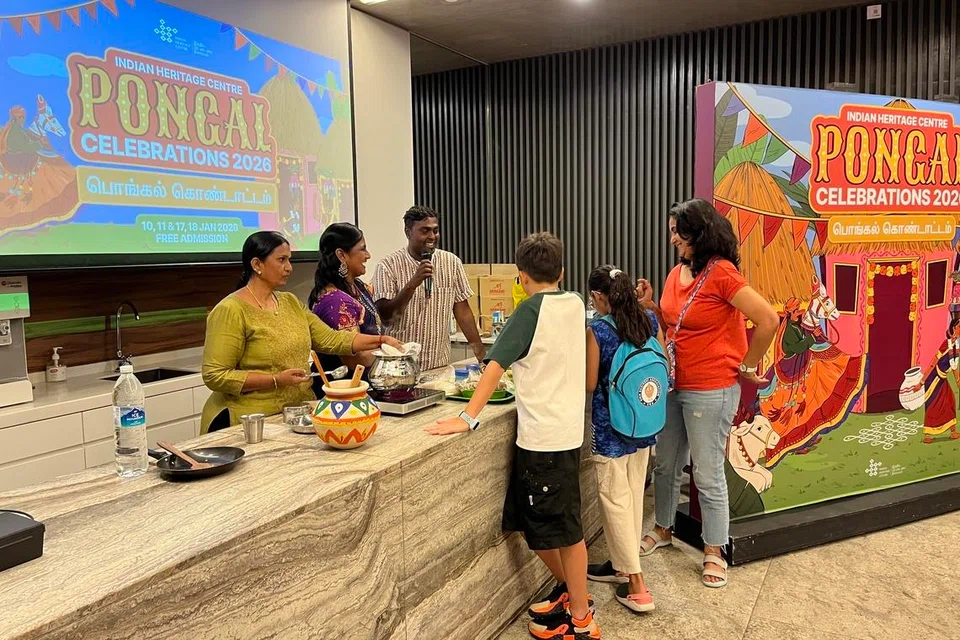
Another handy tip is to pre-soak the rice and dal for at least an hour beforehand, so the pongal cooks more quickly. The entire process can take up to 45 minutes or more, so the key to a good pongal is patience!
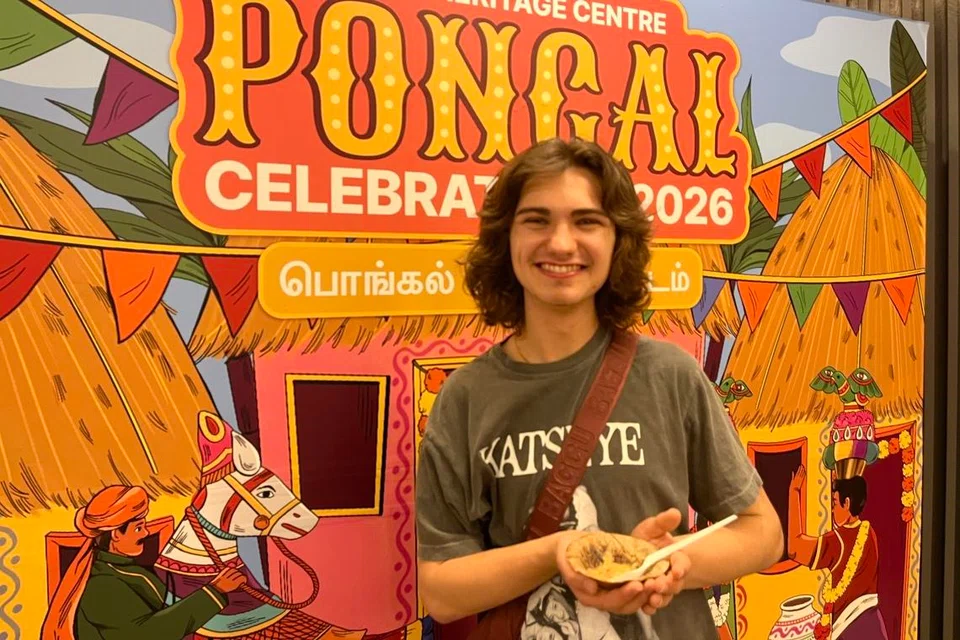
Mrs Rema ladled scoops of warm pongal into palm-sized thonnais (natural leaf bowls), and served them to the attendees. Amongst them was Mr David Schell, 23, an American tourist.
“It was an interesting workshop, and the pongal is really yummy. It reminds me of an Arroz con Leche, a Mexican rice pudding. The only difference is the ghee, which adds an almost salty, buttery flavour to the pongal,” he said.
RELATED STORIES

15 Jan 2026 16:17
15 Jan 2026 19:17