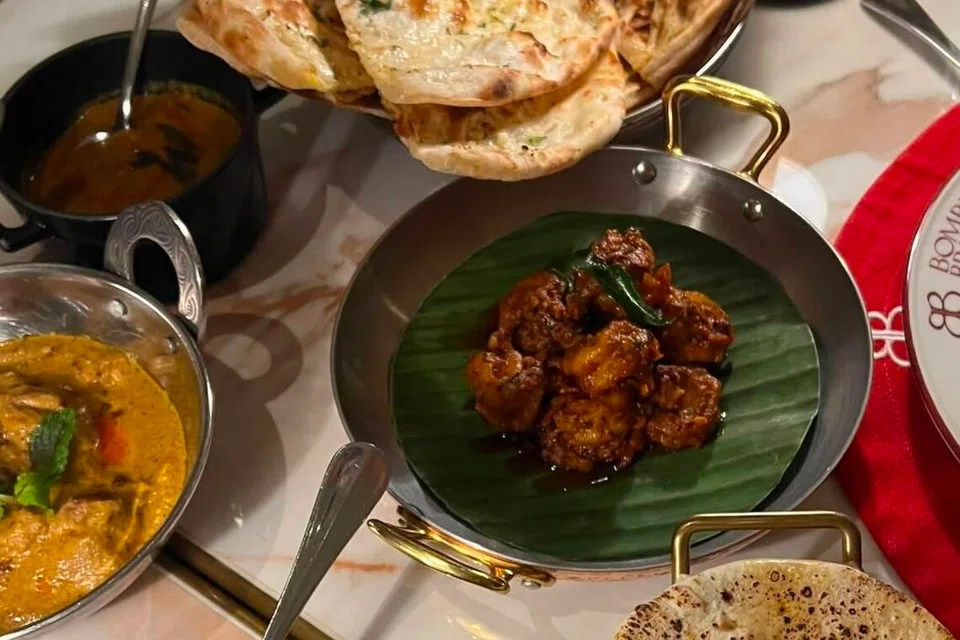

The Nizam dynasty, trickling down from Central Asian origins, ruled over most of the regions of Telangana, Andhra Pradesh and Karnataka for over two centuries until just after India’s independence. As a result, Persian flavours and ingredients entangled themselves with the spices of South India.
Singaporeans can tour this royal cuisine through Bombay Brasserie’s Dastarkhwan-E-Nizam menu, curated by Executive Chef and Operations Head of the restaurant, Chef Areeb Rehman – who took his inspiration from his years working in Falaknuma Palace, one of the Nizam residences.
Some dishes are unlikely to be found elsewhere in Singapore, such as the Pathar Ka Gosht, which translates to Meat from Stone, and the Khubani Ka Meetha, which is an apricot-based dessert.
For the former dish, thinly sliced and lightly spiced mutton is traditionally cooked on a hot stone. The chefs excelled at balancing the smoky grit with a tender bite.
“I had to work with what I have here,” said Chef Areeb, 28. “I did many trials to see whether the flavour of the gosht would be found by frying it on a pan.”
Usually Khubani Ka Meetha is sickly sweet with plump rehydrated Afghani apricots and often takes about one spoon to end your meal, but this iteration was delightfully refreshing as a less sugary syrup allowed the refreshing fruit to shine and melt with the whipped cream topping.
The menu has both non-vegetarian and vegetarian options, and in a strange turn of events – Chef Areeb excels in his vegetarian dishes, perhaps even more so than some of the meat ones, to the shock of the Hyderabadi meat lover.
The Dakhni Saag, made with spinach and soya leaves, looks unassumingly like a dark olive paste but one bite in and the vibrancy of the greens and the distinct nuttiness shine, perfect to sop up with a buttery garlic naan.
The Kathal or Jackfruit Haleem preserved the complex cumin-pepperiness of the stewed, shredded “meat” and lentil dish, while taking away some of the gamey flavours mutton sometimes has. You could not tell by sight or texture which haleem was which, and frankly, the jackfruit version could stand toe-to-toe with some of the haleems near the towering Charminar in Hyderabad.
The biryanis, both the vegetarian Subz Gulzar and Kaccha Gosht, were slightly one-dimensional and lacked some of the spice that is usually expected from biryanis in the region. However, once mixed with the mirch ka salan and raita, the flavours balance out.
Overall, the menu is a great way to explore a different tangent in South Indian cuisine and tingled the olfactory memories of going on iftar crawls during Ramzan in Tolichowki.
The Dastarkhwan-E-Nizam six-course menu is available at Bombay Brasserie at S$73++ per person till July 31, 2026.