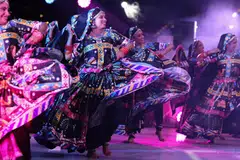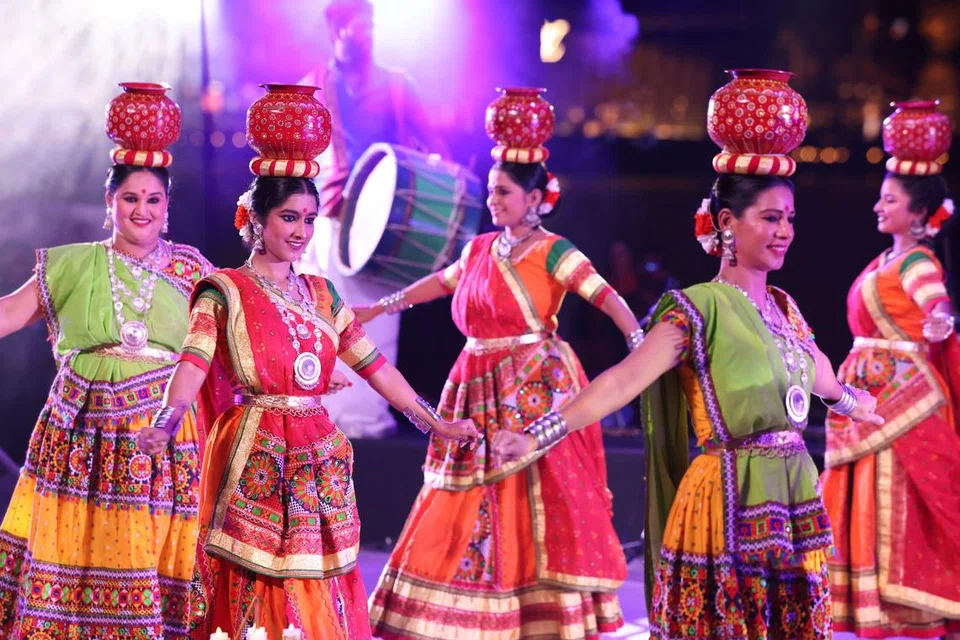
In Gujarat, Garba is a collection of distinct cultural dialects. Nearly every community across the state has woven its own unique history, attire, and rhythm into the circle, creating a magnificent mosaic of traditions.
While it takes immense grace to spin to the rhythm, it takes a lot more skill to do so while balancing a tiered wooden shrine on your head.
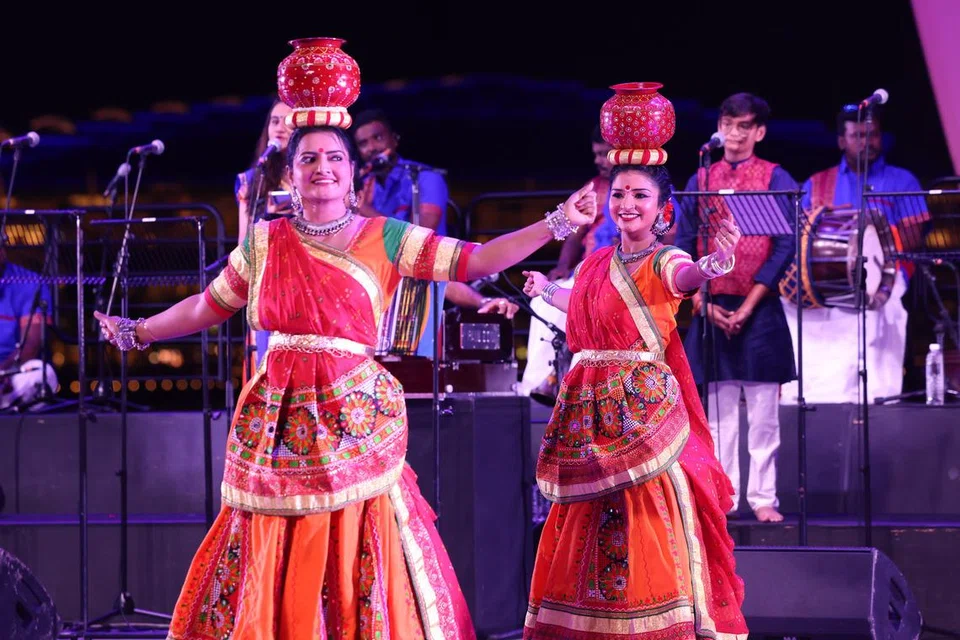
This fusion of devotion, rhythm, and physical balance is the hallmark of Mandavadi Garba. The fascinating details of this regional folk art are explored in the fourth episode of ‘Nam Marabu: An Insight’, a vodcast series produced through a special collaboration between tabla! and ATAM.
Traditionally performed during the festival of Navratri, the word ‘Garba’ is derived from the Sanskrit term meaning ‘womb’, symbolising the divine feminine and the life-giving force of the universe. The Mandavadi is a symbolic shrine, often housing a small earthen lamp.
Dancers must maintain a steady upper body to support the weight on their heads, even as they move through sweeping, energetic steps. The dance unfolds in its distinctive circular formation, a pattern that symbolically reflects the cyclical nature of time marked by birth, life, death, and rebirth.
Local audiences were treated to this tradition last August at Esplanade during ATAM’s ‘Anandha Kondaattam’ production.
The vibrant showcase was co-choreographed by dance instructor Mrs Selvarajeswari Ashok Prabhu, 34. In the vodcast, she delves into the intricate process of adapting and staging this specialised art form for a modern audience.
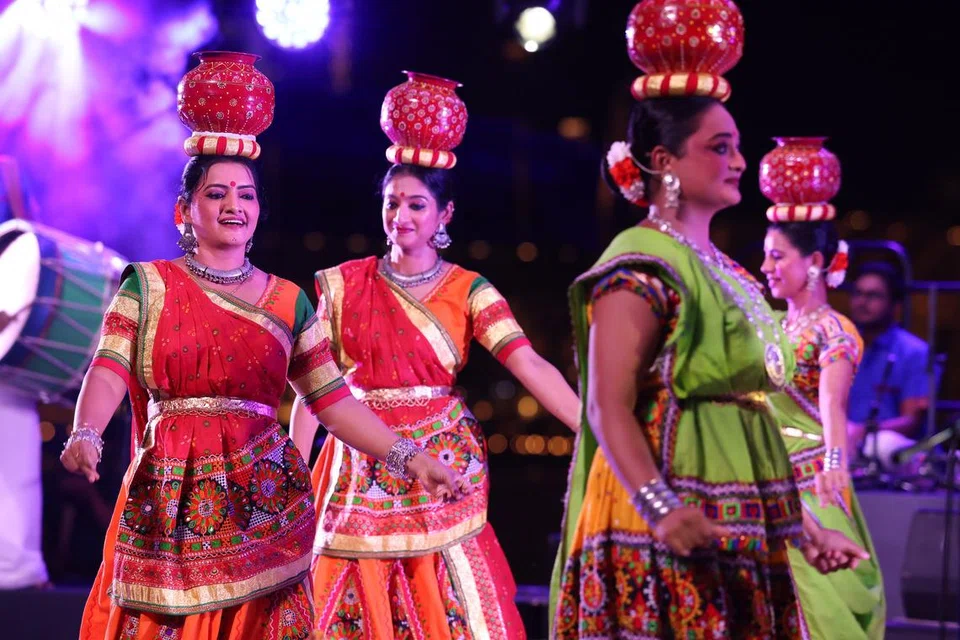
While teaching Mandavadi Garba to adults has its own challenges, Mrs Selvarajeswari undertook the task of adapting it for the classroom. She introduced the art form to the Indian Dance students of Fernvale Primary School, which culminated in the team performing the dance at the Singapore Youth Festival (SYF) this year.
Documenting such initiatives, ‘Nam Marabu: An Insight’ serves as a living archive. It captures the firsthand experiences of artists and educators like Mrs Selvarajeswari, who are working to ensure that diverse traditional Indian art forms are actively passed on to the next generation.