
For decades, Indian manufacturers have competed on cost. The harder task has been convincing global customers that homegrown engineering can also match, and eventually surpass established international players.
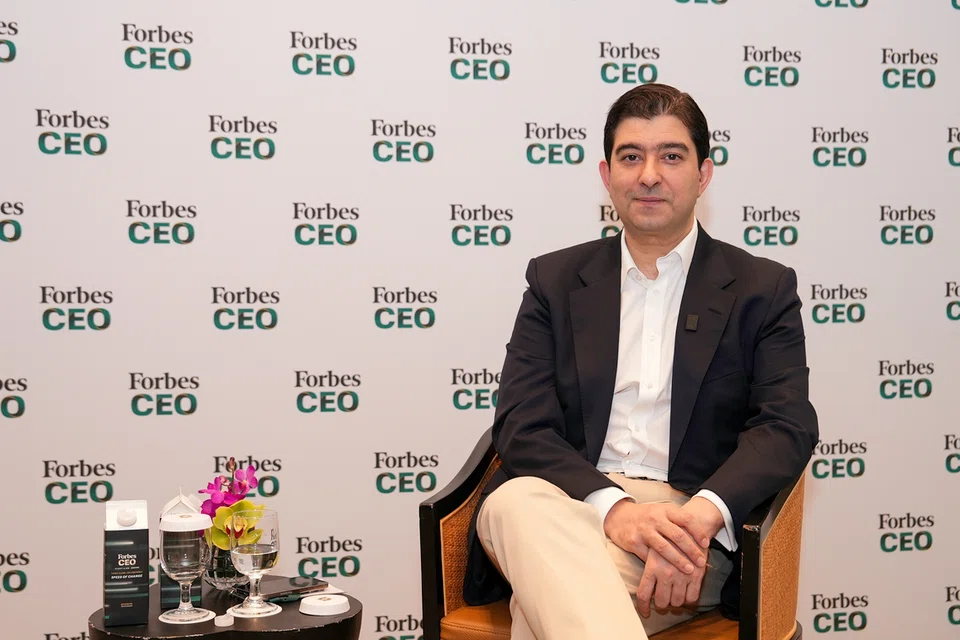
Mr Nikhil Sawhney, the vice-chairman and managing director of Triveni Turbine, believes that this distinction between the local and the international is central to the company’s evolution.
Its ambition, which may have once been to manufacture industrial steam turbines at competitive prices, is now to develop technology that will define the next generation of industrial energy systems.
Founded in 1956, Triveni’s origins lie in India’s sugar industry, manufacturing equipment for sugar mills while maintaining its own interests in sugar production. Engineering, Mr Nikhil argues, was therefore never a departure from the company’s core business.
The more consequential shift was in the late 1990s and early 2000s when reforms in India’s power sector introduced electricity generation to independent power producers, encouraging Triveni to expand beyond traditional markets.
Consequently, its turbine business demerged from Triveni Engineering and Industries in 2009.
“The pivot has actually been towards focus on R&D, engineering and indigenous (technology),” Mr Nikhil said, as part of the company’s transition towards developing proprietary technology and building international presence.
The ability to do so shows a shift in India’s industrial trajectory, wherein homegrown technologies are able to compete on technological merit instead of price alone.
Today, Triveni Turbine has more than 6,000 installations across over 80 countries.
In the financial year that ended in March 2026, the company recorded a revenue of about S$300 million, up 9 per cent year on year.
“The age of India catching up has happened. It’s more a question of now how do we create the narrative, create those newer technologies which can lead the way in the years to come,” he told tabla! at the Forbes Global CEO Conference 2026.
Beyond the technology, Mr Nikhil identifies customer service as one of the key differentiators in Indian manufacturers gaining leverage internationally.
For industrial customers, turbine efficiency is critical, he said, but so is the reliability of the service that accompanies the equipment.
“Ultimately, it’s the success of products, it’s customer satisfaction, seeing customers happy and wanting to buy repeatedly from us,” he noted. This customer base is a point of pride for the company, as is its ability to develop talent internally and see employees progress into senior management positions.
Having studied at Cambridge and the Wharton School of the University of Pennsylvania, Mr Nikhil returned to India after completing his MBA, devoid of familial pressures to join the business, in which the Sawhney family has significant ownership in.
He told tabla! that the opportunity to take on responsibility early allowed him to make capital allocation decisions with more foresight, particularly in R&D, wherein return on investment takes years to materialise.
“Just by the sense of ownership does not give you the right to manage,” he said, describing the family as custodians of its equity rather than owners entitled to control.
This also extends to the next generation. His son, who is currently wading through university applications, has expressed an inclination towards joining the business but Mr Nikhil is clear that the decision to do so must ultimately be his own, and only after his education is completed.
“We have the luxury for him to choose whatever he may want to do, wherever he thinks his career path and choice take him,” he said.
Regardless of who steps into leadership, the company’s aim remains to move beyond being a cost-competitive alternative to becoming a source of technology that global industries can’t afford to overlook.