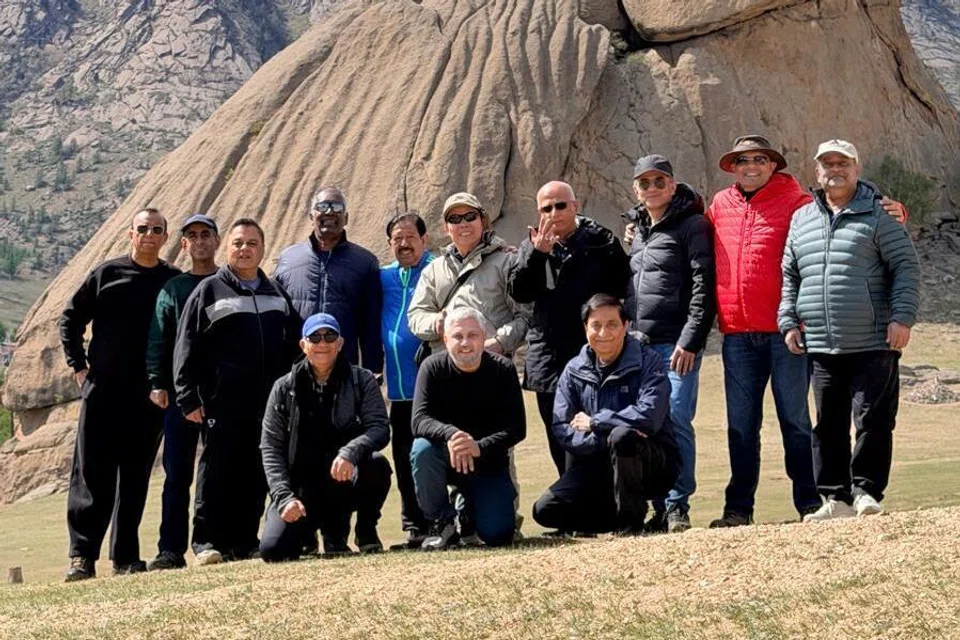

Under the vast sapphire sky, a group of trekkers from Singapore stood spellbound as Mongolian herdsmen demonstrated skills of a nomadic way of life that has endured for centuries.
For more than a decade, the group had gone on trekking trips along popular routes in Nepal, India, Bhutan, Vietnam, Bali, Tasmania, Hong Kong, and Taiwan.
This May, they decided on Mongolia. Businessman Anil Sachdeva and his 12 friends had wanted something far off the beaten track.
Their five-day adventure began in Ulaanbaatar, Mongolia’s bustling capital, where modern structures stood alongside reminders of the proud Mongolian heritage. Visits to the historic Gandan Monastery, the National History Museum, and Sukhbaatar Square provided a fascinating introduction to a country whose history stretches back to the glory of Genghis Khan.
Yet, it was beyond the city limits that the true magic of Mongolia revealed itself. At the celebrated Mongol Nomadic Show, the group was treated to an unforgettable spectacle showcasing how generations of nomads have lived in harmony with nature, tending livestock, and moving across the steppes in search of fresh grazing land.
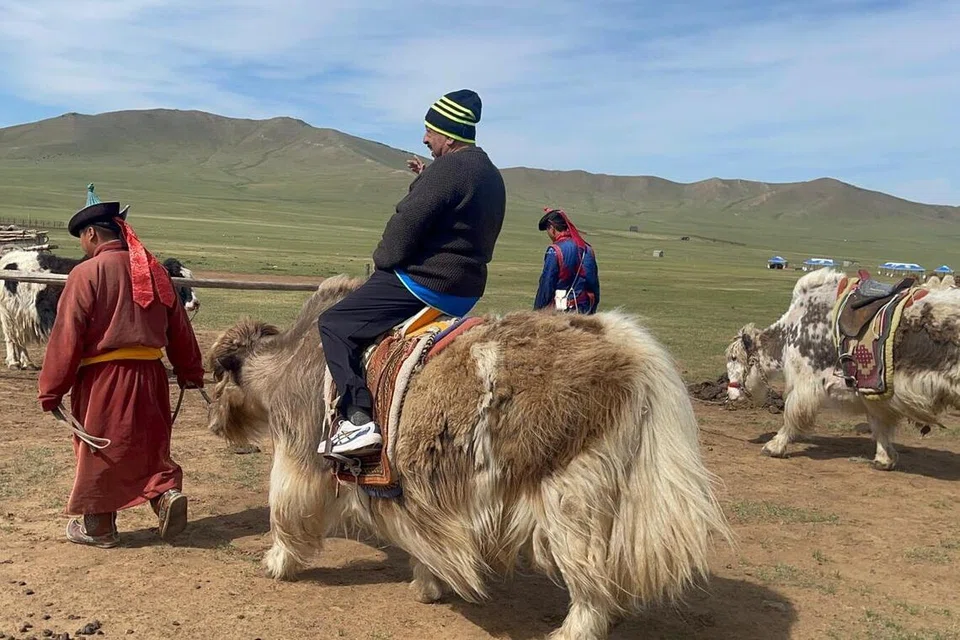
Among their most memorable encounters were the shaggy domestic yaks. The trekkers learnt that these hardy animals have long sustained nomadic communities with milk, meat, wool, and even transport.
Equally captivating were the Bactrian camels, distinguished by their two humps. “Watching the camels stride calmly across the steppes, their thick coats rippling in the wind, felt like stepping back into the days of the ancient Silk Road,” said 72-year-old Anil.
Along with horses, sheep, goats and cattle, camels form part of the “Five Snouts”. These five animals remain central to Mongolian nomadic life until today.
On the way eastwards to Terelj National Park, the group stopped at the towering Chinggis Khaan Statue. (That’s the Mongolian spelling of Genghis Khan.)
Then at the park, they stood mesmerised before granite outcrops emerging from the emerald-green valleys, such as the famous Turtle Rock. For many in the group, it seemed like a landscape sculpted by giants.
A hike to the Ayarabal Meditation Temple was another highlight of the trip. Perched on a hillside, the temple provided sweeping panoramic views. Prayer wheels spun gently in the breeze while the surrounding mountains radiated a profound sense of peace.
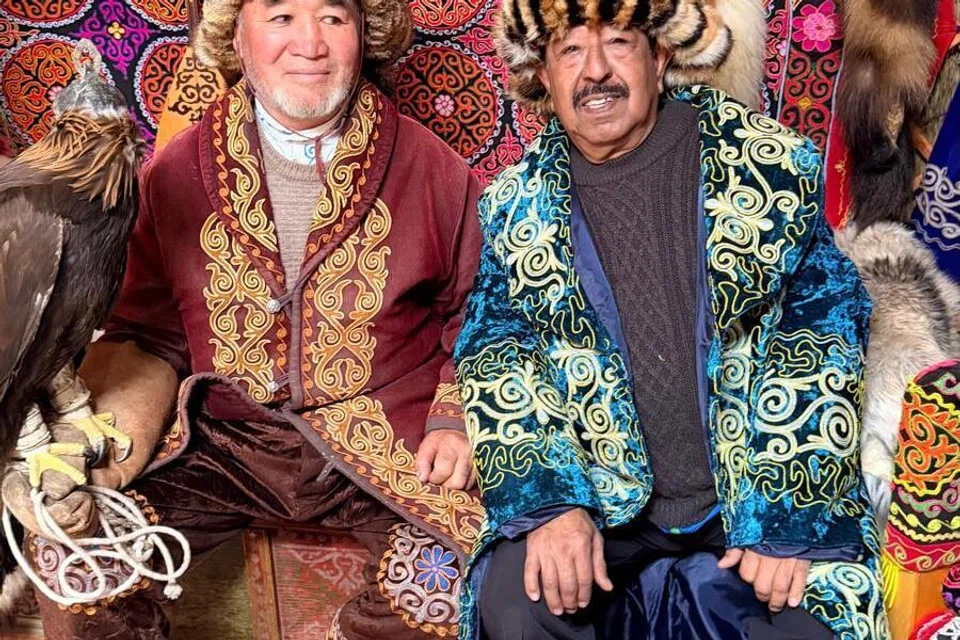
The group also spent a night in the traditional gers. Inside these circular felt tents, it was all warm and cosy. Outside, the stars sparkled brilliantly, and the cold whispering wind was the only sound they could hear.
The pinnacle of the adventure was the trek to Tsetsee Gun Peak, the highest point in Bogd Khan Mountain, which lies within one of the world’s oldest protected areas.
As the trail climbed steadily upwards, conversations became shorter, and breathing became heavier. With many of the trekkers in their 50s and 60s, there was good-natured banter about stamina and fitness.
At one point, when a member remarked on the profound silence enveloping the mountainside, another quipped that he could hear the creaking of their arthritic knees.
Laughter followed, and the group paused to savour the crisp mountain air infused with the scent of pine forests, and to admire the dazzling bursts of wildflowers carpeting the alpine valleys.
Overhead, eagles circled amid the clouds, their shadows gliding silently across the slopes.
Mealtimes occasionally presented a challenge, as traditional Mongolian cuisine is heavily centred on meat and not to every member’s taste. Fortunately, the group found several Indian and Chinese eateries along the way, many of which offered a good selection of vegetarian dishes.
All good things must come to an end, and, as their plane lifted off from Ulaanbaatar, the trekkers left behind Mongolia’s serene mountains and grasslands, but not the memories.
Even now, Anil still recalls the sight of yaks, the laughter of friends sharing the trail, and friendships strengthened one step at a time.
He said: “It is also a comfort to discover that there are still places in the world where nature and tradition remain beautifully untouched.”
tabla@sph.com.sg