
Shivram Gopinath’s Dey and Shilpa Dikshit Thapliyal’s Aerial Roots are poetry collections celebrating pop culture, nostalgia and belonging that have made their way into the Singapore Literature Prize 2026 longlist. Both Indian diasporic poets behind these collections will also make panel appearances at this year’s Singapore Writers Festival on Nov 13 – 30.
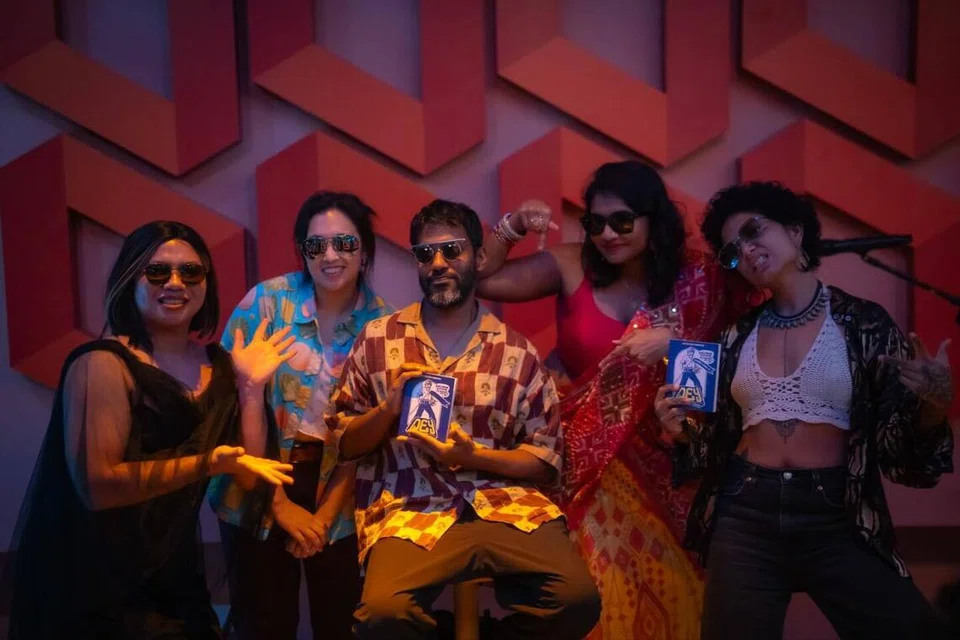
Dey by Shivram Gopinath
“I am awesome, I am Invincible, I romance women half my age, and beat up henchmen twice my size,” an excerpt from Tamil Movie Hero, which is a clear example of the tone and theme of Dey.
Throughout the book, Shivram, 41, is witty and sharp, discussing themes of Indian pride, racism, and some of the not-so-celebratory parts of Indian culture.
Some poems are entirely in Tamil, encouraging readers to ask their Indian friends for help. If they don’t have any Indian friends, then the book urges them to make some.
Local illustrator Brenda “HelloPigu” Tan’s intricate and hilarious designs give the book a cinematic sense on every page.
Born in Chennai and now based in the Netherlands, Shivram received the longlist mention with Singaporean pride, living most of his adult life here.
“Dey is an increasingly Singaporean book. It’s a book that can have only been written by somebody who spent time here. And I think only a Singaporean has a chance of fully getting the book. It’s going to be alien to even a lot of Indian people who may not be familiar with Singapore,” he said.
Some of the most local tributes in the book are in poems like Louw Song, where there are several puns on public transport, and Salted Egg Yolk, which feels like a ghost story in yellow.
Shivram will be a presenter on the panel – Embodying Multiple Worlds: Poetry and Belonging – on Nov 13 at the festival, which is included in the festival pass. The panel aims to discuss what writing poetry is like for those who belong to several different cultures and contexts.
“Some of the angles for the panel that come to mind are: how does poetry form within you as a condition of your environment and as a condition of how you sort of treat the world and get treated by the world around you,” he said.
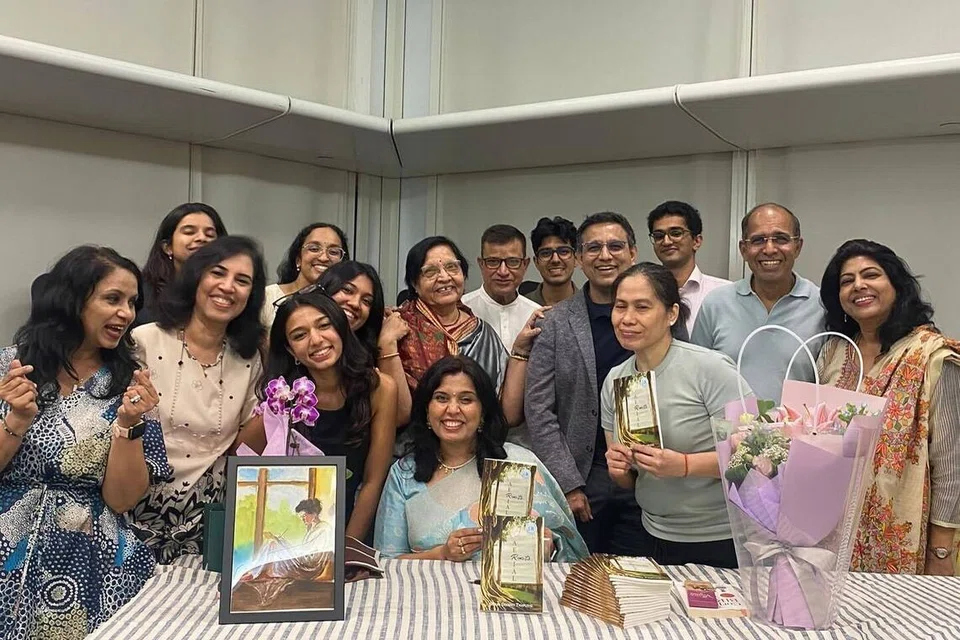
Aerial Roots by Shilpa Dikshit Thapliyal
“Amma in broken English over the phone, spattering of mother tongue in new home”, an excerpt from Grounds To Cover, establishes the key theme in Aerial Roots, the journey of belonging and finding home as diaspora.
The book is sectioned into three sections, with the first two – Loops of Infinity and We Inhabit – having intricate works on what the heart and mind go through while occupying and adapting to a new place.
“Most of us, as diaspora members, we don’t belong to a particular place, we belong to space. We find ourselves between these interstitial spaces, which cross geographical boundaries. So at a moment, we could be right here, but there’s something which could trigger a memory, and I’m transported back into India,” said Shilpa, 53.
Aside from discussing the yearning of diaspora, there are also some beautifully haunting pieces surrounding the Covid-19 pandemic in the book’s last section, Disquiet. One of the highlights from here is the poem The Time The Skies Speak To Me, which follows Shilpa on a video call with her mother, showing each other the oddities of pandemic life.
Shilpa, now a citizen, moved to Singapore 25 years ago and started publishing her poetry here. She received the longlist news ecstatically.
“It’s a nod to people who live in the fringes of society. It’s a nod to inclusion. It’s a nod to multiculturalism in Singapore. Truly including people through literature. There are these little spaces that are here which could be filled by immigrants who are now blending into Singapore,” she said.
Shilpa will be moderating the panel, The Happiness Quotient: Can Poetry Thrive on the Bright Side?, on Nov 21, which is also included in the festival pass. The panel aims to discuss whether poetry can be based in joy, instead of only in sadness and longing.