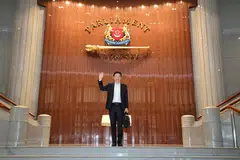


Against a backdrop of Artificial Intelligence (AI) acceleration, global uncertainty, and persistent cost-of-living pressures, Prime Minister Lawrence Wong delivered the first fiscal statement shaped by the Cabinet formed after GE2025.
Indian businesses, workers, and community leaders shared some of their key takeaways with tabla! after the Budget 2026 speech.
AI takes centre stage
PM Wong unveiled a sweeping set of initiatives aimed at accelerating Singapore’s push into Artificial Intelligence (AI) and assuaging fears that AI could displace jobs.
At the centre of the announcement is the formation of a National AI Council, to be chaired by PM Wong himself. The council aims to provide strategic direction and drive Singapore’s AI agenda, including increasing AI optimisation across four sectors: advanced manufacturing, connectivity, finance, and healthcare.
According to Priyadarshini Majumdar, AI Project Manager @ AI Singapore, these initiatives lower the “biggest barriers” to AI adoption, which are infrastructure and cost, specifically for Small and Medium Enterprises (SME).
“With stronger national support and shared resources, more businesses can experiment, innovate, and improve margins through AI. For entrepreneurs, it signals strong government backing and opens opportunities to solve real-world problems at scale,” she noted.
The government will also launch a pilot initiative known as ‘Lorong AI’, a dedicated space for the AI community. Seeing this as a catalyst for ecosystem partnerships and faster idea-to-product cycles, Ms Priyadarshini said: “In my role at AI Singapore, this helps industry partners move from MVPs (minimum viable products) to full production while giving apprentices hands-on, real-world learning.”
Theophilus Darius Thomas, a Lawyer and founder of AdminLess AI Pte Ltd, a Legal Tech Company helping law firms and social service agencies automate administrative work with AI, is encouraged by PM Wong’s focus on AI.
Coupled with the 400 per cent tax deductions under the Enterprise Innovation Scheme, he noted that these measures significantly lower the cost barrier for companies looking to adopt AI solutions.
At a community level, Young Sikh Association president Harishpal Singh noted that leveraging AI automation and strategic prompting can help Indian youth secure a distinct competitive advantage.
“We still see a high number of Sikh youth venturing into the law, accountancy, and finance sectors. By providing access to premium AI tools, the National AI Council will enable youth to pivot from administrative tasks toward high-value advisory and analytical roles,” Mr Harish said.

Amid the enthusiasm, Mr Theophilus cautioned companies to continue adapting beyond these initiatives. “Real transformation happens when companies rethink processes so professionals and workers can focus on higher-value tasks. Capacity building should also be sector-specific, translating AI into real operational improvements,” he said.
Local businesses encouraged to take flight
The government will also enhance support schemes to help local businesses internationalise and provide more financing options for growth-stage companies.
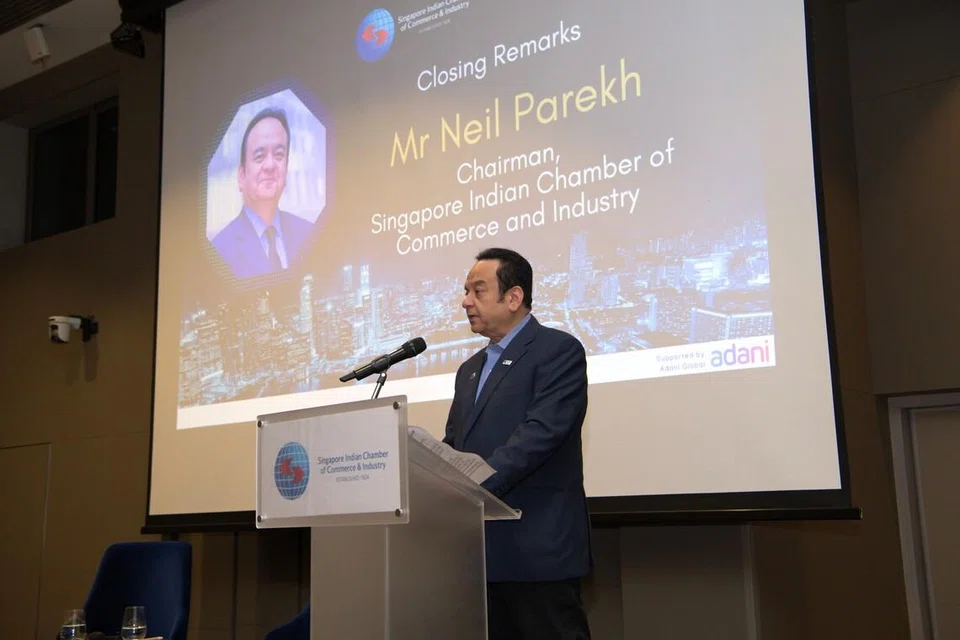
Singapore Indian Chamber of Commerce and Industry (SICCI) chairman Neil Parekh noted that a significant segment of local Indian businesses in Singapore are second or third-generation enterprises that are now at an inflection point.
“They are no longer asking whether to expand overseas, but how to do so in a structured and lower-risk manner,” Mr Neil said. “We are seeing a growing interest in India, given cultural familiarity and commercial linkages, ASEAN, the Middle East, and other emerging, high-growth markets.”
Updates to the minimum qualifying salaries for Employment Pass and S Pass holders, effective from January 2027, will increase cost pressures in certain sectors.
“For many SMEs, foreign manpower complements local capabilities, particularly in specialised roles where there may be skill shortages,” Mr Neil said.
However, this policy direction is consistent with Singapore’s broader push toward greater localisation of leadership pipelines and stronger wage standards. Ensuring traditional support and clarity, so that SMEs can plan ahead rather than react abruptly, will be key, Mr Neil highlighted.
Continued support for families
Introduced during the pandemic, the CDC vouchers scheme will continue into 2026, alongside other measures to offset cost-of-living expenditures such as U-Save rebates and LifeSG Credits.
Singapore Indian Development Association’s (SINDA) chief executive officer (CEO), Anbarasu Rajendran, views these schemes as still timely and practical, as they provide immediate and targeted relief, allowing families flexibility to prioritise spending on their actual needs, which is especially helpful for households with children, seniors, or irregular incomes.
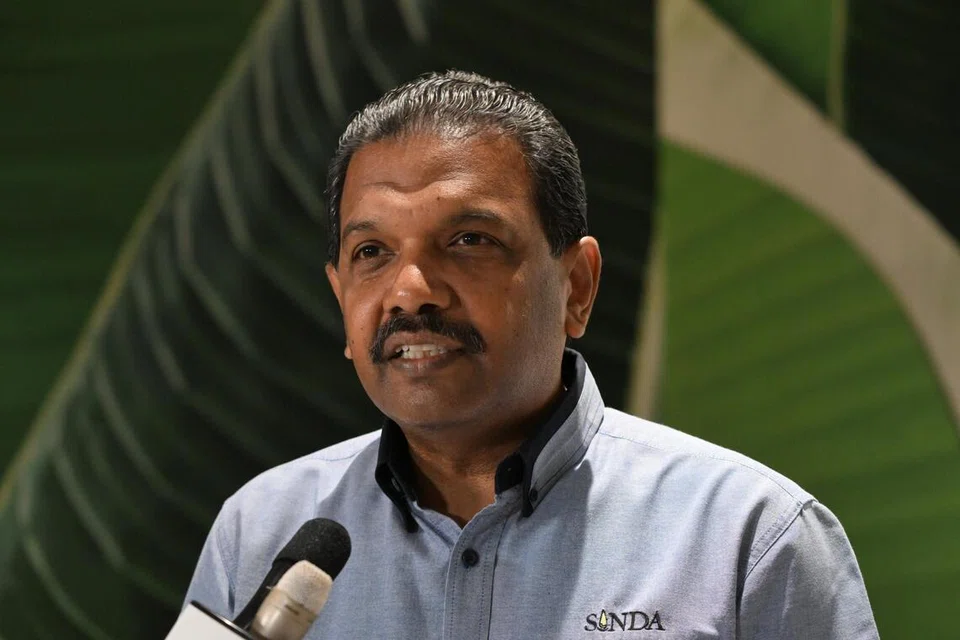
“Cost-of-living challenges do not disappear overnight. Although inflation has moderated, many households continue to feel the strain from utilities, food and essential expenses,” Mr Anbarasu said.
It is important that Government support remains calibrated and complementary to longer-term strategies such as skills upgrading, wage progression, and employment stability, he added.
Financial literacy starts young
A new low-cost, life-cycle investment scheme will be offered for CPF members. Starting at 18 years old, individuals can invest their CPF contributions until age 60 and receive payouts from 60 to 65 years old.
The ratio of high-risk to low-risk portfolios will be automatically adjusted as the person ages, making the scheme accessible to those who are not financially literate.
Mr Thirukumara Ravi, a financial advisor, pointed out that it’s good to invest young and that it’s a necessity in today’s generation.
Observing Indians’ preference to invest in gold, fixed deposits, and property, he said: “These investments are not guaranteed, and often Indians depend on their children for retirement, so a retirement-specific investment scheme is helpful.”
Sustainability should be a need
As part of growing efforts to reach net-zero carbon emissions, PM Wong announced the extension of the Energy Efficient Grant and support for green loans under the Enterprise Financing Scheme.
“Beyond incentives, if we want to shift the needle, what really needs to happen is a stronger requirement for green practices in government tenders. Ultimately, it needs to be a business advantage for companies to shift to green practices. From nice-to-have to a need-to-have,” noted Veerappan Swaminathan, CEO of Sustainable Living Lab.

We-First Society
In invoking the idea of a “We-First” society, PM Wong made a case for cultural stewardship and highlighted the Founders’ Memorial and Indian Heritage Centre in his speech.
“Multiculturalism is a key founding value of our nation, and is more relevant than ever today as we seek to strengthen the Singapore spirit in a world marked by divisions,” said Bhavani Selva Kumar, Deputy Director (Partnerships and Programmes), Founders’ Memorial.
Concurring, Mr R. Rajaram, Chairman of the Advisory Board for the Indian Heritage Centre, noted that the Budget speech makes it evident that PM Wong is striving to ensure that Singapore’s unique cultural identities are not lost amid modern changes.
“In a multi-racial society like Singapore, respecting and nurturing the roots of every race is essential for social cohesion. Even if a country progresses economically, it is considered to have achieved complete development only if its arts and culture flourish alongside it,” Mr Rajaram said.