
As India marks its Independence Day on August 15th, the occasion carries a deep historical resonance for Singapore.
Beyond celebrating freedom for over a billion people, the day serves as a powerful reminder of a shared history and an increasingly intertwined future for the two nations.
Singapore’s history is indelibly linked to India’s journey toward independence. During the struggle for self-rule, the island nation provided a crucial backdrop for key moments in freedom movements—most notably as the springboard for Netaji Subhas Chandra Bose’s Azad Hind Fauj (Indian National Army) in 1943.
When India gained independence in 1947, it quickly became a steadfast champion for Singapore, establishing formal diplomatic ties shortly after Singapore’s own independence in 1965.
Today, the vibrant Indian diaspora in Singapore serves as a living bridge, enriching the island nation’s cultural fabric while anchoring bilateral goodwill.
The Economic Powerhouse: Capital, Trade, and Trust
Beyond shared history, the relationship is powered by monumental economic synergy.
Singapore is not merely a trade partner; it is India’s largest source of Foreign Direct Investment (FDI). Over the past two decades, cumulative FDI from Singapore into India has surpassed US$170 billion, consistently accounting for roughly 20-25 per cent of all foreign direct investment flowing into India.
This investment isn’t just about capital—it spans critical future-defining sectors.
- Infrastructure & Real Estate: Logistics parks, urban development, and industrial parks funded by major Singaporean institutions.
- Technology & Fintech: Cross-border digital banking initiatives, start-up investments, and joint software ventures.
- Renewables & Green Energy: Capital inflows driving India’s ambitious transition toward green hydrogen, solar infrastructure, and clean technology.
Conversely, India represents one of Singapore’s most vital emerging markets for trade, tourism, and talent.
This mutual dependence transforms their relationship from standard diplomacy into a genuine economic engine for Southeast Asia and South Asia alike.
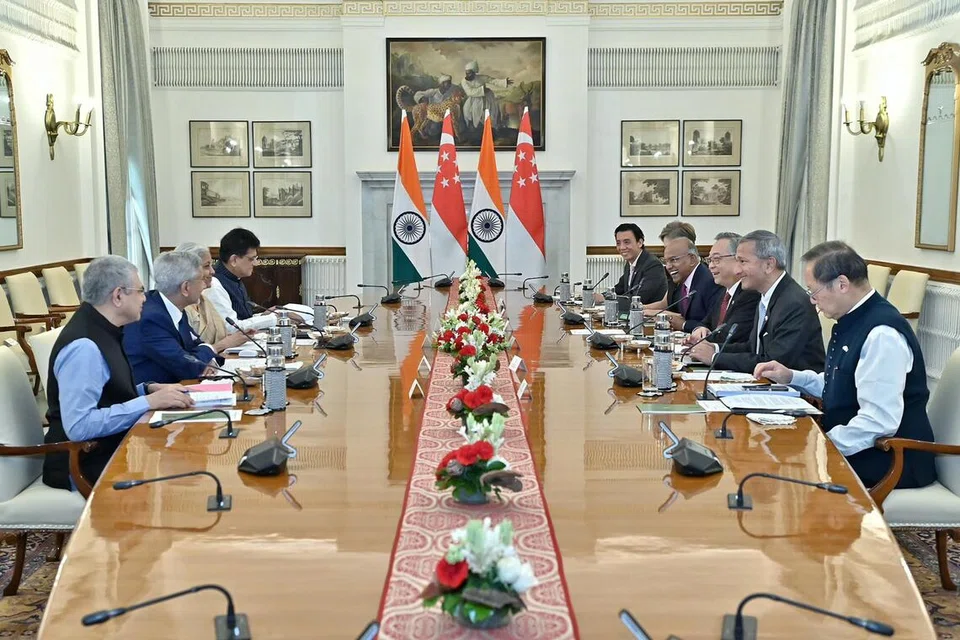
The 6 Pillars of Future Collaboration
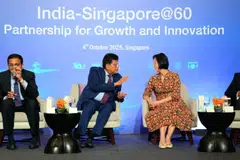
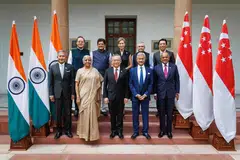
To take this economic engine further, both nations elevated their relationship to a Comprehensive Strategic Partnership (CSP), guided by the high-level India-Singapore Ministerial Roundtable (ISMR).
The roadmap establishes six core priorities aimed at addressing 21st-century global challenges:
- Digitalisation: Interlinking digital public infrastructure and cross-border fintech initiatives (e.g. PayNow-UPI).
- Skills Development: Building workforce talent for future-ready industries.
- Sustainability: Partnering on green technology, energy transition, and carbon credits.
- Healthcare & Medicine: Collaborating on medical research, pharmaceuticals, and nursing ecosystems.
- Advanced Manufacturing: Driving joint growth in semiconductors, electronics supply chains, and industrial technology.
- Connectivity: Enhancing maritime safety, logistics networks, and aviation trade routes between South and Southeast Asia.
As India looks toward its future, the strong partnership with Singapore stands as a powerful testament to how mutual respect and joint innovation can shape regional stability and growth.