
Every decade, a new techno-economic wave arrives and sends a familiar ripple of anxiety through the workforce. In the 1980s, it was factory automation replacing manual work. A decade later, it was the internet creating (and destroying) entire professions. While globalisation shifting jobs across borders caused much heartburn and anxiety in the 2000s.
More recently, we were all worried about e-commerce killing our Indian provision shops, fintech platforms putting money changers out of business and ride-hailing apps changing how many of our uncle taxi drivers once earned a living.
This time, it’s artificial intelligence (AI).
If you listen to conversations at dinner tables or in WhatsApp groups, you might think otherwise.
“I heard AI can replace lawyers.” “Marketing jobs will disappear.” “Even coders are not safe anymore!”
For the Indian community in Singapore – long defined by its emphasis on education, professional success and stability - this moment can feel unsettling. But it is precisely here that we need to flip the narrative. Because AI is not just a disruption. It is an invitation.
Rewriting the Dinner Table Conversation
Historically, Indian families have done well by spotting opportunity early – whether in education, migration, or entrepreneurship. The question now is: Will we approach AI with the same instinct – or retreat into caution?
Let’s be honest. In many Indian households, career conversations still revolve around a familiar shortlist: doctor, lawyer, engineer, maybe accountant or banker, at most.
AI is quietly rewriting that script. Today’s opportunity lies not just in traditional professions, but in how those professions evolve: The lawyer who uses AI to analyse cases faster, the marketer who uses AI to create smarter campaigns, the teacher who uses AI to personalise learning for students.
In other words, AI will not replace professionals. It will replace professionals who don’t use AI.
According to a recent McKinsey Global Institute (MGI) report, Agents, robots, and us: Skill partnerships in the age of AI, with current technologies such as AI and robotics, more than half (57 per cent) of work hours in the United States could be automated. This includes 44 per cent of work hours replaced by digital agents for non-physical work and 13 per cent by robots for physical work.
While this may sound alarming, MGI reminds us in the report that this is not a forecast of immediate job losses but a measure of “technical task potential”. That means the focus should move from automating entire jobs to automating tasks. This will change or shift what people do rather than eliminating the work itself.
Take the ATM example. The first machine was installed in 1967 at a Barclays Bank branch in North London, and from then until the 1990s, there was widespread speculation that ATMs would eliminate bank teller jobs.
On the contrary, the uptake of ATMs led to job transformation – tellers were trained in customer service and sales and became relationship managers and customer service associates. ATMs also lowered the operating cost of each branch, as fewer tellers were needed, so banks used the savings to expand the number of branches and hire more front-line staff.
The net result of automation: higher-level work and more jobs. AI stands to do the same, and we should be proactive to upskill before, and not after, our tasks are automated.
A Community That Lifts Together
Here’s where the Indian community can make a real difference.
First is to understand and educate on how AI would impact our jobs.
In its report, MGI argues that future work will see humans collaborate closely with AI agents and robots as colleagues. There will be considerable redesigning of work and organisational processes to integrate AI agents into most, if not all, aspects of the organisation.
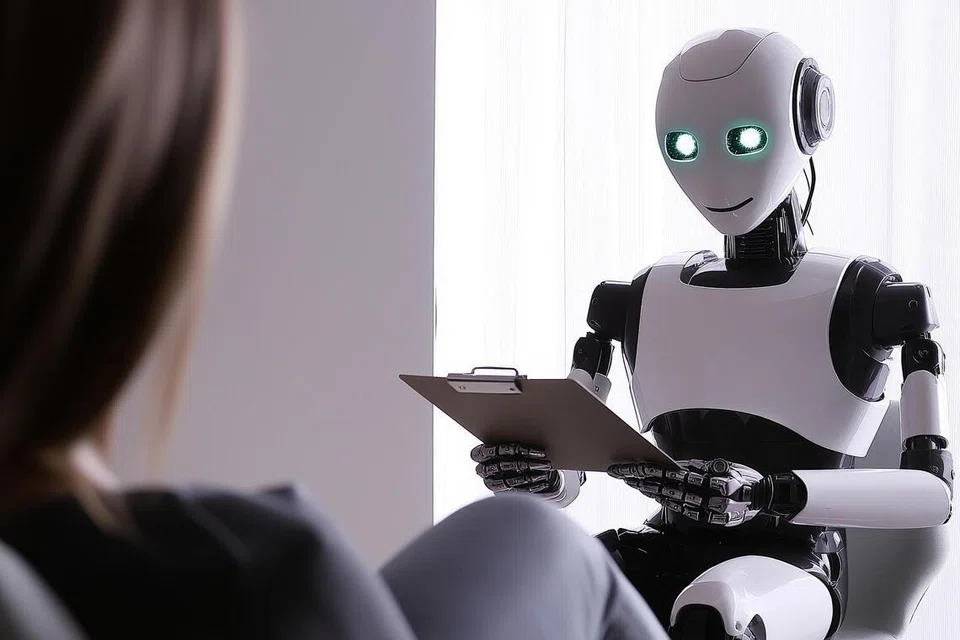
That means companies are not just going to tag on an AI tool to the organisation or job, it will be a part of the business, its work processes and organisational culture. Love it or hate it, you have a new colleague – and he is unlikely to pack a tiffin to work or have that afternoon chai break with you!
Understanding this is crucial to get to the second part, which is to get comfortable in learning and using AI tools. This has to go beyond the generative AI platforms many of us are now comfortable using to craft that social media post, write a wedding speech or plan a travel itinerary.
We need to be able to learn how to work with, train, leverage, and supervise AI agents.
That is why McKinsey states that the demand for skills like routine writing and basic research is declining and being replaced by a growing demand for AI-adjacent capabilities like process optimisation, validation, and AI supervision, to cater to the emergence of new kinds of work.
Third is to understand and correctly guide others, and then what skills they should be looking to hone. Ask any uncle in our families what career direction to take, and most would typically guide you to the hard sciences or technical skills. And you can’t blame them – these skills have led to strong employability and high salary prospects for decades.
For the most part, up to 70 per cent of the skills currently sought by employers are expected to remain relevant. However, they will be applied, assessed and measured differently. The cognitive abilities, which can’t be replaced by AI, would become more important and distinguish human from the digital agent.
Interpersonal skills like caring, coaching, negotiation, empathy will remain largely beyond the reach of AI. We therefore need to encourage the community to develop traits like critical thinking, problem solving, negotiation and conflict management. This emphasis has to start from our homes and dinner tables to community platforms.
How can we encourage dialogue and discussion over monologue and conflict? While we guide our children to undertake that computer science or engineering degree, encourage them to also read, write poetry, volunteer and help the less fortunate.
Like any Indian movie, the AI story has a twist too – that the best preparation for AI may not be in the classroom but in the skills you acquire in your everyday lives. And that embracing this technology may return us to our core human values.
Not a bad colleague to have then, is it?
Malminderjit Singh is the Founder and Director of Terra Corporate Affairs, a former journalist, and host of the On the Flipside podcast.