Driven by a passion to elevate Singapore’s arts landscape to new heights and explore uncharted dimensions, a new generation is actively pushing creative boundaries.
This year, the National Arts Council (NAC) Arts Scholarship brought together three highly promising artists who are leaving their distinct marks across completely different disciplines: music, literature, and computational technology. Having overcome challenges in their respective fields to explore new artistic possibilities, this trio has been awarded the prestigious scholarship to pursue their higher education.
Tamil Identity Resonating in Pop Music
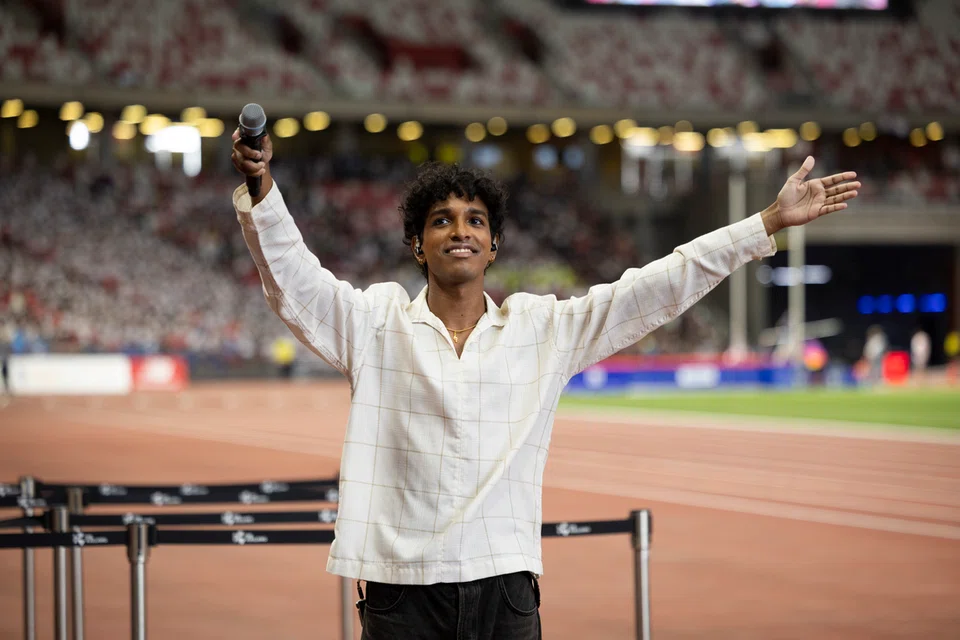
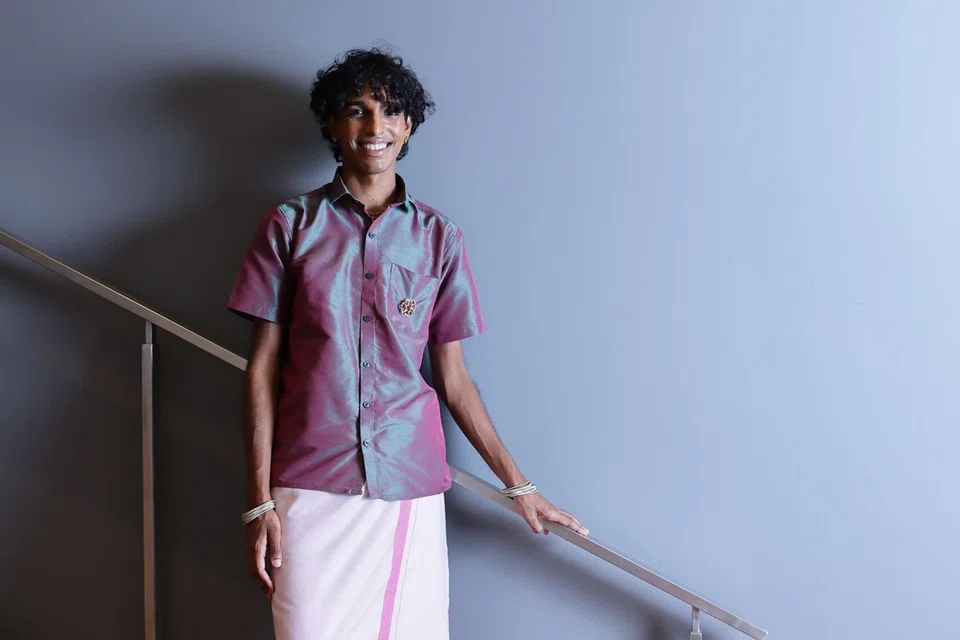
Thaarmin Thana Rajan discovered his love for music at age seven while listening to Tamil songs on family drives. Soon, playing instruments and dancing to Vasantham programmes became his daily after-school routine.
The 21-year-old has since graced massive stages including the National Day Parade (NDP), the Istana Open House, and the Esplanade’s Baybeats festival. Trained in Western classical opera, Thaarmin is now an emerging singer making a foray into pop music. With the support of the NAC-UAS Arts Scholarship, he will pursue a BA (Hons) in Music Business at LASALLE College of the Arts.
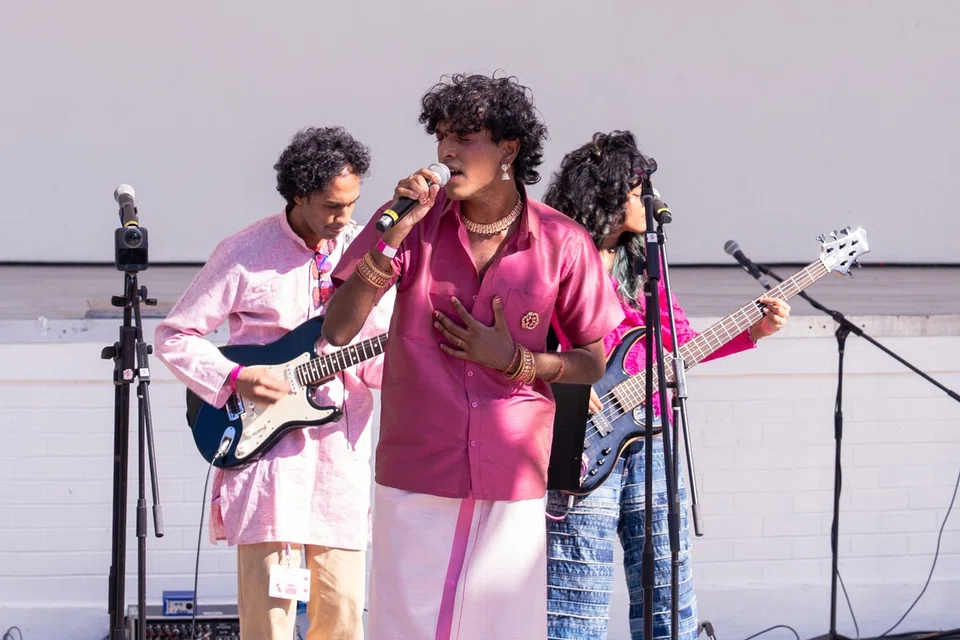
His musical journey evolved at 12 when he discovered a passion for songwriting. Receiving recording equipment for his 15th birthday, he produced his debut song, ‘Shaking’ in 2020, detailing his struggles with anxiety and depression.
“Singing on stage allows me to bring people from different backgrounds together. My main goal is for people to find comfort when they listen to my music,” Thaarmin said.
At National Junior College, he could not initially enroll in the music program as he was lacking formal certification. His unwavering passion prompted teachers to let him sit at the back of the class for two years just to learn. He eventually went on to take Music as an ‘A’ Level subject, mastering Western operatic vocals, violin, guitar, and piano on the side.
Thaarmin is among the few Tamil artists carving out a space in Singapore’s English music scene. As a Singaporean Tamil, he takes immense pride in firmly establishing his cultural identity within his craft.
“When I sing on stage, my name is written in Tamil in the background, and I try to blend my Indian cultural heritage into my outfits and makeup,” he said. “I want people to realise that Tamil artists can succeed in modern English music without ever forgetting their culture.”
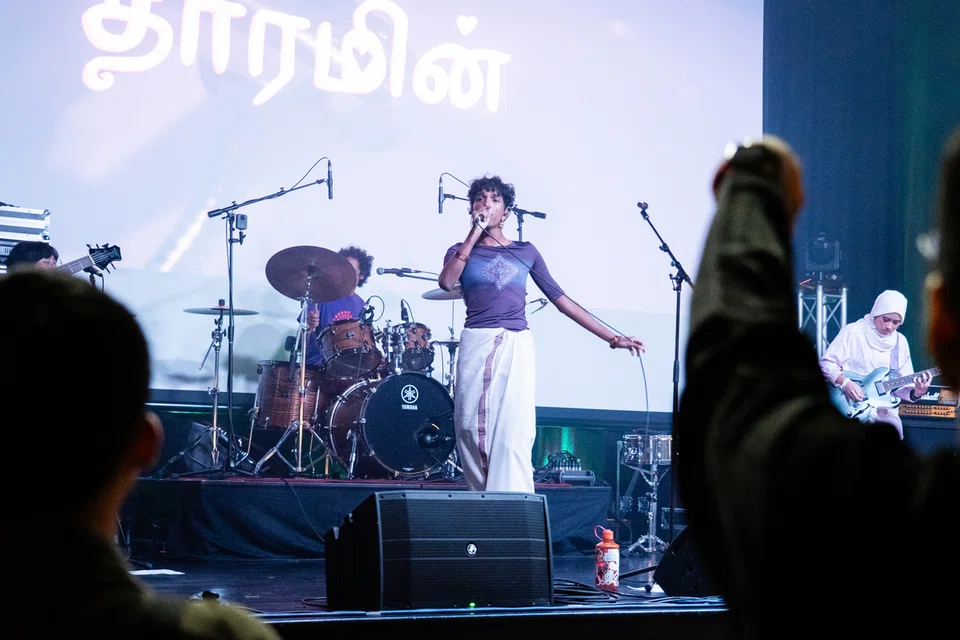
Performing at this year’s NDP was an unforgettable, full-circle moment for him, having watched the National Education show at the exact same stadium ten years prior.
Looking ahead, Thaarmin hopes to use his degree to improve local industry structures and foster deeper collaboration among artists. Driven by a desire to connect people through diverse stories, he dreams of touring internationally to share his music. His biggest dream, he said, is to make history one day as the first Indian artist to write an official National Day song.
Young Literary Talent Forging a New Path
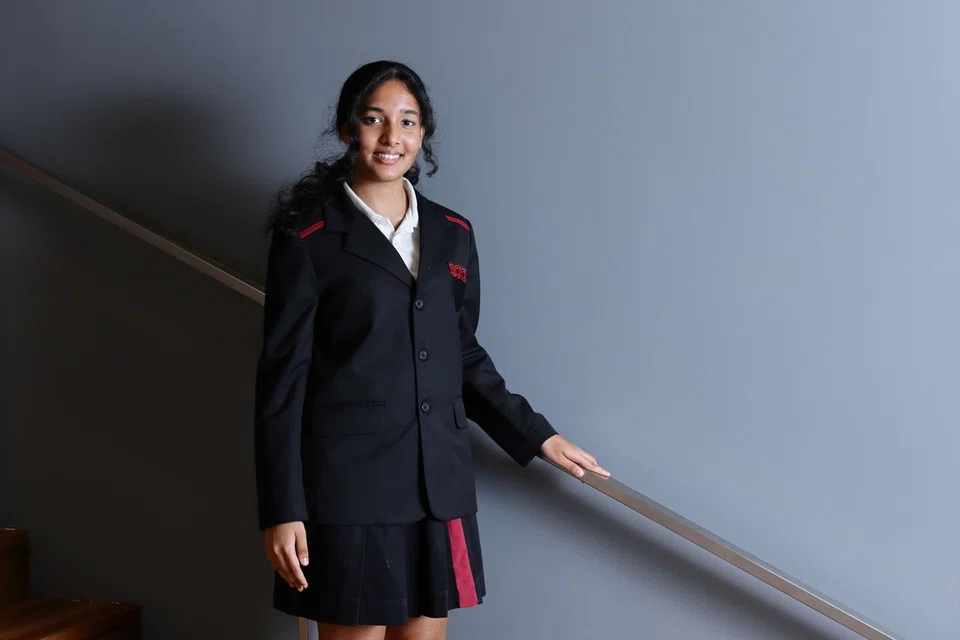
From a very young age, 17-year-old Priyanshi Mohanty possessed a unique passion for crafting and vividly expressing stories. Whether directing short films with her sister or staging elaborate puppet shows at home, her innate storytelling abilities shone early on.
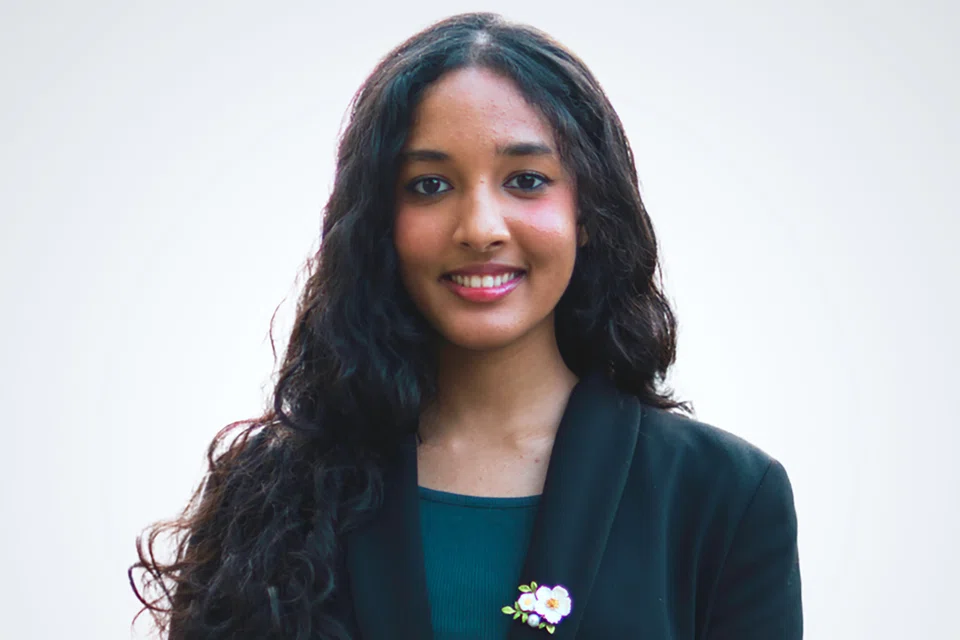
This Year 5 Literary Arts student at the School of the Arts (SOTA), Singapore, has become a recognised youth literary figure and NAC Arts Scholarship (Diploma) recipient.
In primary school, Priyanshi had a boundless love for English composition and enthusiastically wrote far beyond the required word count for examinations. Growing up reading fantasy series like Percy Jackson, she was captivated by how writers seamlessly wove character backgrounds and emotions into narratives. At SOTA, she expanded her reading repertoire significantly.
Emotional struggles within family dynamics take center stage in Priyanshi’s work, which often features character-driven navigations of culture. She meticulously documents the psychological tug-of-war between familial obligations and personal independence in South Asian culture. She is currently writing a manuscript set in Odisha, India, about an older woman struggling to adopt a child after a miscarriage. Her process involves rigorous research into the location’s history and lifestyle.
Beyond schoolwork, Priyanshi is actively engaged in the broader literary scene. Serving as a youth curator and moderator at the Singapore Writers Festival and a panellist at the Asian Festival for Children’s Content, she learned the vital importance of understanding audiences and asking the right questions.
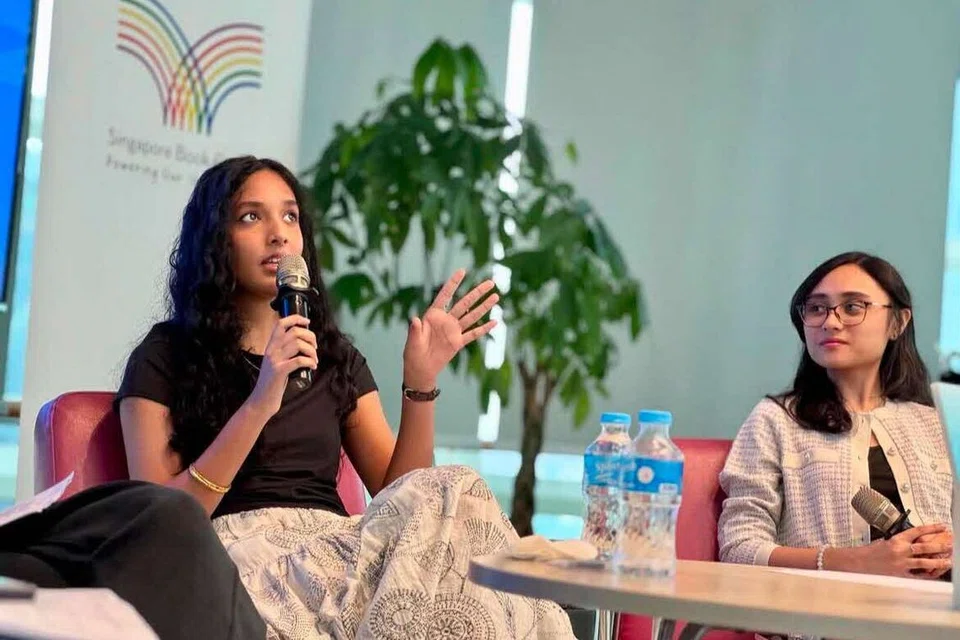
Her artistic journey is heavily bolstered by her parents’ encouragement, and she frequently brainstorms narrative structures with her mother, an avid film watcher.
Noting that the scholarship provides incredible opportunities to form deeper connections, Priyanshi hopes to contribute to more collaborative practices in the local arts scene.
“When readers engage with my work, I want them to question the world around them. My writing should offer them new perspectives and experiences they haven’t encountered before,” she said.
Where Art Meets Computational Technology
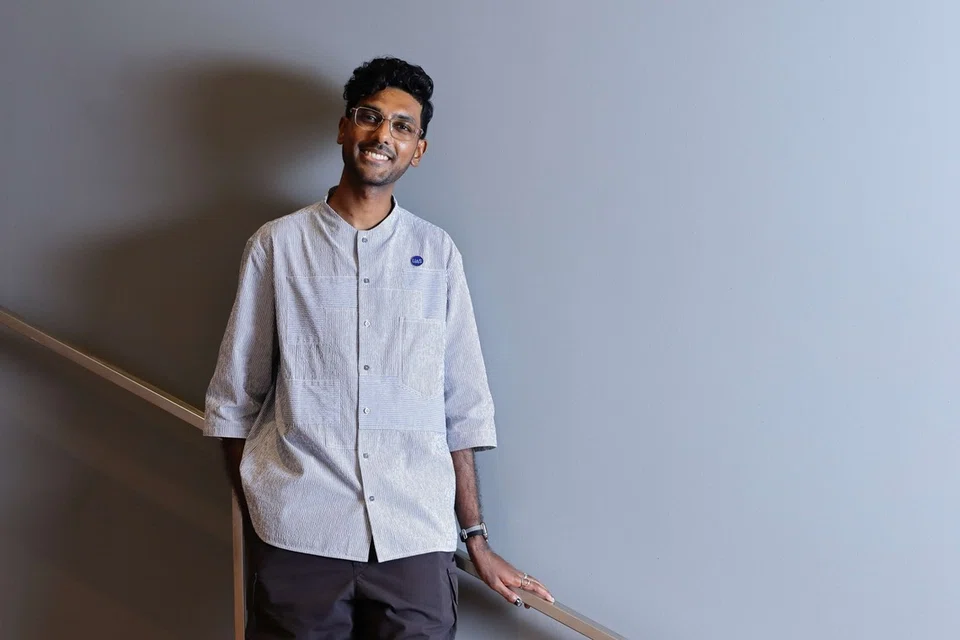
In an era shaped by computational technology and artificial intelligence (AI), 34-year-old media artist Kapilan Naidu views these tools not merely as utilities, but as mediums to forge artworks.
As a creative technologist, Kapilan innovatively merges machine learning with interactive media art. In recognition of his talent, he was awarded the NAC-UAS Arts Scholarship to pursue a Master of Arts in Fine Arts at LASALLE College of the Arts.
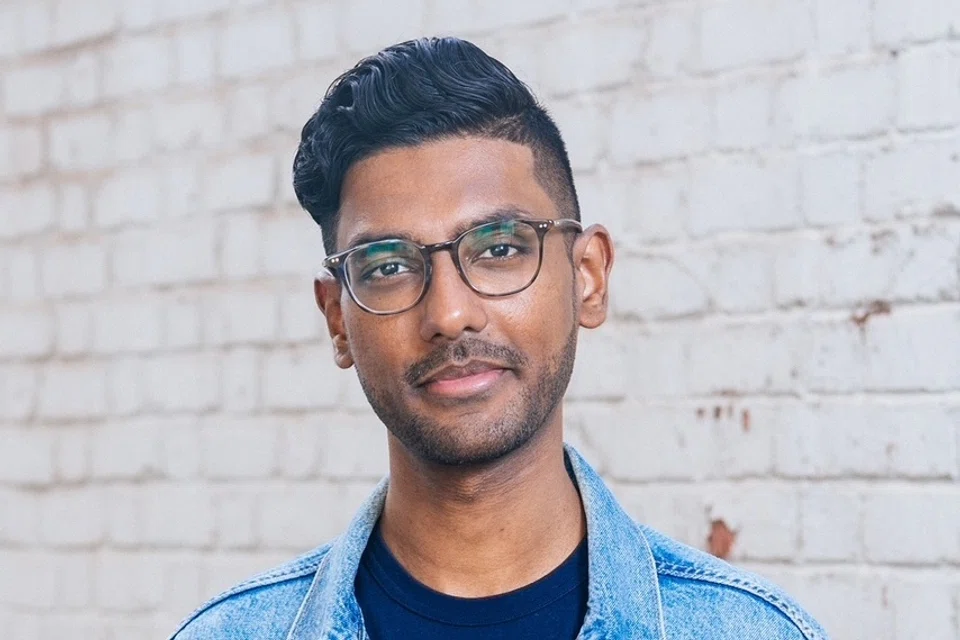
Deeply involved in art and music since childhood, Kapilan began freelance design projects at 15. The transition to broadband internet in the early 2000s sparked a profound fascination with computers, particularly interactive online games where player choices dictated narrative flow.
While studying Visual Communication at Nanyang Technological University, he pivoted from traditional print design to interactive, screen-based media.
“Understanding how technology works has always been fascinating to me. My main quest became figuring out how to use it for artistic expression and how to deeply engage audiences,” he said.
After years in advertising, a 2024 tech-sector retrenchment served as a major turning point, pushing him to transition into a full-time artist.
Amid criticisms surrounding AI-generated art, Kapilan holds a principled stance. “I strongly disagree with typing a few sentences and claiming the computer-generated image as my own artwork. There is no individual creativity in that,” he said.
Viewing AI models trained on other artists’ works without permission as unacceptable, he instead generates his own datasets and adheres strictly to technological ethics. To minimise environmental impact, he deliberately avoids massive overseas data centres, running AI processes locally.
A hallmark of Kapilan’s practice is transforming the audience into an active component of the artwork itself. He establishes foundational rules, and the computer completes the artwork based on audience decisions, exploring how computational systems shape collective experience.
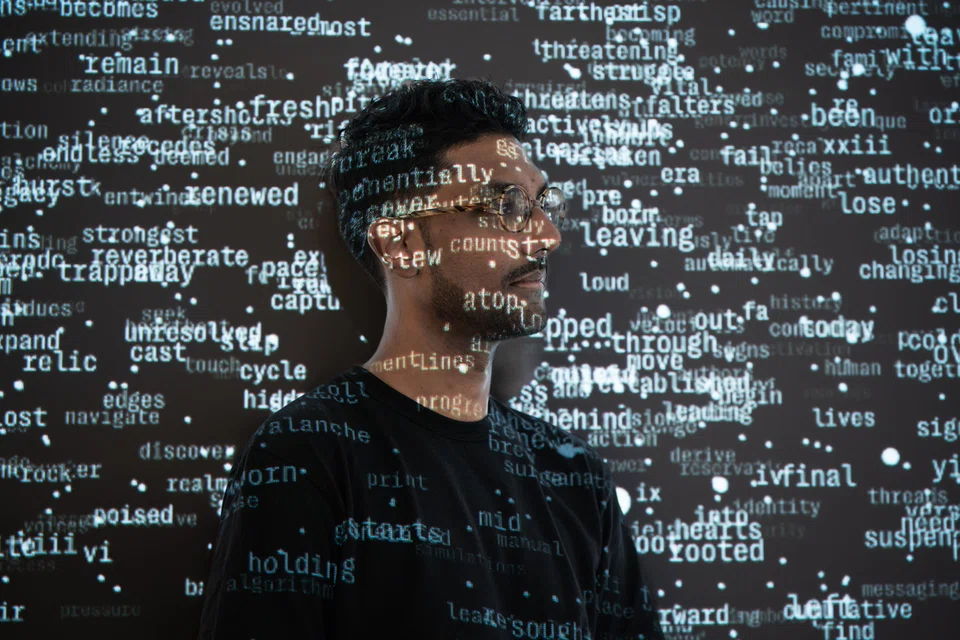
The scholarship provides the freedom to focus entirely on his research and practice without financial worries, Kapilan said. Currently an adjunct lecturer at LASALLE and NTU, he considers passing down tech-based artistic knowledge a crucial responsibility. To provide platforms for local artists, he also regularly curates exhibitions through his collective, ‘jo+kapi’.
At the heart of his artistic journey is a clear, driving mission: to make technology-based art highly accessible and, in turn, forging a more connected and inclusive arts ecosystem in Singapore.