
The Singapore alumni community of the Indian Institutes of Management (IIMs) opened its annual quiz competition to students and alumni beyond the IIM network for the first time on Aug 29, to build what co-organisers Rahul Phondke and Rajat Kashyap hope will become a “marquee quizzing event” in Singapore.
The contest began in 2019 as an internal competition among India’s IIM business schools under the Pan IIM banner. But with Singapore lacking what Mr Phondke described as a “professional quizzing scene”, the organisers decided to broaden participation.
Alumni clubs of international universities were invited to participate alongside students and alumni of Singapore-based institutions.
For Mr Kashyap, the more difficult task was “convincing a university quiz society that an event run by an Indian business-school alumni association was genuinely for them”.
Much of the organising was handled by volunteers outside their working hours.
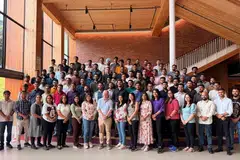
The competition attracted 180 participants, comprising 16 teams of four and 21 individual entrants, as well as an audience of around 160.
Teams represented Singapore institutions including NUS, NTU, SMU and St Joseph’s Institution, alongside 14 Indian institutions, including IIM Calcutta, IIM Bangalore, IIT Kharagpur, and the Indian School of Business.
The top three teams from the written round advanced automatically to the final. They were joined by a wildcard fourth team comprising the highest-scoring individual entrants. The format was designed to give quizzers from institutions without a large local alumni base a fair chance to compete.
The written round covered eight themed categories, including American sports, art and literature, East and Southeast Asia, music and movies, and history and geography. The leading teams then faced off in a live final onstage.
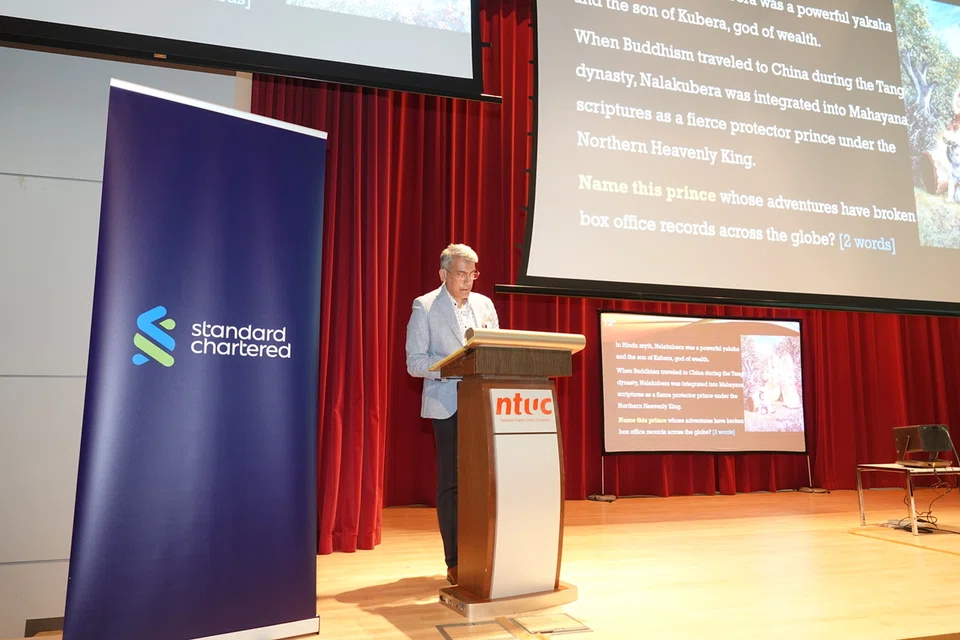
Quizmaster Rajeev Rai, who travelled from India for the event, was briefed to avoid questions that favoured any particular nationality.
“If a question could only be answered by someone who grew up in a particular country, it did not make the cut,” Mr Kashyap said.
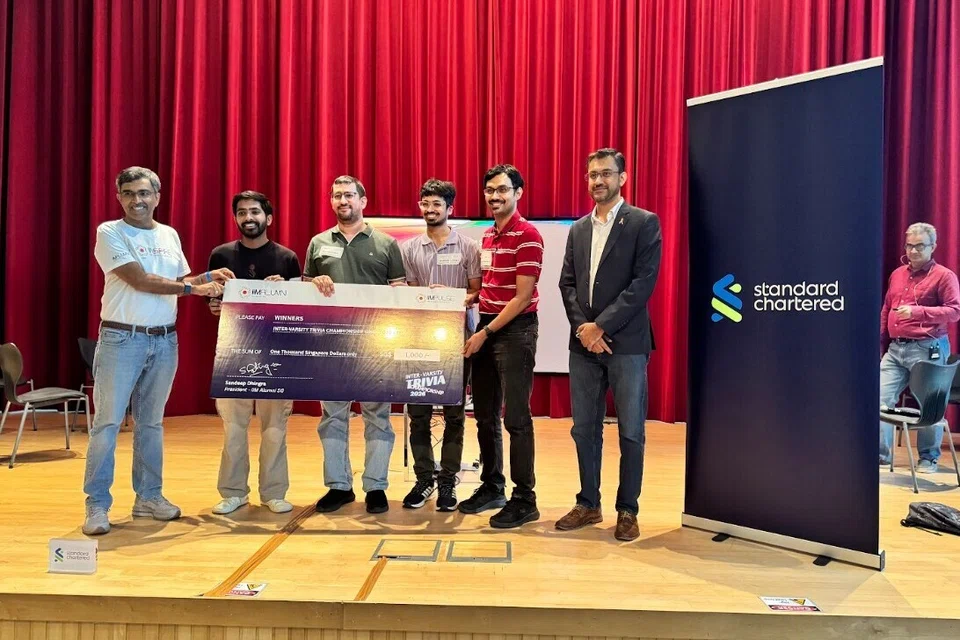
In the final, NTU defeated IIM Bangalore, which organisers said had dominated previous editions. It was also the first time the NTU team had competed together.
Mr Rai, who has conducted more than 100 quizzes over two decades, described the event as one of his most satisfying, citing the quality of the answers and the engagement of the audience.
Beyond the competition itself, organisers said the event helped strengthen ties among institutions in a city with little tradition of inter-university competition.
“The number of interactions in the lead up to the event brought us closer to local universities and alumni associations,” Mr Kashyap said.
Mr Phondke described the format as a leveller, noting that neither seniority nor age offered participants any particular advantage.
Both organisers expect the competition to become an annual fixture, with plans to expand international participation, double the number of teams, and eventually introduce a corporate edition.
Longer-term ambitions include regional qualifying rounds across Southeast Asia, professional broadcast coverage and a permanent trophy, which would reduce the event’s reliance on annual sponsorship. Mr Phondke also suggested extending the competition to the school level to introduce students to quizzing at an earlier age.