Singaporean artist and architect Lakshmi Mohanbabu has achieved what few in the world have imagined.
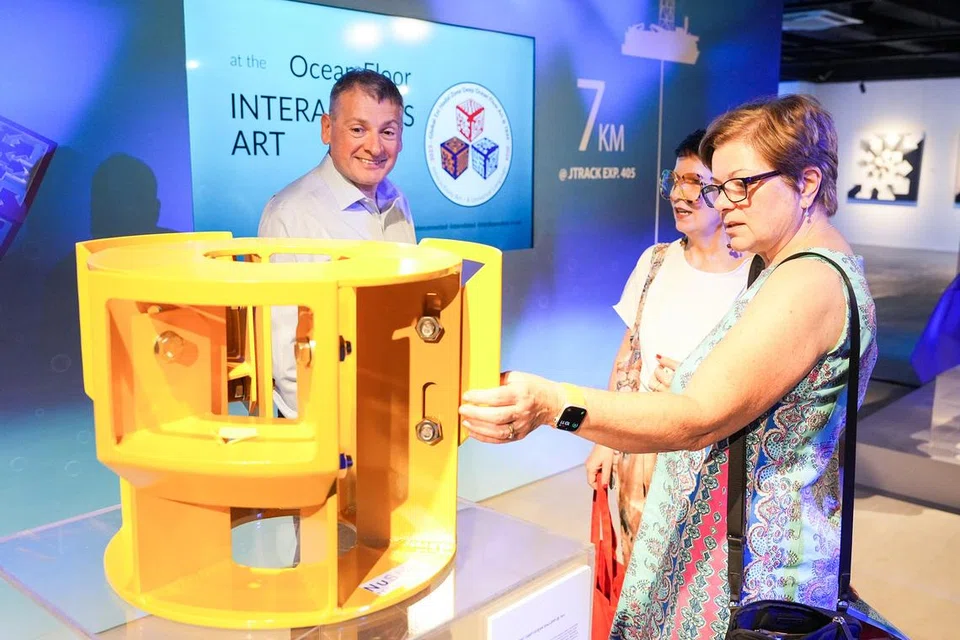
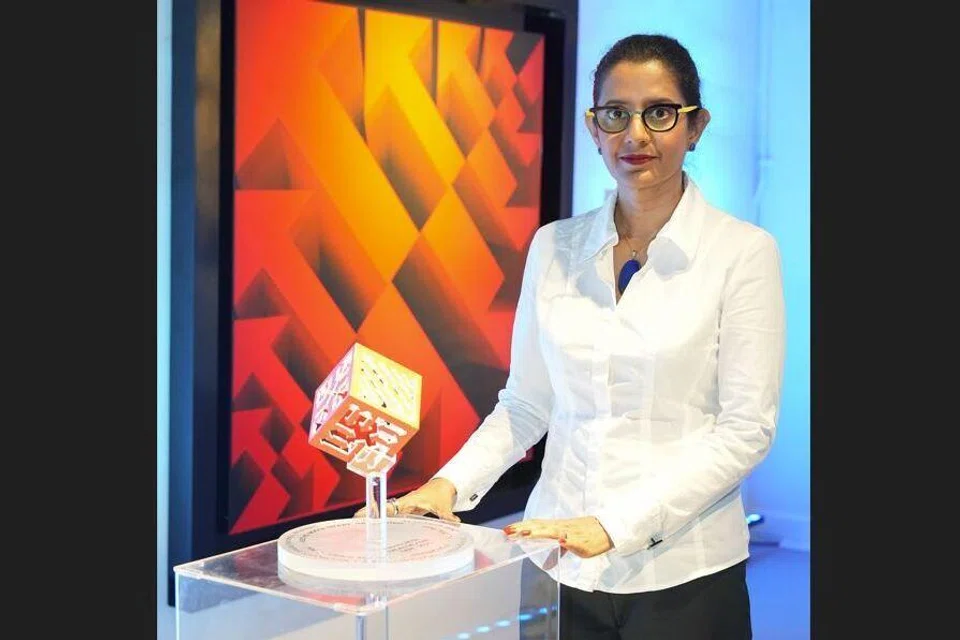
Her latest creation, a set of stainless steel cubes titled Deep Ocean Interactions, has been installed a staggering 7,192 metres below sea level, near the Mariana Trench in the Pacific Ocean.
Deployed on December 12, 2024, the art installation marks the deepest underwater art placement in human history.
With this, Singapore becomes the first nation to have artistic works both orbiting in space and submerged in the planet’s deepest ocean zones.
The milestone is not just an artistic triumph, but a powerful collaboration between science, engineering and culture.
The project was executed in partnership with Singapore’s NuStar Technologies, Japan’s JAMSTEC (Japan Agency for Marine-Earth Science and Technology), and researchers from Nanyang Technological University (NTU).
Together, they integrated the artwork into the Long-Term Borehole Monitoring System (LTBMS), a seismic observation system that improves early warning for undersea earthquakes and tsunamis.
Each cube measures 10cm per side and features Ms Lakshmi’s “Universal Language of Symbols”, an artistic expression of nine universal elements – Creation, Lifecycles, Colour, Shape, Movement, Direction, Energy, Space and Time.
The installation is a part of her broader Interactions series, a long-running project that seeks to connect humanity through shared existential themes.
“This isn’t just about placing art in extreme environments. It’s about shared journeys, shared purpose, and a universal story,” said Ms Lakshmi. “The symbols on the cubes aren’t owned by any culture – they’re for all of us.”
Of the three cubes, one was crafted using cutting-edge 3D printing technology developed at NTU’s Singapore Centre for 3D Printing.
The LAPIS (Laser Patterning and Incorporation of Sheets) method allowed researchers to fuse 80 ultra-thin stainless steel layers into a single cube with walls just 4mm thick – 70 per cent stronger than conventional steel and capable of withstanding crushing deep-sea pressure.
Assistant Professor Lai Changquan, who led the NTU team, noted the broader potential of the technology, especially in high-performance industries like aerospace and marine engineering. A startup has already been formed to commercialise the innovation.
“This is the third time I’ve collaborated with NTU,” said Ms Lakshmi. “We always set out to blur the lines between art and science – to do something the world hasn’t seen.”
Born in Thiruvananthapuram, India, and trained in architecture and fashion, Ms Lakshmi has spent decades working across India and Singapore, combining design, technology and philosophy in her art.
Her previous achievements include sending miniatures of the same symbolic artwork to the International Space Station in 2022 as part of the Moon Gallery initiative.
And she’s not done yet.
The same five designs that have now reached both space and the deep ocean will be launched to the Moon in 2025, making Ms Lakshmi the only artist with work on Earth, in orbit, under the ocean and – soon – on the Moon.
But her vision doesn’t stop with far-off extremes. She’s already planning to bring this universal language of symbols to global cities in forms that resonate locally – like chocolate-toned installations in Switzerland, or glass-inspired structures in the Czech Republic.
“Some people ask why I’d place art somewhere humans can’t reach,” said Ms Lakshmi. “But it’s about the story. Just like the Mona Lisa is known worldwide despite few seeing it in person, these artworks are about connection – not location.”
The feat has drawn praise from leaders in both art and science. NuStar managing director Goi Kim Kok called it a “landmark fusion of culture and innovation,” noting the special significance ahead of the 60th anniversary of Singapore-Japan diplomatic relations.
Singapore’s SG60 celebrations this year underscore the country’s transformation into a global hub for innovation and imagination. For Ms Lakshmi, her project is a reflection of that spirit.
“Singapore is my home now. It’s where different minds, cultures, and disciplines come together,” she said. “This project is about what’s possible when we dream beyond limits.”