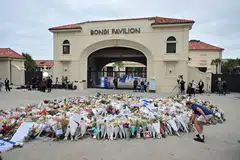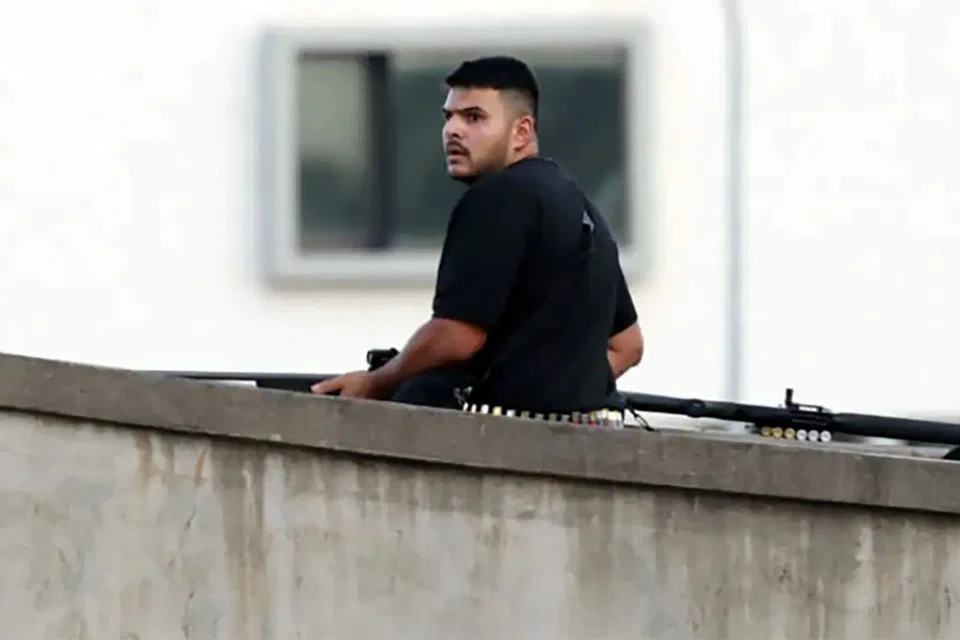

Naveed Akram, the surviving suspect in the Dec 14 mass shooting at Bondi Beach in Sydney, Australia, has been formally charged with 59 offences, including 15 counts of murder and one of committing a terrorist act, New South Wales Police said.
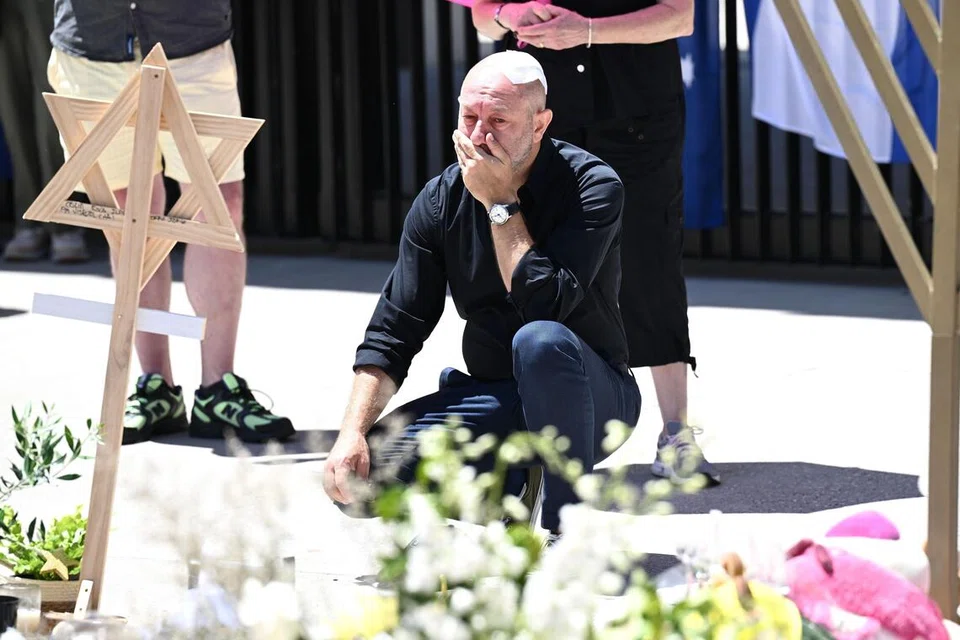
The attack, which targeted Australia’s Jewish community during a Hanukkah celebration, left 15 people dead and dozens injured, making it the country’s deadliest shooting in nearly three decades, reported the BBC.
Akram, 24, was seriously wounded during the incident and faced his first court hearing from his hospital bed, according to the New South Wales local court.
The case has been adjourned until April 2026, giving prosecutors time to prepare their evidence.
Police Commissioner Mal Lanyon confirmed investigators are waiting for Akram’s medication to wear off before formally interviewing him, stressing the need for him to be fully alert to understand legal proceedings.
In the deadly confrontation near Bondi Beach, Akram’s father Sajid Akram, 50, was killed by police after an exchange of gunfire at the scene.
Authorities allege the pair carried out the attack together, and have classified it as a terrorist act inspired by Islamic State (IS) ideology, a claim supported by Prime Minister Anthony Albanese.
Alongside the murder and terrorist charges, Akram faces 40 counts of causing grievous bodily harm with intent to murder, and a charge related to displaying a prohibited terrorist organisation symbol in public.
Police say the evidence compiled so far indicates a premeditated attack driven by extremist motives.
As of Dec 17, medical officials noted that 17 people remain hospitalised following the shooting, with one in critical condition and four others seriously injured but stable.
Authorities have released limited details about Akram’s motives, but officials and commentators have increasingly labelled the attack a terrorist incident, given its targeting of a religious minority and links to violent extremist ideology.
The case has also prompted scrutiny of past interactions between Akram and Australian security agencies, reported The Guardian.
In 2019, when Akram was a teenager, the Australian Security Intelligence Organisation (ASIO) investigated him for alleged extremist associations, Prime Minister Albanese confirmed.
That inquiry, which lasted about six months, ultimately concluded there was no indication of a threat or potential for violence, a finding now likely to be re-examined by investigators.
Despite the earlier inquiry, neither Akram nor his father had previously attracted significant enforcement action.
The fact that Sajid held a firearms licence as recently as 2023 and legally acquired six guns over two years – while living with his son – has raised questions about whether warning signs were missed.
Police have also disclosed that the father and son travelled to the Philippines in November, returning just weeks before the attack.
Immigration authorities said they were in the country from Nov 1 to Nov 28, arriving in Davao, near regions associated with insurgent activity.
While the purpose of the trip remains unclear, investigators are probing whether it had any bearing on the attack.
Akram returned from the Philippines and soon told his employer he had injured his wrist and would be off work until 2026. He requested annual leave and entitlements to be paid out, though it is not known how those funds were used in the weeks before the shooting.
Former colleagues described Akram as a quiet, hard-working bricklayer who “kept to himself,” with few social connections outside his immediate family.
He grew up in Sydney’s west, where in 2019, as a 17-year-old, he was briefly involved in Islamic missionary work before starting a vocational apprenticeship as a bricklayer – his only full-time job.
Police believe both father and son lived together in a tidy house in Bonnyrigg, a normally quiet suburb.
After the attack, police searched the property following reports that members of the household did not respond to calls to exit with their hands raised.
Naveed’s mother and two others were escorted from the home; none have been accused of wrongdoing.
Neighbours said they knew little about the family, describing them as private.
Sajid, originally from Hyderabad, India, arrived in Australia in 1998 on a student visa and later became a permanent resident, reported Reuters.
Indian police said his family in Telangana was unaware of any radicalisation or extremist behaviour. Sajid had returned to India only six times in 27 years and did not attend his own father’s funeral.
Telangana authorities noted “no adverse record” on Sajid before he left India and said there was no apparent local influence on the factors that may have led to the attack.