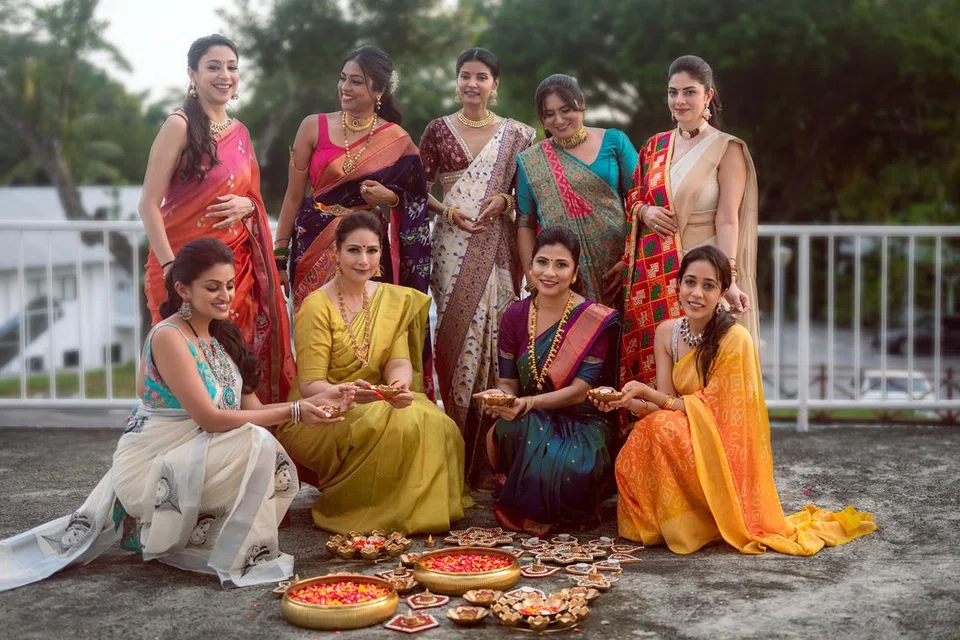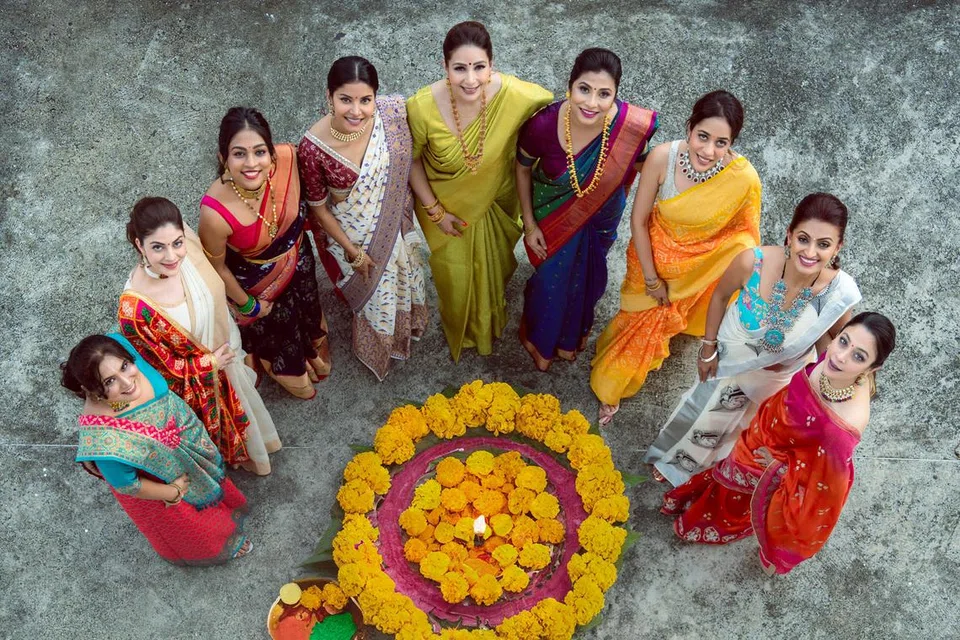
Deepavali showcases both the festival of lights and the enduring grace of the saree – a garment loved by Indian communities across the globe, including in Singapore.
It brings together people of all backgrounds, especially women who love to wear the saree, which has become a symbol of cultural pride.
India has a diverse range of regional weaves, some of which are featured here by nine women from different professions and states. All live in Singapore and love the traditional nine-yard.
Some have personal connections to the state their saree hails from, while others have a lovely story attached to it. Others wear the weave simply because they admire the artistry.
Whether it’s the bold Patola, the ethereal Chanderi or the earthy Kasavu, the varieties are remarkable.
“The Paithani I am wearing comes from Maharashtra, and holds a special place in my heart, as it was the first purchase of my wedding trousseau,” said Ms Deepali Satpute, a marketing lead who came up with the concept and styling for the photoshoot.
“The Paithani is known for its intricate designs, often featuring peacocks and floral motifs woven into vibrant silk. Historically, it was a symbol of royalty, crafted with gold and silver threads, and remains a timeless example of textile brilliance.”
Each Indian saree is far more than a beautiful piece of fabric; it reflects the craftsmanship unique to its origin, from the lustrous silks of the South to the meticulously crafted handlooms of the East.
Each one also embodies the dedication of artisans who create such masterpieces day after day, keeping alive a craft passed down generations.
“Wearing a Kerala kasavu saree for Deepavali in Singapore can have several layers of significance, both cultural and personal,” said make-up artiste Gayathri Menon. “It can be a way to celebrate one’s roots and showcase the beauty of South Indian traditions in a multicultural setting.
“The Kerala outfit is all about understated grace. It is also light and airy, aligning with Singapore’s tropical climate.”
The saree is one of the oldest garments in the world, with its origins tracing back over 5,000 years. This iconic piece of clothing has survived the ages and continues to adapt to modern styles while retaining its cultural significance.
“Phulkari is a vibrant and rich textile tradition from Punjab, embodying both artistry and cultural heritage,” said Ms Sandeepa Arora Nair, who runs an Indian wear boutique. “Its intricate floral patterns, typically embroidered on fabrics such as dupatta, saree and lehenga, reflect the region’s love for colour and design.
“Each piece tells a story, showcasing traditional motifs and craftsmanship. Phulkari is not just about fashion; it’s a celebration of life and festivals, like Deepavali.”
Deepavali is the perfect time to showcase India’s extraordinary saree heritage, said Ms Geeta Balagangadharan, a business strategy and talent development consultant who has been wearing sarees since her teens and has a huge collection.
“Over the years, I have learnt a lot about the intricate weaves, their rich histories and unique characteristics,” she said.
“I’ve officially turned the map of India into my personal shopping guide – to help create a ‘must-have’ on my saree wish list. For someone who rarely wore Indian attire, let alone a saree, I must admit, I never miss an opportunity to drape one now.
“What was once a school uniform has now become a personal expression of heritage, identity and an everlasting respect for the hands and hearts that create them.”