Mahatma Gandhi’s words, “There are people in the world so hungry that God cannot appear to them except in the form of bread”, signify an era that began well before India’s independence, but, unfortunately, survived well into the 1960s.
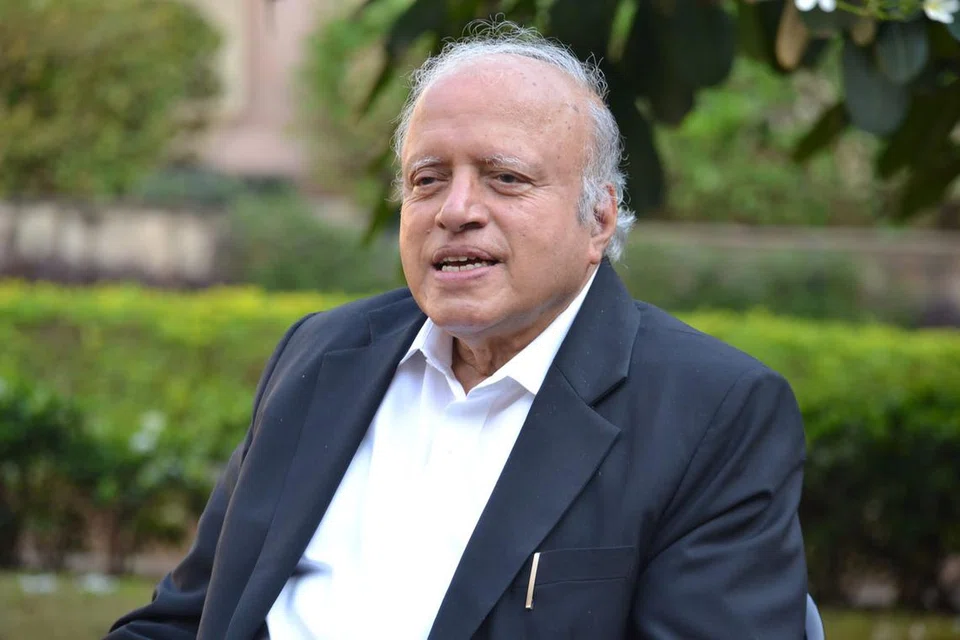
In that era of famines and food shortages appeared Mankombu Sambasivan Swaminathan –the agronomist, agricultural scientist and plant geneticist, whose ability to optimise crop productivity helped produce India’s Green Revolution.
Professor M.S. Swaminathan was not God but the revolution he created brought material salvation right into the homes of the poor and hungry.
When he died in Chennai at the end of last month, aged 98, Prof Swaminathan left the world indebted to the role of singular scientists in changing the destiny of humans, nations and states by moving mortals beyond fatalism to hope through the rational and ethical control of nature.
The Green Revolution saw grain production soar: Wheat yields increased from 800kg per ha in the 1960s to more than 2,800kg per ha by the early 2000s. Rice yields grew at a similar pace.
But in his later years, Prof Swaminathan was not contended with the term Green Revolution, preferring Evergreen Revolution, one which would be ecologically viable by avoiding dependence on the chemical fertilisers and pesticides required by the Green Revolution. It would focus on sustainable farming and on native plant varieties that would suit resource-poor farmers in India and other developing countries.
This was the whole point of Prof Swaminathan’s efforts: to indigenise science in the service of agriculture.
He was a close associate of the Nobel laureate Norman Borlaug, an American geneticist and plant pathologist whose work in Mexico produced spectacular successes in finding high-yielding and disease-resistant wheat.
Mr Borlaug’s mission was to provide breathing space in the war against hunger and deprivation in order to deal with global population growth. Prof Swaminathan used such scientific advances made elsewhere to seek a specific answer to India’s own problems with low agricultural productivity amid a population explosion.
Science is universal but geography is not. The topographical identity of India demanded scientific solutions that were related to the nature of the soil, rainfall patterns and the countervailing agency of irrigation.
Prof Swaminathan’s success in India, and India’s success because of him, led to an American publication acclaiming him as one of the 20 most influential Asians of the 20th century and one of the only three from India, the other two being Mahatma Gandhi and Rabindranath Tagore.
The United Nations Environment Programme described him as the Father of Economic Ecology.
His life-work lives on in the M.S. Swaminathan Research Foundation. He founded it in 1988 as a not-for-profit trust with proceeds from the first World Food Prize he received in 1987.
The foundation aims to accelerate the use of modern science and technology for agricultural and rural development to improve the lives and livelihoods of communities.
It follows a pro-poor, pro-women and pro-nature approach and applies appropriate science and technology options to address practical problems faced by rural populations in agriculture, food and nutrition. The foundation benefits 550,00 households and 250,00 fisheries in 4,000 villages across 14 Indian states, and its influence is seen in 18 countries.
Prof Swaminathan’s legacy continues the tradition of Mr Borlaug’s work in Mexico, which led to revolutionary yields produced by new wheat in India and Pakistan and to its fruitful adoption in several Latin American, West Asian and African countries.
The Green Revolution played a crucial role as well in determining the global space occupied by India. In the 1960s, the country had come to depend on food aid brought in by ships, which led Prof Swaminathan to bemoan India’s “ship-to-mouth existence”.
Such existence exacted a price in both economic and diplomatic terms. A case in point is the PL-480, a law passed by the United States Congress under which America shipped billions of dollars in foodgrains to India against rupee payments.
The rupee-priced imports did help to feed the Indian people, but only because they also helped the US to profitably dispose of farm surpluses generated by price supports. American shippers did booming business, since half of all PL-480 shipments had to be carried on American vessels.
In 1971, India decided to cancel all grain imports from the US even before the expiry of the existing PL-480 agreement. The move demonstrated Indian resolve to not succumb to American pressure over India’s support for the liberation movement in East Pakistan that led to the birth of Bangladesh, and for daring to upgrade its diplomatic representation in North Vietnam to the embassy level – a move that would endear India to the unified Vietnam which would appear within the decade.
It is difficult to see how India could have acted so boldly on the foreign front without the degree of agricultural sufficiency produced by the Green Revolution.
Today, India does not depend on ship-to-mouth imports. Instead, it exports wheat and rice across the world. India’s agricultural coming of age underpins its global presence.
This is not to say that every Indian enjoys equitable access to food. That would have been beloved Prof Swaminathan’s dream. However, he would still be happy that his country has escapedcome so far from its ship-to-mouth existence.
God did appear in the form of bread.
Asad Latif is an editorial writer for The Straits Times