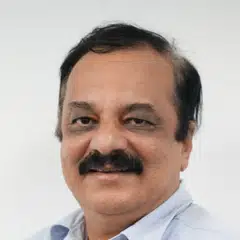
While visiting Sri Lanka with a charitable organisation in 2009, towards the end of the civil war there, Singaporean Kalaivani Subramaniam noticed how the decades-old conflict had adversely affected the education of children in the predominantly Tamil-speaking north.
Teenagers did not have access to quality books and lagged behind their peers elsewhere in learning.
Books donated to them were not always suitable for their education.
“People often passed on books that they did not want to keep,” said Ms Subramaniam, 40, who teaches English language and literature at secondary school level. “For instance, books by Shakespeare were donated, which did not help the children develop elementary language skills.”
She also observed that there was a lack of English teachers, especially at primary and secondary school levels.
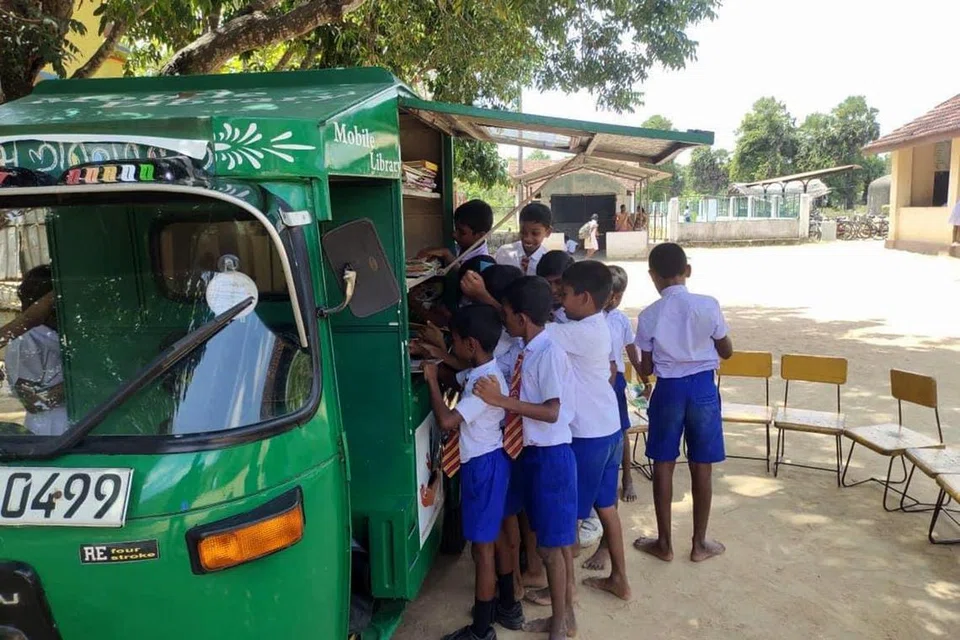
So Ms Subramaniam, who was then a political science student, decided to set up a mobile library, a modified autorickshaw carrying books for children in Kilinochchi, a town in the north of Sri Lanka.
She made a sketch of what she wanted the autorickshaw library to look like and passed it to a designer in India who made a prototype.
“It then took more than a year to convert the autorickshaw into a mobile library at a workshop in Kilinochchi, Sri Lanka, and it cost $18,000,” she said. “Donations from my friends and family helped me pay for it.”
Devaartz, an Indian sticker printing company, made the artwork for the mobile library at a very low cost once they realised it was for rural school children in Sri Lanka, she said.
“I carried the huge signboard rolls to Sri Lanka. Many people were very kind in playing their part in their own way,” she said.
After searching for suitable books, she chanced upon Thulika, a publisher of English and Tamil books.
“Its books are simply written and appropriate for basic learners,” she said. “They also have meaningful themes, such as bravery, loss and disability.”
Ms Subramaniam said Kilinochchi’s zonal education director was initially sceptical of her initiative. But she persisted.
“I was determined to carry out my work,” she said. “After three days, he relented.”
Starting in March 2018, the autorickshaw library has been visiting two rural schools a day in the Kilinochchi area, making its way through lumpy, pot-holed roads.
The books, which can be read within an hour, reach more than 3,000 children a month.
Ms Subramaniam spends $300 a month to run the mobile library.
“We have received favourable responses and requests from school principals to continue the project,” said Ms Subramaniam, who has a 10-year-old child.
Though the project came to a halt because of the Covid-19 pandemic and the economic crisis that hit Sri Lanka, it has resumed this year.
Ms Subramaniam hopes to add two more such mobile libraries soon.
“We don’t have to be millionaires to do such social service,” she said. “Simple solutions like this can go a long way in lifting the needy.”