
RAVI SINGARAM
Feb 15, 1942, marked the beginning of a dark chapter in Singapore’s history.
The resistance of the British Army ended and the Japanese embarked on a reign of terror throughout the land, once considered an “impregnable fortress”. Several died in fierce defence.
Singapore is now a first world country, but even as citizens thrive in peace, the sacrifices of their forefathers cannot be ignored.
In line with that notion, the National Heritage Board (NHB) has come up with a series of exhibitions and theatrical experiences that will allow Singaporeans to relive the battles fought.
Titled Battle for Singapore, the series will run from Saturday to March 3.
Mr Letchmenon Mariappan, 83, was two years old when Singapore fell to the Japanese. His father, who had been serving in the British Police since 1923, was among the first to be rounded up for interrogation.
“My father knew they would look for him, so before that, he sent my mother and my sister to our hometown in Malacca,” recalled Mr Letchmenon. “Luckily, they let him go and, in fact, employed him in the police.”
As a result, Mr Letchmenon’s family was moved to different police barracks – from Hill Street to Beach Road to Thomson, according to their father’s postings.
“We were very lucky. While many others were tortured by the Japanese and suffered from malnutrition, we were given food. The Japanese were very kind to us and many other Indians,” said Mr Letchmenon.
However, his uncle was not as fortunate. An engineer, he was sent to work on the Burma Railway (also known as the Death Railway) and never made it back home.
The fall of Singapore is not just significant to wartime survivors like Mr Letchmenon and his 85-year-old elder sister, but is a lesson to be noted by the younger generations too.
Mr Goh Chour Thong, NHB’s director of International and Museum Relations, said: “Stories of human resilience, hope and perseverance through the toughest of times never grow old.
“We are always excited to help Singaporeans rediscover physical vestiges of Singapore’s World War II history, which still remain amid our changing urban landscape.”
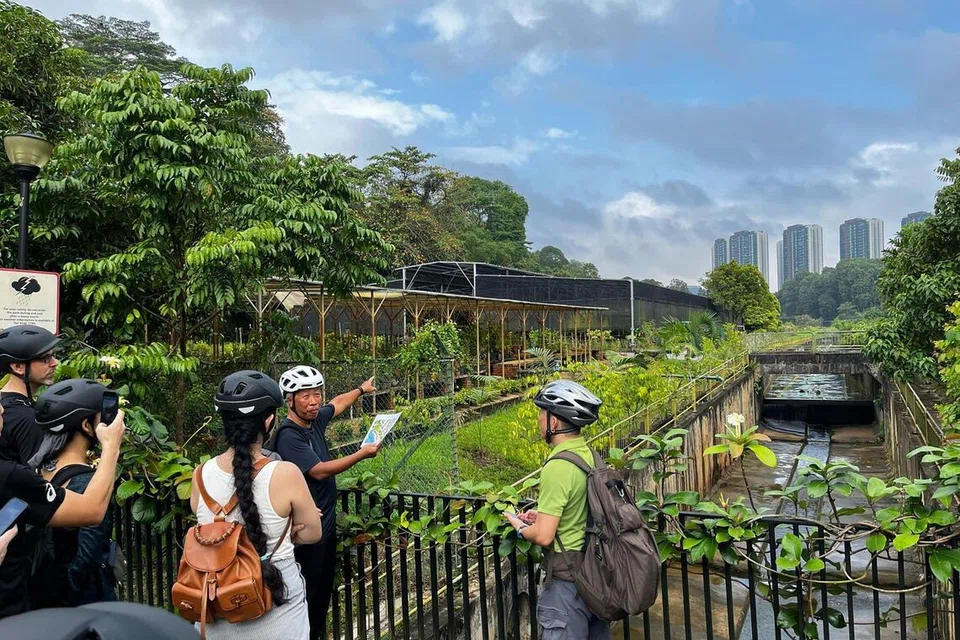
A Cycling Buona Vista tour, led by heritage experts, will take participants down the Buona Vista defence line, which was key during the final battles for Singapore. It will start from Buona Vista and continue through Pasir Panjang, Gillman Barracks and other military sites before culminating at Haw Par Villa.
There will also be guided tours to Cashin House at Lim Chu Kang Nature Park, which witnessed some of the first landings of the Japanese troops, and historical sites such as Bukit Brown, Mount Pleasant and the Civilian War Memorial.
A 110-minute immersive theatrical experience titled No Question Of Surrender: Three Days Before The Fall premiered yesterday at the official opening of The Battlebox – an underground command centre in Fort Canning Park.
At the National Museum, a Makan With Seniors segment will feature second-generation war stories over meals, while Peacetime Kitchen cooking demonstrations will allow participants to learn wartime recipes.
The Singapore Art Museum will also present a conversation with the artists behind Hotel Aporia, an installation that reveals different perspectives of Singapore’s wartime past.
In total, there will be more than 25 programmes and over 70 tours. Registration for the activities can be done at museums.com.sg