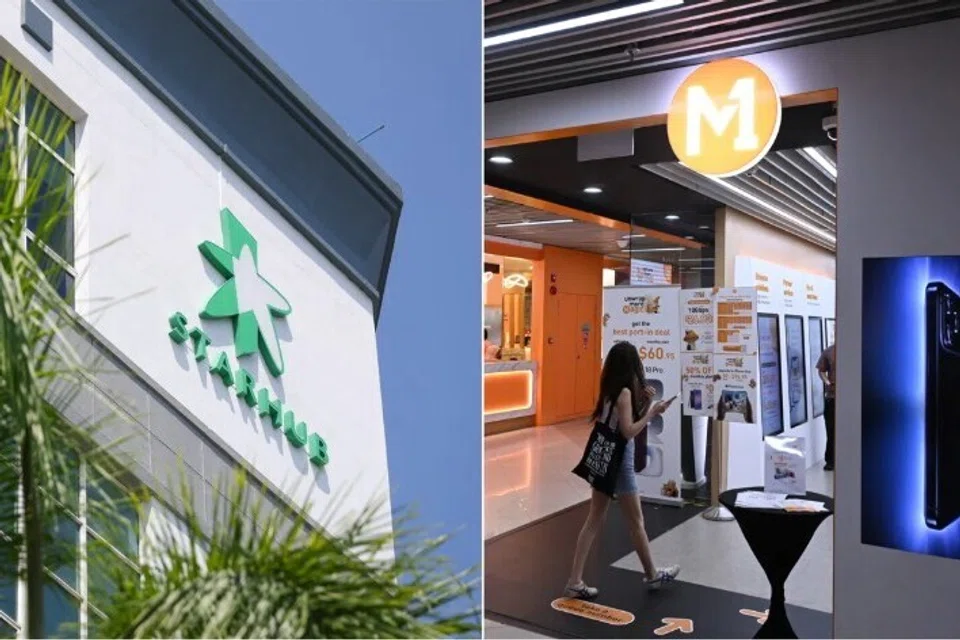
StarHub said on Tuesday it had agreed to acquire mobile operator M1, majority-owned by Keppel, in an all-stock deal that will create a combined entity with an enterprise value of S$5 billion.
The telecom firm also announced that it has exercised its call option to acquire the Singapore operations of Circles Life, an MVNO which operates on M1’s network.
StarHub will issue 651.7 million shares to fund the M1 acquisition, representing about 27.4% of the enlarged share capital.
Upon closing, M1 will become a StarHub unit, with asset manager Keppel holding an effective 23% stake in the combined entity. M1‘s other shareholders will receive the balance of the newly issued shares.
Keppel said it owns an effective interest of about 83.9% in M1.
Based on StarHub’s implied issue price of S$1.04 per share and M1‘s net debt of about S$380 million, StarHub estimates M1‘s standalone enterprise value at roughly S$1.06 billion.
Meanwhile, customers of both telcos will retain their existing plans, services and points of contact, with StarHub and M1 both continuing operations independently until the merger is completed.
Following the merger, StarHub and Keppel assure that customers will be able to “benefit from a larger, combined group” that has nearly three decades of infrastructure expertise at both ends of the merger.
Customers could also expect better network experience and customer service after the merger is completed.
“Both companies will begin structured employee engagement and are committed to open consultation, fair treatment and regular updates throughout the process,” the statement added.
At a briefing on Tuesday, Keppel CEO Loh Chin Hua said Singapore’s four-telecom market is “under quite a lot of financial duress,” so earnings multiples of companies in the industry are “probably not reflective” of what a healthier market might have.
“With the synergies and potential revenue uplift and the share action of what we have seen in other markets where consolidation has taken place, we are sanguine that the combined entity will deliver the potential upside,” he said.
M1 CEO Manjot Singh Mann noted that both companies’ technology stacks have enough capacity to serve the combined subscriber base, so there is “significant value” that can be derived from synergies, while the merged company could also be right-sized.
As for potential special dividends, Loh said that the deconsolidation of M1‘s debt from the company’s balance sheet would go toward the calculation of special dividends for 2027. Any proceeds from the sale of shares in the merged company after the initial lockup period of 12 months will also be factored into special dividend calculations, he added.
The transaction is subject to regulatory approval from Singapore’s Infocomm Media Development Authority and the Ministry of Digital Development and Information, among others.
The parties expect to complete the deal by the first half of fiscal 2027.
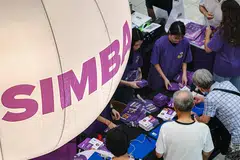
This deal follows a failed attempt by Australia-listed Tuas to acquire Keppel’s stake in M1 for S$1.43 billion through its unit Simba Telecom after the Singaporean regulator suspended its review of the transaction. AGENCIES