
The tiger stalks in the tall grass, waiting for the right moment to strike on unsuspecting prey grazing on the green. The prey inches closer and closer to the predator, until the tiger ambushes it – not with baring fangs, but with striped stinging tentacles.
This tiger goes by the name Macrodactyla fautinae or tiger anemone, and is one of over 20 new species discovered at the St John’s Island Marine Laboratory (SJINML).
Taxonomy – the science of naming – is essential for the discovery of new species and often involves naming and renaming based on research developments. SJINML itself is going through a name change based on its own developments.
St John’s Island Marine Laboratory is renamed as the National Marine Research Station (NMRS) on Nov 25, with the new name coinciding with the broadened scope of the facility to lead regional efforts in the field.
Former Deputy Prime Minister and Chairman of the National Research Foundation Heng Swee Keat gave the opening address at the launch ceremony, stressing the importance of marine research for the nation.
“For a small and highly urbanised country like Singapore, whose waters are among the most intensively used in the world, our marine environment is a precious asset. We must understand it well so that we can steward it responsibly and sustainably.
“This is why marine science continues to be an important part of our Research, Innovation and Enterprise 2030 or RIE 2030 plan. Under RIE2030, we are deepening our investments in climate science and adaptation, focusing on key areas such as weather science, coastal protection and flood management, as well as heat resilience,” he said.
NMRS is still hosted by the National University of Singapore (NUS) and will serve the same role as a national research infrastructure (NRI), which means being a supporting facility for any marine researchers, including internationally, rather than a self-publishing research institute.
One of the major new missions the station is embarking on is establishing the Southeast Asia Marine Research Stations (SEAMaRS) network. So far, over 10 research stations across five ASEAN countries are already within the network, meeting at symposiums and workshops.
President Tharman Shanmugaratnam attended the ceremony as the guest of honour and officially launched the expanded scope.
“Climate change, the loss of biodiversity and the health of our oceans are not separate problems, but deeply connected. Building on a decade of scientific work at NMRS, the new SEAMaRS network will bring together scientists from across Southeast Asia to learn from one another, and strengthen our collective ability to look after our seas, an effort that will matter even more in the years ahead,” said President Tharman.
Both President Tharman and Mr Heng received a token of appreciation at the ceremony.
Mr Heng also spoke on the importance of SEAMaRS in his address: “This is particularly timely as Singapore prepares to take on the ASEAN Chairmanship in 2027. Through SEAMaRS, we can strengthen the connections among marine research stations across our region while building on the strengths and capabilities that each country already has. Research vessels, laboratories, datasets and specialised capabilities can be shared and research teams can come together to tackle questions that no single country can answer alone.”
Investing in a new research vessel and equipment, such as new machinery to study plankton, are the other initiatives they hope to make with the rebrand.
Marine Science Week at St John’s Island
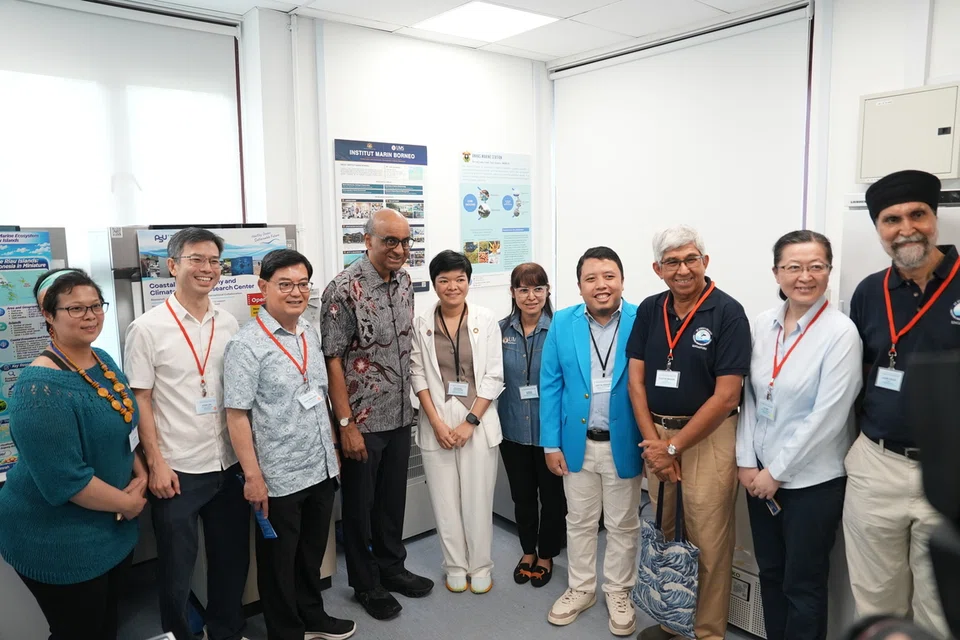
The renaming ceremony also kicked off the station’s Marine Science Week, from Nov 25 to Dec 2, celebrating the past 10 years of the laboratory’s progress as an NRI.
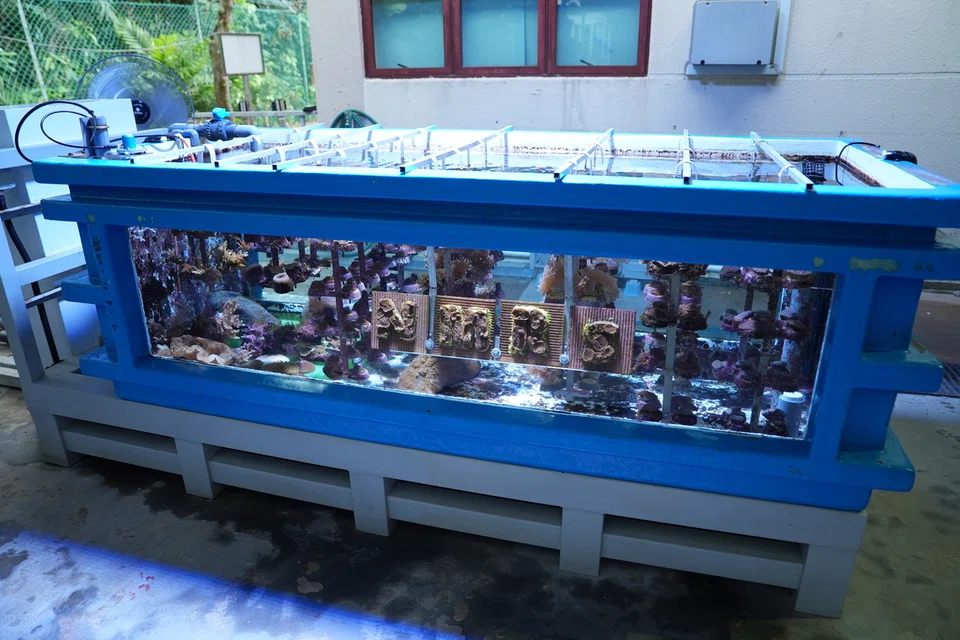
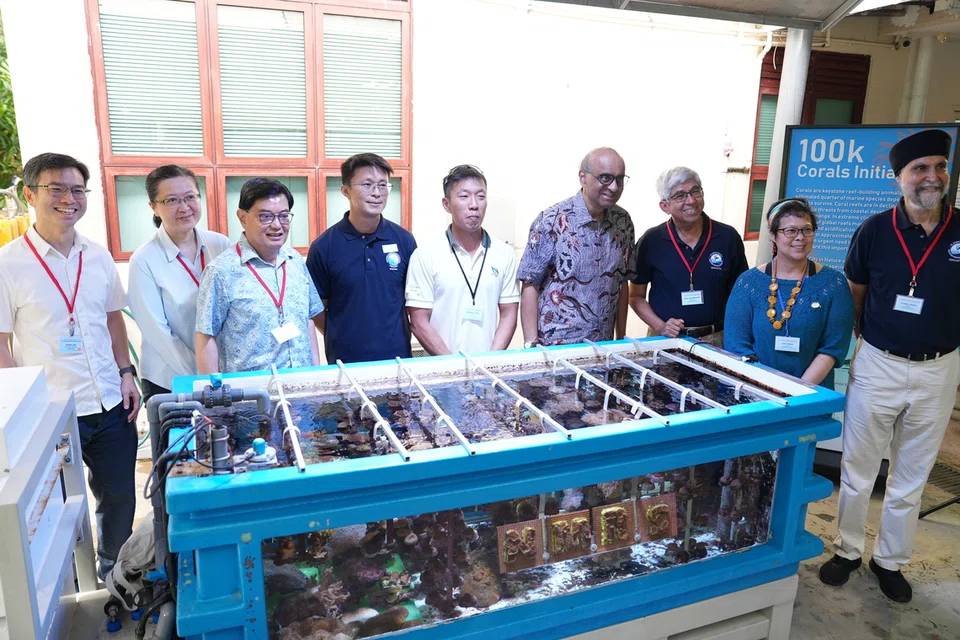
Singapore’s first and only offshore marine research station has been collecting data, restoring ecosystems such as the 100k Corals Initiative with the National Parks Board, hosting workshops and talks, and aiding in the discovery and naming of new marine species.
While the weekday events are mainly targeted to fellow researchers and stakeholders of the station, Marine Science Weekend, which takes place on Nov 28 and 29, has some activities for the public. These include facility tours, painting workshops, electric boat rides, and lunchtime talks with researchers, with some requiring registration.
There will also be daily online talks with researchers from around the world on an assortment of issues.
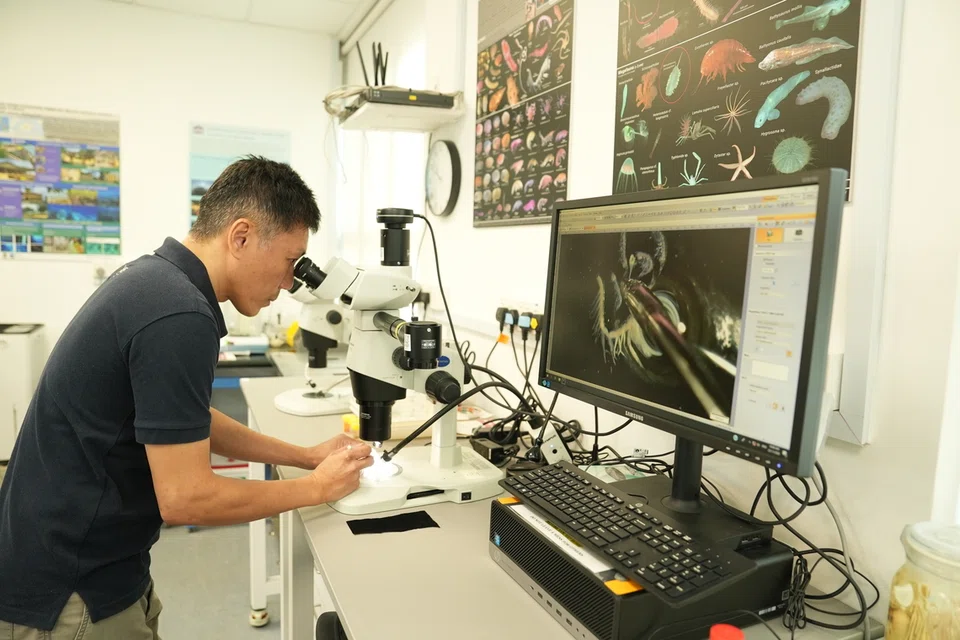
Dr Hari Vishnu, a senior research fellow at the NUS Tropical Marine Science institute, will be hosting a panel titled, Hidden Voices in Urban Waters: Bioacoustics Observations in Singapore’s Coastal Waters.
“Sound travels long distances underwater and collects information from a large area, and is thus a powerful medium to sense the ocean in a non-invasive way,” he said.
Dr Hari, 40, hopes to show the importance of monitoring sound, such as how the underwater calls of marine mammals like dugongs and dolphins, could help us understand their behavioural patterns and how often they visit Singapore’s shores.
Professor Mandar Chitre at NUS Tropical Marine Science Institute will also be hosting a panel, Harnessing Technologies for Marine Science and Research.
Through his panel he hopes to excite researchers on the possibilities emerging technologies could bring to the field.
As NMRS celebrates 10 years, Professor Mandar, 51, also shared his hopes on what the next 10 years in the field.
“Marine science in Singapore can benefit from developments in two areas. The first is related to better adoption of technology to study the marine environment. Enhanced communication between scientists and technology developers to build a partnership where scientists and engineers work together to understand the science problems and solve them.
“The second is a regional collaboration in marine science. While there are some regional collaborations in the ASEAN region, there is much more that can be done in the region between universities, research centres and government regulatory bodies to jointly improve the understanding and management of marine habitats and oceanic processes,” he said.