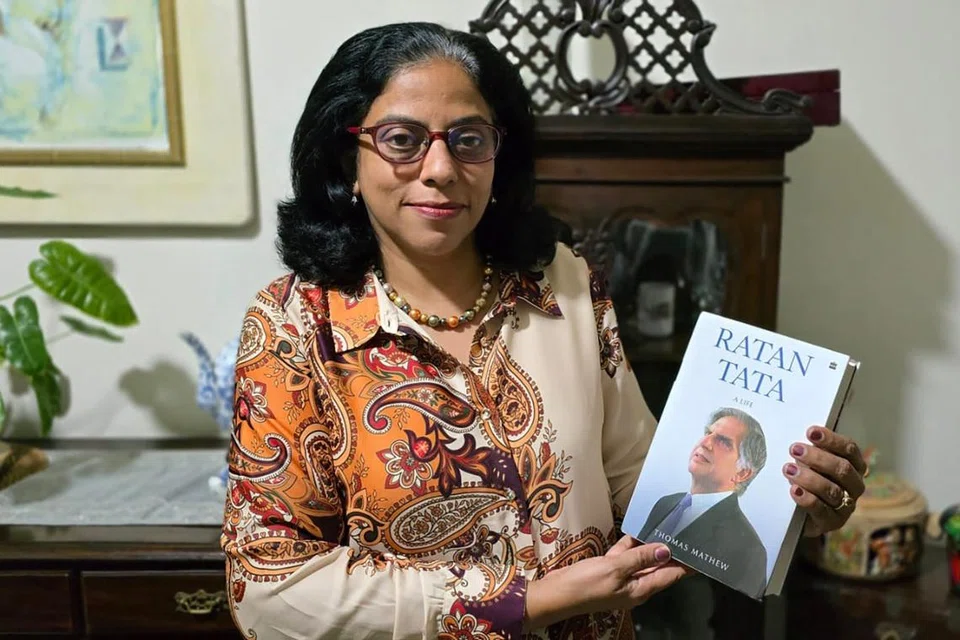
Dr Flocy Joseph, head of commercial at the Singapore Management University (SMU) Executive Development Office, has been named the winner of the Festival of Feelings campaign, which invited people to share their personal stories of how the Tata Group or the late Ratan Tata impacted them.
The contest was initiated in December 2024 by Mr R. Gopalakrishnan, former executive director of Tata Sons, to promote the book Jamsetji Tata, co-authored with Mr Harish Bhat, the brand custodian at Tata Sons.
Twelve entries from around the world were received, and Dr Flocy’s deeply personal and insightful reflections won the final award.
An Indian citizen from Kochi, Dr Flocy has lived in Singapore for 13 years. At SMU, she oversees executive development programmes for corporate leaders, family businesses and government officials.
A champion of steward leadership, she frequently shares Tata Group case studies in her courses, showcasing their values and ethical business practices.
Her admiration for Tata’s influence began a decade ago when a Mumbai taxi driver enthusiastically spoke about the Indian conglomerate’s positive impact on workers. This interaction left a lasting impression on her.
She also recalls her visit to Jamshedpur, where she witnessed Tata’s early adoption of robotic street cleaners – a testament to the company’s visionary approach to technology. Mr Jamshedji Tata, the founder of the Tata Group, established the city of Jamshedpur in 1907, laying the foundation for Asia’s first steel plant there, and subsequently it became the heart of the Tata Group’s industrial endeavours.
Ms Flocy fondly remembers seeing Mr Ratan Tata, the chairman of Tata Group and Tata Sons from 1991 to 2012 and an honorary Singapore citizen, in Mumbai while driving to work.
At a traffic signal, she was surprised to find him sitting in the front seat of a car, engaged in a meaningful conversation with his driver – a rare sight in Indian corporate culture, where most business leaders prefer the backseat.
Living near the luxury apartments Taj Wellington Mews, she also often saw Mr Ratan Tata walking his beloved dogs, enjoying his private moments.
She later attended his 2014 visit to SMU, where he received an honorary doctorate. His humility and powerful vision for India and Tata’s future left a deep impact on her.
Dr Flocy highlights Tata’s ethical business practices, particularly their anti-corruption stance in India’s challenging environment. She has worked with several Tata leaders and admires their commitment to integrity and corporate social responsibility.
She recalls Tata’s response to the 2008 Mumbai terror attacks, where the company provided financial support to victims – employees and non-employees alike. Similarly, during the Covid-19 pandemic, Tata opened its five-star Taj Hotels to healthcare workers, offering free accommodation.
The 2016 leadership crisis at Tata Sons, which led to the controversial ousting of Mr Cyrus Mistry, was another defining moment for Tata’s legacy. Ms Flocy, like many academics, followed the developments closely and prayed that Tata would endure the storm while preserving the company’s values.
Dr Flocy submitted her heartfelt article to Mr Gopalakrishnan without expecting a prize. She was pleasantly surprised when, six weeks later, she was announced the winner, and the recipient of a signed copy of the Jamsetji Tata book.
Mr Gopalakrishnan praised her touching and humane narrative, calling it an example of values that the world desperately needs.
Mr K.V. Rao, former resident director (ASEAN) at Tata Group, also commended Ms Flocy, noting that she deeply understands the Tata ethos and has authentically shared its best practices with the world.
For Dr Flocy, winning was not about competition but about documenting her personal memories of Tata’s impact. She takes pride in sharing Tata’s legacy of integrity, leadership and service with her students and global business leaders.
“As an Indian, Tata’s values are etched in my heart,” she said. “I hope other Indian businesses will follow their clean, ethical leadership model. Through my work, I’m grateful to showcase the power of the Tata brand to the world.”