Singapore plans to roll out new foreign work pass track and tax exemptions to strengthen its asset management sector as competition heats up among regional hubs to attract and retain talent.
The new measures are timely and send a “strong signal” of Singapore’s commitment to grow the sector, especially amid growing concern that the Republic risks losing investment talent and fund-management mandates to competing hubs, market observers said.
“The timing of the announcement is a nice surprise,” said Mr. Suhaimi Zainul-Abidin, chief executive of fund manager Quantedge Capital. “The industry cannot afford a further six months of silence, so an earlier announcement (ahead of details) is the correct decision.”
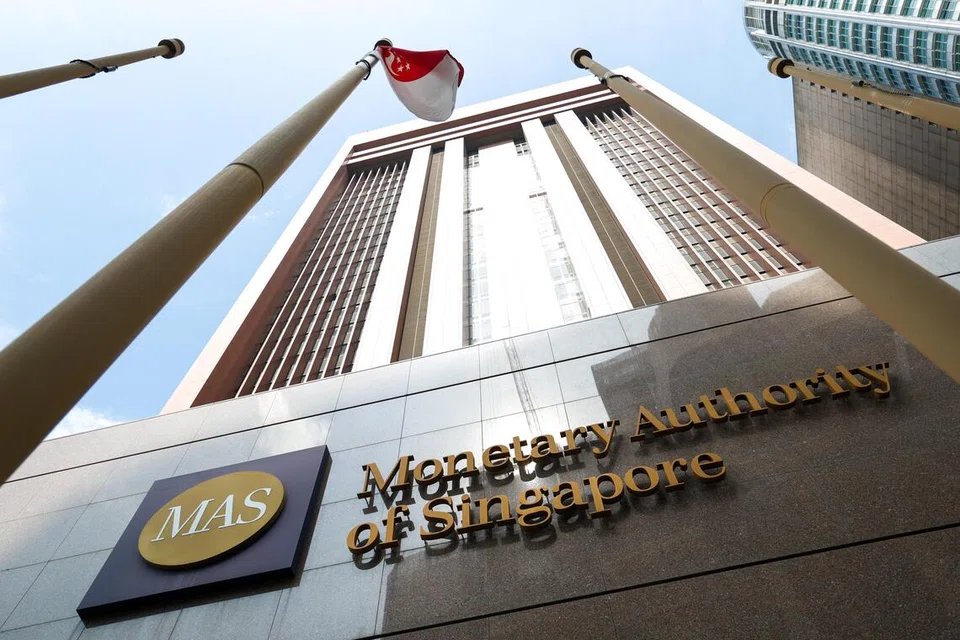
On Wednesday (Aug 20), the Monetary Authority of Singapore (MAS) said it would introduce three measures that encourage key asset managers to anchor their business activities, capital allocation and talent deployment in the country.
These include a proposed tax exemption on profit-related returns arising from the provision of fund-management services to qualifying funds, as well as a new hedge fund investment programme.
Singapore will also add a new track under the Overseas Networks and Expertise (One) Pass framework for foreign leaders and senior investment professionals.
The announcement comes shortly after Hong Kong in June expanded tax breaks for private funds, family offices and carried interest. The move widened the financial centre’s effective tax advantage over that of its rivals (including Singapore) by broadening tax-free asset classes and eliminating the 5 per cent cap on incidental profits.
Mr. Suhaimi said it was “striking” that both cities similarly concluded that performance-linked returns should be treated as a return on risk rather than a salary.
But Singapore’s three-pronged approach is broader than tax, which could create a durable advantage, given that Hong Kong’s recent reform is principally a tax measure, he said.
“If the only way to compete is to keep cutting – whether it is taxes or something else – no one wins,” he said. “Singapore’s edge has never been price; hence its multi-pronged approach.”
Ms. Lim Maan Huey, asset and wealth management leader at PwC Singapore, also expects the three measures to work together as a “very compelling package” for fund management companies and fund managers to be in Singapore.
“The new measures are not aimed at tax competition; they are more about level-setting the fund management playing field and reinforcing Singapore’s competitiveness as a global fund management hub that competes for both capital and talent on an even footing,” she said.
In fact, Singapore’s willingness to react quickly to the recent developments in Hong Kong sends a strong signal, given that significant tax measures and concessions are typically announced during the Budgets in the first quarter each year, she added.
For industry players, this is a positive move, as some people in the industry were thinking that MAS would take a while to roll out measures, said Mr. Lee Kher Sheng, co-head for the Asia-Pacific at the Alternative Investment Management Association (AIMA).
Describing MAS’ announcement as “a powerful statement of intent”, he added: “MAS came out so strongly and definitively… This will be something that the industry looks forward to.”
Benefiting Asia as a whole
Beyond Singapore, observers expect the move will benefit Asia as a whole by bringing more depth and capability to the region.
Mr. Lee sees Singapore’s move – together with Hong Kong’s reforms – as a “rising tide phenomenon”, where an improvement lifts all parts of the system.
Many investors and allocators who invest in Asia are from the United States or Canada, and improvements to asset management incentives in Singapore and Hong Kong would draw more interest into the region as a whole, he said.
Mr. Suhaimi, who is also deputy chairman at AIMA Singapore, added: “We don’t need Hong Kong to fail or suffer for Singapore to succeed, and I don’t think anyone at MAS thinks about things that way either.”
On Wednesday, MAS deputy chairman Chee Hong Tat told the media that he does not see the competition between Singapore and Hong Kong as a zero-sum game.
Mr. Chee, who is also minister for national development, said there is enough scope for both markets to grow as financial sectors.
In fact, these announcements by both Hong Kong and Singapore reflect how actively the region is becoming a hotbed for asset management flows and talent, said Ms. Anulekha Samant, partner and co-head of real estate and asset management tax at KPMG Singapore.
What works?
Observers expect the proposed tax exemption for performance-related payments to have the most meaningful impact on the industry.
Performance-linked profit-sharing arrangements are already a recognised feature in the industry, and the move will bring Singapore in line with other jurisdictions, said Mr. Kai-Niklas Schneider, co-chair of the Singapore Funds Industry Group and partner at law firm Clifford Chance.
Meanwhile, AIMA’s Mr. Lee expects investors and allocators will pay attention to the hedge funds investment programme, given several requests from the industry for the government to help seed the growth of managers.
In the longer term, Mr. Suhaimi said the One Pass track could be more significant as talent compounds and feeds the industry.
“Capital is mobile, but people are less so once they have put down roots,” he said.
Nevertheless, the strength of the measures will lie in how they work together in a broader framework.
While tax incentives remain important, KPMG’s Ms. Samant noted that investors and fund managers also look at the overall operating environment, access to talent, ease of doing business and long-term policy stability.
MAS should continue engaging with the industry and maintain its pragmatic approach to policymaking, given that Singapore’s competitiveness is built on strong collaboration among the regulator, industry players and the wider ecosystem, she said. THE BUSINESS TIMES