

For a lot of students, the transition from academia to real life can be a daunting experience, filled with questions and doubts. What’s next? Will I land a job? Am I headed in the right direction?
But what if you could take charge of your own future?
Republic Polytechnic (RP) is looking to make that transition smoother with its new “Designing Your Life” (DYL) programme, set to kick off next year.
Under the programme, incoming RP students will be guided by their lecturers who will use a design thinking approach developed by Stanford University in the United States to explore and plan their personal and career goals.
The programme will take students through the process of figuring out their life goals and job preferences by approaching the challenge the way a product designer would. They will be taught to approach problems with curiosity, reframe dysfunctional beliefs and prototype ideas to figure out what would be the right fit for them.
Once they have identified some fields that interest them, students will then be guided to tailor their three-year diploma course to explore their interests and hone their natural talents.
Dr Girija Veerappan, director, centre for educational development at RP, said the initiative is to empower students to define what success means to them.
“Success wears many hats. For some, it’s about having a rewarding job, while for others it’s about making an impact through community service or pursuing higher education,” she said. “No matter where they start, every RP student will graduate as a better version of themselves.”
Dr Girija added that the programme includes refresher workshops conducted six months after a student has graduated – to check on students’ career paths and job satisfaction.
“We want to make sure they’re on the right path and provide support if they need it,” she explained.
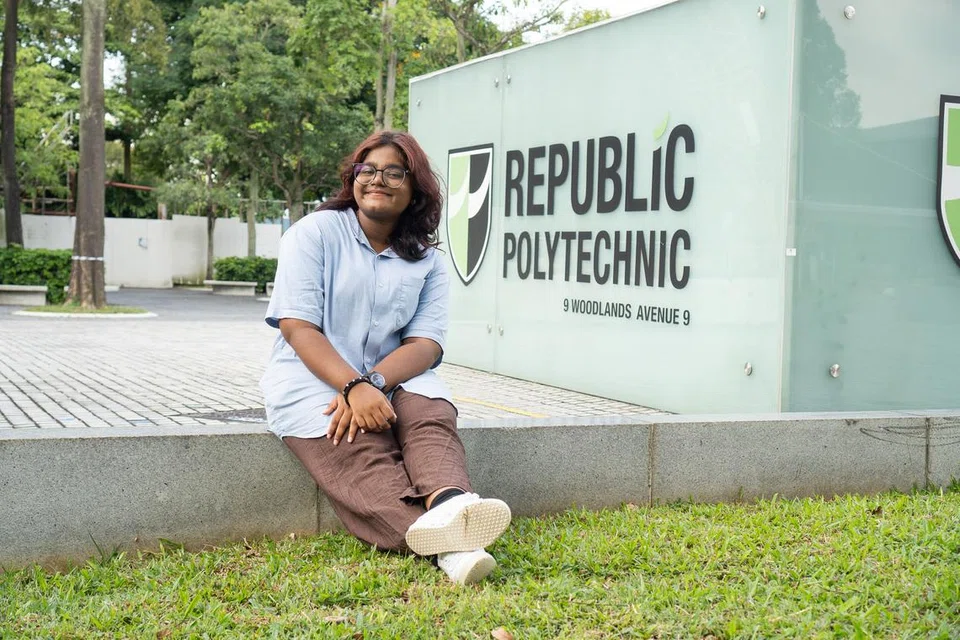
Manisha Saravanan, 17, a student in the Polytechnic Foundation Programme (students’ first year in poly) echoes this sentiment.
“With everything changing so fast, especially with AI, even though a lot of us have a clear idea of our future paths, there’s still a lot of uncertainty about how advanced AI will become.
“Plus, there’s peer pressure. Many Indian parents, mine included, often ask me, ‘What’s your plan for the future? Are you ready for it?’ They always push me to choose something that’s successful, which adds to the pressure.”
Manisha, who will begin her diploma in human resource with psychology next April, said: “I think DYL is a great concept. It includes a mentorship programme where, after three years of my diploma, I can have a mentor for two years to ask questions.
“After I graduate, if I’m unsure whether to jump into a job or pursue a degree in HR or psychology, I can reach out to them for guidance.”
By April 2025, around 800 RP lecturers will be trained to become mentors, and they’ll stick with the students for two years after graduation, helping them navigate the early stages of their careers.
Varshini Anbalagan, 17, who’s gearing up to start her Diploma in Aviation Management next April, said the mentorship is beneficial “because not everyone lands a job right after graduation”.
“Having a mentor gives them a chance to talk about their options and discover new job opportunities. Mentors can really help them figure out their next steps after graduation.”