


ANUSHA SELVAMANI
Ms Meenambal Paramasivam was just 10 years old when she came to Singapore in 1982, leaving her mother and older sister who remained in Melavasal village, on the outskirts of Mannargudi, a small town in the Indian state of Tamil Nadu.
She joined her father who, in search of a living, had come to Singapore in the 1950s. He had gone back to India to get married, before returning here for work.
Ms Meenambal’s two older brothers were already serving National Service on the way to getting Singapore citizenship when she arrived.
Naturally, there was much for her to adjust to, language notwithstanding.
“I was disappointed to learn that I had to start my education from Primary Three level – at 11 years old. It was a waste of two years for me,” said Ms Meenambal, now 51, who at the time enrolled at the now-defunct Beatty Primary School.
An educator for the last 18 years, Ms Meenambal continues to live in Singapore. But it was only recently that she began to forge a stronger bond with the people from her village – thanks to gatherings here organised for people from Melavasal.
Through word of mouth and by recognising her fellow villagers at family functions and temples, Ms Meenambal and her brothers connected with hundreds of people from Melavasal living here.
They meet on festive occasions, most notably to join hands and raise funds to help improve the living standards in their village.
People from southern Indian regions around Tiruchirappalli city, such as Mannargudi, travelled to Singapore for work and business from the 1920s. They now make up a large proportion of the 500,000 Tamil-origin Singaporeans.
Singapore’s influence is telling in and around the village. Indeed, there is so much admiration for Singapore’s founding prime minister Lee Kuan Yew that Mannargudi is said to be building a monument for him, The Times of India reported in May this year.
“Melavasal was once a primitive village,” explained Ms Meenambal. “But it has vastly developed now with proper schools and facilities.
“Before, schools were run down and people did not receive proper education to work and live there. That prompted the villagers to move overseas, and Singapore was their obvious choice.
“Our village is in a reformed shape now because of our monetary contribution. And that speaks of how special our community is.”
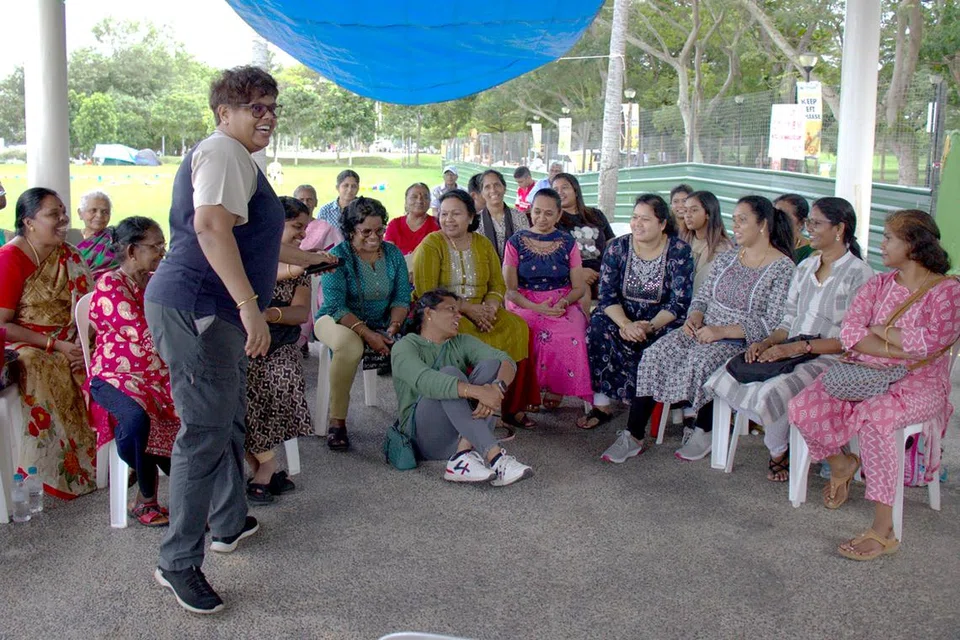
In 2017, the community began to link up through chat groups on Whatsapp. They first organised a family event called Uravugal Ondrukoodal (meaning “relations unite” in Tamil) at Pasir Ris Park in 2019. There, families and friends – all with a common hometown bond – met for the first time.
The Covid-19 pandemic prevented further gatherings, until recently.
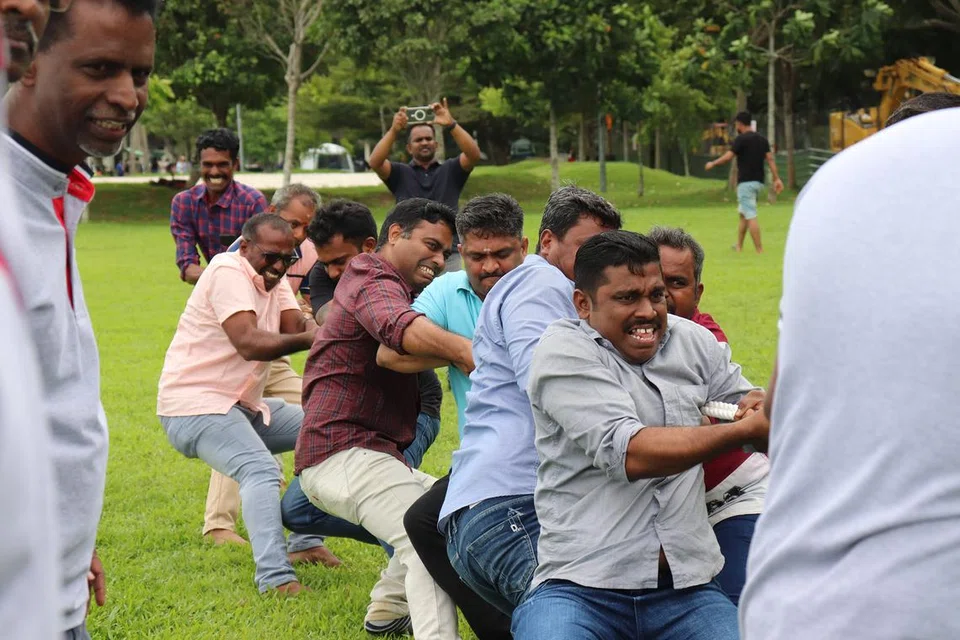
On Nov 19, some 130 people – young and old – gathered in Pasir Ris Park for a day of food and activities.
Goodie bags labelled “Uravugal Ondrukoodal’” were given out to all. There were also prizes for those who won games.
“I know almost everyone from the group, and what came as a surprise to me was that some of the migrant workers who attended the gathering were actually sons of my former classmates in India,” said Ms Meenambal.
Annathurai Mithun, an eight-year-old pupil from New Town Primary School, said: “I am so happy that I made a huge number of friends through this gathering. If this is organised next year, I would definitely go. The games were so fun.”
Mithun’s father Varadarajan Annathurai, 41, a train station manager, said such gatherings will strengthen bonds and make members feel that they are not alone in a new country.
The group plans to make the gatherings at Pasir Ris an annual event.
“We met so many people from Melavasal. It was really nice to see that people from my village are here and that this feels like home to us,” said Mr Varadarajan. “I do not miss home back in India as we have already formed a mini-family here.”

