Having learnt to play the parai, a traditional musical instrument, during a trip to India in 2020, Dr S. Jegatheesan, a Tamil teacher at Raffles Institution (RI), decided to impart some of the knowledge he gained to his students.
He soon realised that the boys had taken a liking to the Tamil frame drum.
They not only diligently studied the playing technique, but also the history attached to the somewhat lost art form.
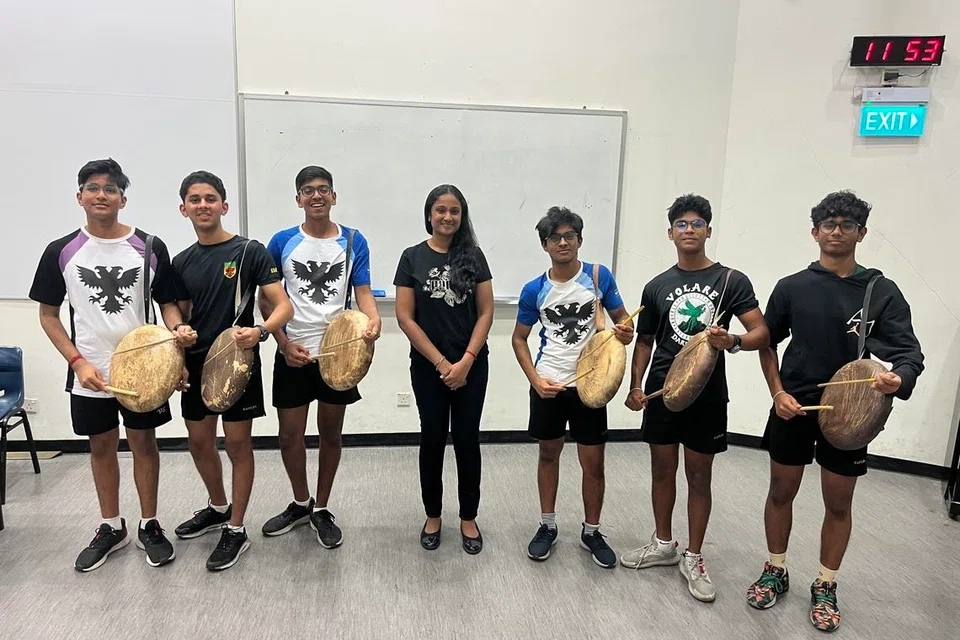
Earlier this year, he got RI alumni Ashwinii Selvaraj, who had learnt to play the parai during a course at the arts school Makoolam Kalai Koodam in Singapore, to teach the boys in detail. And they did a successful performance at the school’s Teachers’ Day celebrations in September.
“I embarked on the trip with the sole intention of immersing myself into the realm of folk arts,” Dr Jegatheesan told tabla! “Little did I know that imparting my newfound knowledge to my students would have such a profound impact on them.”
He was piqued with learning the parai after his son went to India to master the basics of Parayaatam, a special type of dance where performers beat the parai and dance to its rhythms, as well as other Tamil art forms such as Oyilattam (dance) and Silambam (martial arts).
The Tamil teacher then embarked on a trip of his own to Madurai in Tamil Nadu to learn the parai over three weeks.
Ms Ashwinii, 25, who was impressed with the RI boys’ performance, said: “It’s crucial for young people to acquaint themselves with folk arts.
“Young parents should actively instil an appreciation for these arts in their children. Preserving our culture begins with them.
“If they can enrol their children in activities like swimming, why not consider doing the same for Indian folk arts? Besides cultural preservation, it also contributes towards their overall development.”
Adharsh Srinivasan, 17, one of the student-performers, agreed that learning about the traditional arts keeps Indian youths connected to their roots.
“It also provides us with a sense of identity,” he said. “It’s essential for young people to gain such experiences (learning and performing). Only then can they truly understand the beauty of these art forms and appreciate their significance.”