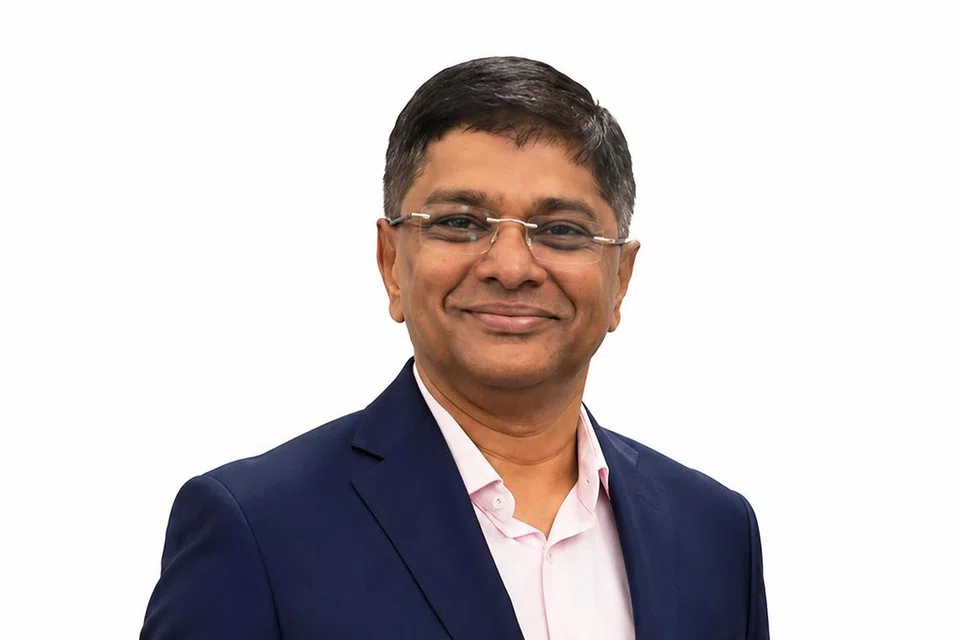
Interview with Mr Rajakumar Chandra, Owner, Jothi Holdings Group, and Vice-Chairman, SICCI, who is standing for the chairman’s post in the SICCI Elections 2026.
Q: You’ve highlighted digital development, such as online platforms. What is your strategy for accelerating the digital transformation of traditional family-run businesses without losing their cultural identity?
A: This is a question I take very personally. Jothi Holdings has been in this community since 1960. Our customers do not come to us just to buy products. They come because there is trust, because there is a relationship, because when they walk into our store for a prayer item or wedding garlands, they know we understand their occasion and their culture. That cannot be replaced by an algorithm.
What technology can do is handle the back-end, such as inventory management, HR, accounts and customer data, so that the owner is freed to do what only a human can do, serve the customer with cultural intelligence. My strategy for SICCI is to run structured Digital Readiness Workshops that start with the back end, not the front end. We will not ask a 60-year-old provision shop owner to run a TikTok campaign on day one. We will first help them control their stock, reduce wastage, and understand their numbers. Once the foundation is stable, the digital shopfront follows naturally. The cultural identity is not threatened by technology. It is threatened by business failure. If we help these businesses survive and thrive, the culture survives with them.
Q: How will you expand SICCI’s reach to ensure that newly established startups receive the same level of institutional backing as legacy businesses?
A; SICCI has, for much of its history, been seen as an organisation for established businesses. That perception must change, and I say this from my own experience. When I was first approached to join SICCI, I thought it was not for me. I thought it was for the big corporations. I was wrong. But the fact that I had that perception means many startups today have the same perception. And perception, if unaddressed, becomes reality.
Through the AEN, the Aspiring Entrepreneurs Network, within SICCI, we already have a platform for newer businesses. What I will do is ensure the AEN has a dedicated budget, dedicated programming, and a direct line to Enterprise Singapore grants. I will also introduce a Startup Access Programme where new founders get a structured six-month onboarding into the SICCI ecosystem, including legal clinics, funding navigation, and introductions to our established member network. Legacy and startup are not opposites. The legacy businesses are looking for distribution partners, technology vendors, and fresh ideas. The startups are looking for networks, credibility, and market access. SICCI is the natural bridge.
Q: In your campaign, you’ve emphasised giving direct service support to traders. How does your vision for SICCI shift from “advisory services” to active, on-the-ground execution?
A: Advisory without execution is just conversation. I have seen too many chamber initiatives that produce a very good report, a very good seminar, and then nothing changes on the ground. That is not acceptable.
My shift in approach is this: SICCI should measure itself not by the number of events it holds, but by the number of businesses it has directly helped to survive, grow, or digitalise in a given year. I want to introduce a Member Impact Dashboard, a transparent tracking system that tells us, by quarter, how many members accessed grant support, how many completed digital onboarding, and how many linked up with government procurement opportunities through us. When SICCI leadership can stand up and say ‘This year, we helped 200 businesses access PSG grants worth a combined $4 million’, that is a chamber earning its membership fees. That is what I intend to build.
Q: Having served as past chairman of LISHA and current Vice-Chairman of SICCI, how do you intend to strengthen the synergy between different Indian ethnic and trade associations in Singapore?
A: The Indian business community in Singapore is not one community. We have the Tamil traders on Serangoon Road, the Sindhi merchants, the Gujarati business families, and the newer generation of professionals from different states of India. Each association. LISHA, SINDA’s business arms, the various ethnic chambers, have their own constituency and strengths. What we have lacked is a coordinating architecture that allows us to speak with one voice when it matters most.
Having chaired LISHA and served at SICCI, I sit in a unique position to build those bridges personally. My immediate priority will be to establish a formal Inter-Association Council, a quarterly platform where SICCI, LISHA, Indian Restaurant Association (Singapore), SINDA Indian Business Roundtable and other key Indian business organisations align on policy positions before presenting them to the government. This is not about merging organisations or diluting identities. It is about strategic coordination. When Enterprise Singapore consults us, when MOM issues new manpower policies, when URA revisits Serangoon Road’s development plans, we should be presenting a unified Indian business perspective, not five different and sometimes contradictory voices.
Q: How do you plan to increase the active member engagement and retention rate among young professionals and next-generation entrepreneurs within SICCI?
A: Young professionals join SICCI and then go quiet because the programming does not always speak to their reality. They are dealing with customer acquisition costs, digital marketing, co-founder conflicts, and term sheet negotiations. When they attend an SICCI event and the content is about challenges from ten years ago, they disengage. That is not their failure. That is our failure as a chamber.
Under my chairmanship, I will introduce a Young Professionals Programme within SICCI AEN’s annual programming, specifically designed around the challenges of businesses less than ten years old. I want monthly fireside sessions, not with politicians or senior government officials, but with entrepreneurs who built something in the last five years and can speak to the realities of today’s market. I will also activate the SHE programme more aggressively. Our women entrepreneurs’ Team has done outstanding work, and I see enormous untapped potential in bringing in more female founders, particularly in the F&B, wellness, and education sectors where Indian women entrepreneurs are making significant strides. Engagement follows relevance. We need to make SICCI relevant to the 35-year-old founder, not just the 55-year-old establishment business owner.
Q: As a business leader deeply rooted in the Tekka precinct, how will you advocate for policies that help local physical retailers combat the rising dominance of e-commerce?
A: E-commerce is not going away. I will not pretend to offer a policy that reverses that tide. What I will advocate for is a level playing field, and right now, it is not level.
Online platforms pay no retail rental. They carry none of the fixed-cost burden that a physical retailer in Little India carries. Yet they compete for the same customer. What SICCI must push for, in active dialogue with MTI and URA, is a renewed Physical Retail Support Package, a structured rental assistance and productivity grant specifically targeting ground-floor retail in heritage precincts like Serangoon Road, Tekka, and Mustafa’s vicinity. I will also advocate for a Buy Local, Buy Physical campaign that runs on national platforms similar to how Singapore has promoted local produce and local F&B. Our physical retailers are custodians of cultural identity. That is a public good, and it deserves public support. Beyond grants, I want SICCI to broker partnerships between physical retailers and the major local e-commerce platforms such as Lazada and Shopee, to help our members establish digital storefronts that extend their physical reach rather than competing against it.
Q: As a veteran retailer on Serangoon Road, how do you plan to represent the specific needs of traditional retail and F&B businesses against rising operational costs and manpower shortages?
A: I have worked 18-hour days in that precinct. I know what it means when your rental goes up by 20 per cent and your best staff member leaves for a higher-paying food delivery gig. These are not abstract policy problems. They are daily survival questions.
On manpower, my position to the Ministry of Manpower will be direct: the S Pass and Work Permit quota structures need to be reviewed for the retail and F&B sectors in designated heritage precincts. The Singaporean workforce pipeline for these roles is structurally insufficient. We are not replacing local jobs. We are filling roles that are genuinely vacant. I will push for a Heritage Precinct Manpower Carve-Out that gives SICCI member businesses in areas like Serangoon Road more flexibility in their foreign workforce mix.
On operational costs such as rental, utilities, and regulatory compliance costs, I intend to work with Spring Singapore and the relevant agencies to create a Cost Relief Navigator available through SICCI: a single-stop tool that maps every available grant, rebate, and scheme to a business’s specific profile. Too many of our members are not claiming what they are already entitled to, simply because the bureaucracy is too complex to navigate alone.
Q: The Indian business community is highly diverse. What targeted initiatives will you introduce to attract younger, next-generation entrepreneurs while retaining the wisdom of legacy business owners?
A: The answer is not to choose between generations. It is to build a structured intergenerational architecture within SICCI.
My specific initiative is what I call the SICCI Legacy-to-Future Mentorship Programme. Every legacy business owner who has operated for more than 25 years carries irreplaceable knowledge about customer relationships, about surviving economic cycles, about managing family business succession. We will formalise that knowledge transfer by pairing each legacy member with a next-generation entrepreneur through a structured 12-month programme with defined milestones and SICCI-facilitated sessions.
In return, the younger entrepreneur brings digital skills, new market knowledge, and fresh energy. This is not charity in either direction. It is mutual value creation. I have already seen this work informally within my own network. I intend to institutionalise it within SICCI.
Q: You have consistently advocated for visionary leadership that builds strong internal teams. What changes will you make to streamline SICCI’s internal operations to better serve the chamber’s members?
A: A chamber is only as effective as its secretariat and its internal systems. I will conduct a full operational review of SICCI’s administrative infrastructure in the first 90 days of my chairmanship. My focus will be on three specific areas.
First, responsiveness. When a member sends an enquiry to SICCI, there should be a committed 48-hour response standard. This sounds basic, but it is not consistently in place today.
Second, data. SICCI should know its members deeply: what industry they are in, what their growth challenges are, how long they have been members, which programmes they have attended. A proper CRM system, integrated with our programming calendar and advisory services, will allow us to be proactive rather than reactive with member support.
Third, measurement. Every SICCI initiative, every programme, every clinic, every policy submission should have a stated outcome and a review mechanism. We are accountable to our members’ annual subscription fees and to the broader community we represent. Accountability requires measurement, and I intend to make SICCI’s performance data visible to members annually.
Q: How do you intend to strengthen partnerships with other chambers such as SCCCI and SMF to foster a more inclusive Singaporean business ecosystem?
A: Singapore’s business ecosystem is strongest when its chambers work together rather than in parallel silos. SCCCI represents the Chinese, and SMCCI represents the Malay business community. SMF represents the manufacturing sector. SICCI represents the Indian business community. Each of us has government access, member depth, and sector expertise that the others can learn from.
I will formalise a Quad-Chamber Working Group comprising SICCI, SCCCI, SMCCI and SMF that meets quarterly to align on shared policy positions, particularly around manpower, cost competitiveness, and trade facilitation. When all four chambers submit aligned representations to MTI or MOM, the policy impact is significantly greater than when each chamber submits separately. Beyond policy, I see enormous potential for cross-chamber new member networking, business matching – connecting SICCI’s distribution members with SMF’s manufacturing ecosystem, for example. Singapore’s economic strength was built on inter-community collaboration. Our chambers should reflect and reinforce that.
Q: Beyond just networking, how will you ensure SICCI acts as a stronger advocacy voice for businesses when engaging with the government on national policy changes?
A: Networking events are where relationships start. Policy advocacy is where they deliver results. For too long, chambers have been seen by some government agencies as consultation checkboxes rather than genuine policy partners. I intend to change that for SICCI.
My approach is to be present before policies are announced, not after. SICCI should be the chamber that government agencies call before drafting a new manpower circular or a new retail support framework because they know we will bring them ground-truth data and constructive recommendations. I will build that credibility by ensuring every SICCI policy submission is evidence-based, specific, and actionable. No more generic requests for “more support for SMEs.” We will go in with specific numbers, specific case studies from our members, and specific policy language we are proposing. That is how you get taken seriously at the policy table. And I have the relationships, built over years at SICCI’s board, to open those doors.
Q: You have previously stated that the community needs leadership that “has lived that reality from the inside.” How will your personal entrepreneurial journey shape your empathetic approach to crisis management and business survival?
A: When I mortgaged my father’s property to build the business, I was not doing it as a calculated risk from a comfortable position. I was doing it because I believed in the opportunity, and I had the data to back my conviction. My father was furious. He came from a generation where you never borrowed to do business. I had to sit with him and explain interest rates, profit margins, and growth trajectories until he understood. That is not a textbook crisis management case study. That is a real conversation at a real kitchen table with real consequences.
When COVID shut everything down, I did not read about the impact in a report. I felt it in my business immediately. And I know what it means to pivot in real time, we had already built an e-commerce platform through SICCI’s SME centre, and that platform became the lifeline for dozens of Little India businesses during the lockdowns. I know the fear that comes with crisis. And I know the discipline, the data-orientation, and the community solidarity that it takes to come through it. That experience will be the foundation of how I lead SICCI through whatever economic disruptions come next.
Q: Elections can sometimes bring emotional and bitter rhetoric. As a long-standing community leader, what steps will you take the very day after the June 19 vote to heal camp lines and ensure a unified front under your ‘One SICCI, One Business Community’ manifesto priority?
A: I will say this clearly: on June 20th, regardless of the outcome, there is only one SICCI.
If I am elected, my first act as Chairman will not be to celebrate with my supporters. It will be to call every candidate who stood against me and offer them a meaningful role in the work ahead. Their candidacy means they have passion for this chamber and this community. That passion should not be wasted or sidelined. The best councils in any organisation are built from people who challenge each other during elections and then channel that energy into building something together.
My ‘One SICCI, One Business Community’ is not a slogan for the campaign. It is a governing philosophy. The lines that form during an election must dissolve the moment the results are declared. I have built my business, built my family, and built my community relationships on the principle that the table is always bigger than the disagreement. That is how I intend to lead from day one.
Q: You have advocated for leadership that understands the ground reality from the inside. How does a contested, high-friction election change the way a Chairman must govern and build internal teamwork compared to previous uncontested tenures?
A: It raises the bar. An uncontested Chairman can take unity for granted to some degree. A Chairman who won a contested election must earn it continuously, through results and through inclusion.
The advantage of a contested election, if the winner is wise, is that it forces accountability from day one. Members have seen the alternatives. They made a choice. The Chairman who wins under those conditions must demonstrate, clearly and measurably, that their choice was correct. That is not pressure, I fear. That is the pressure that produces the best leadership. I will govern not as someone who won an election, but as someone who was trusted with a mandate. There is a significant difference. And I intend to honour that trust by being the most transparent, the most results-oriented, and the most accessible SICCI Chairman this chamber has seen.
Q: If elected Chairman, what will be your key measurable goal for SICCI by the end of your term?
A: One number: I want SICCI membership to grow by at least 100 per cent by the end of my term and I want that growth to be disproportionately from MSMEs, SMEs, micro-businesses, startups, and women-led enterprises that currently see SICCI as “not for them.”
Because if we achieve that, it means everything else worked. It means our advisory services were effective enough that businesses told their friends. It means our digital transformation programmes were practical enough that traders adopted them. It means our policy advocacy was credible enough that members saw real value in having SICCI in their corner. Membership growth is not the only metric, but it is the most honest one. It cannot be gamed. Either businesses find enough value to pay their subscription and stay, or they don’t.
That is my north star.
Q: Your work with the SICCI SME Centre has helped thousands of traders. How do you plan to scale these advisory services to better support micro-businesses facing rising operational costs?
A: When I first joined the SICCI SME Centre, I saw firsthand how many micro-businesses, the single-owner provision shops and the family-run textile traders on Serangoon Road were operating completely in the dark when it came to grants, cost management strategies or even basic cash flow planning. They were not unintelligent. They simply had no access to the right information at the right time.
My plan is to bring the advisory services to the ground, not expect the ground to come to us. That means dedicated monthly clinic sessions inside Little India, not in a boardroom, but on-site, at the shop level. We will partner with Enterprise Singapore and IMDA to co-deploy advisors who understand the Indian business context, not just generic SME frameworks. I also want to introduce a peer-mentorship model by pairing legacy business owners who have survived multiple economic cycles with newer operators. The knowledge that kept Jothi running through the 1997 crisis, through SARS, and through COVID is not in any textbook. It lives with our experienced members. We need to systematically harvest and transfer that institutional wisdom.