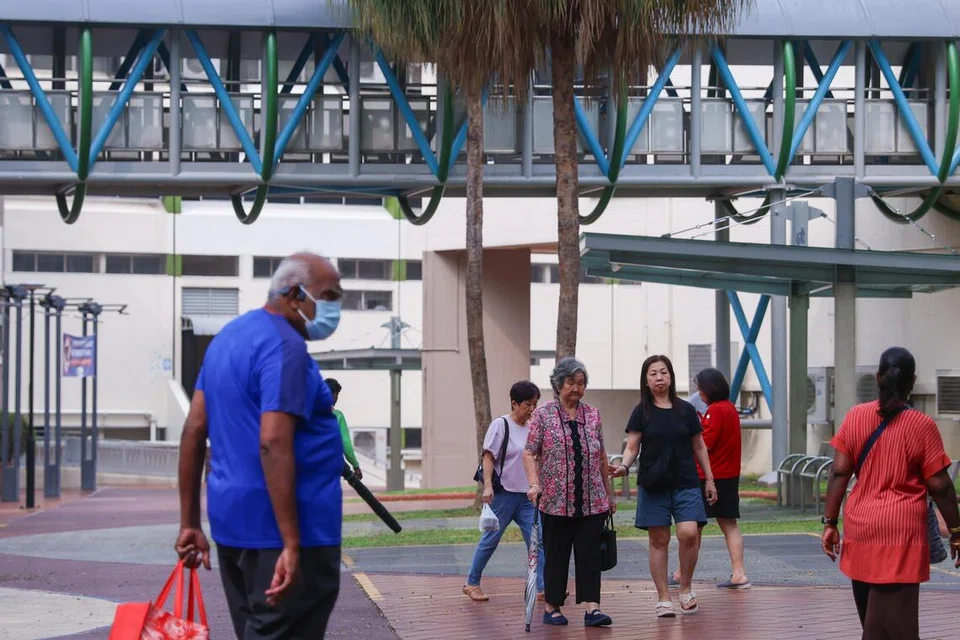
Six recommendations including raising retirement and re-employment ages ahead of schedule, as well as providing more financial support, wage credits and tax breaks has been accepted by the government.
These recommendations by a tripartite workgroup for senior employment, which were released in a report on Monday (Oct 26), include programmes in three broad areas: to reduce premature exits and support re-entry; enable opportunities beyond statutory retirement and re-employment; and uplift lower-wage seniors.
The workgroup comprises representatives from the Ministry of Manpower (MOM), National Trade Unions Congress and the Singapore National Employers’ Federation.
Speaking at the report’s launch, Minister of State for Manpower Dinesh Vasu Dash said the recommendations are centred on providing more choice and flexibility over work.
“Our goal is therefore to build age-friendly jobs and multi-generational workplaces, where experience is valued and people can continue contributing in ways that work for them, and in turn benefit businesses,” he said.
Mr Dinesh added that senior employment should not just mean doing the same job for more years, but having meaningful options across a longer career, and leveraging senior workers for business success.
First on the list: scale up flexible roles and career guidance, through a new Flexi-Load Programme (FLP) and programme office for career longevity.
The FLP will provide funding support to help employers defray transitional costs of developing and implementing flexi-load arrangements such as part-time or fractional work. These costs could include those for additional human resource and organisational resources required to redesign jobs, systems and policies that are traditionally structured around full-time work.
Details of this new programme will be provided at the 2027 Budget and Committee of Supply debates.
This replaces the existing Part-Time Re-employment Grant (PTRG) when it expires in end-2027. It also expands the eligibility criteria.
The PTRG has supported about 68,500 seniors and about 7,800 employers. It caters to employees aged 60 and above and funds employers who make changes to their HR policies.
The new programme, in contrast, will be available to employees aged 50 and above, and funds employers “to demonstrate the outcome of creating additional flexi-load roles”, said the report.
While many seniors wish to remain economically active beyond retirement ages, labour force participation among Singapore residents begins to decline more sharply from their late 50s onwards, according to MOM survey data.
This suggests that some workers leave the workforce earlier than they wish to, the report said.
The office, meanwhile, will help workers plan for career and skills transitions, as well as support employers to adopt age-inclusive workforce practices.
Led by the Skills and Workforce Development Agency, it will also connect both to suitable employment opportunities and ecosystem support.
These complementary measures will be part of a holistic system to promote career longevity and health, which include other efforts for human capital development, navigating workforce transitions and improving workplace safety, the report said.
Second, increase the retirement age (RA) to 65 and the re-employment age (REA) to 70 on Jan 1, 2029, ahead of the 2030 schedule that was set previously.
Mr Dinesh said: “This sends a clear signal that seniors who wish to continue working should have the opportunity to do so.”
The report added that the earlier implementation date considers the positive employment outcomes from previous increases, and the growing number of seniors who wish to remain economically active.
The RA, which is the earliest age at which employers can suggest retirement, is now set at 64. The REA currently dictates that employers must offer contracts to eligible employees who wish to keep working until they are 69, beyond the retirement age. These reflect the last round of changes, which came into effect on Jul 1 this year.
Third, raise the recommended Employment Assistance Payment minimum and maximum amounts, to account for wage growth since the last review in 2022.
These payments help to tide over eligible employees who want to keep working but are not offered re-employment, as they look for another job.
For seniors aged 64 to 69, these payments could range from S$4,000 to S$14,750.
Fourth, enhance the Earned Income Relief for senior workers who work beyond the statutory RA and REA, to reduce their tax burden. Currently, those aged 60 and above can claim a maximum of S$8,000 per year.
This move will increase these seniors’ take home pay, and further incentivise them to remain in the workforce, the tripartite partners said.
Fifth, introduce a re-employment credit from 2028 to offset the costs of employing senior workers, facilitating their retention beyond the RA and REA.
This will replace the Senior Employment Credit – which provides employers with wage offsets of up to 7 per cent for hiring Singaporeans aged 60 and above earning under S$4,000 a month – extending wage support beyond its end-2027 expiry.
Finally, enhance the Workfare Income Supplement (WIS) and update the Progressive Wage Credit Scheme (PWCS), which support lower-wage workers.
“Enhancing WIS will improve wages and retirement adequacy of lower-wage senior workers, while updating PWCS will give employers greater support to raise wages sustainably,” the partners said.
Further details of the various measures will be released in the first half of 2027.
The tripartite workgroup on senior employment was convened in July 2025, building on the foundations laid by a 2019 workgroup for older workers. It consulted over 1,000 stakeholders, including employers, industry and union representatives, workers, HR professionals and academics, and took insights from the Alliance for Action on Empowering Multi-Stage Careers for Mature Workers. THE BUSINESS TIMES