ASAD LATIF
Law and Home Affairs Minister K. Shanmugam used an interesting economic metaphor when he said this week that issues of race and religion cannot be dealt with by taking a laissez-faire approach. Instead, Singapore intervenes heavily to ensure social cohesion and has tough laws to deal with the minority who choose to be nasty towards people with different characteristics.
He was speaking at a forum on non-violent ethnic hostilities organised by the Ministry of Home Affairs and the Institute of Policy Studies on Monday.
“Laissez-faire” refers to an economic philosophy that advocates minimal government interference in the economy, a philosophy propagated by French physiocratic economists who were early proponents of a free-market economy.
Laissez-faire economists would permit government involvement in only three functions: protecting national frontiers by means of a standing army; protecting private property rights and personal freedom through a police force and the judiciary; and producing public goods such as parks and libraries that the market would have no incentive to produce on its own.
At the heart of the theory is the postulate that markets work best when demand and supply are allowed to meet in a natural equilibrium, that is, without the government playing a regulatory economic role.
The limitations of laissez-faire thinking were laid bare by the Great Depression of the 1930s that led directly to World War II. It took the genius of the Cambridge economist John Maynard Keynes to argue for forceful government intervention to get the economy rolling again.
Keynes was not only a great economist but a trenchant social philosopher as well. He wrote: “The world is not so governed from above that private and social interest always coincide. It is not so managed here below that in practice they coincide. It is not a correct deduction from the principles of economics that enlightened self-interest always operates in the public interest. Nor is it true that self-interest generally is enlightened.”
Hence the need for the agency of governance. Keynes argued that governments should solve problems in the short run rather than wait for market forces to do so over the long run because “in the long run, we are all dead”.
If this is true of economic life, how much truer is it not of social life?
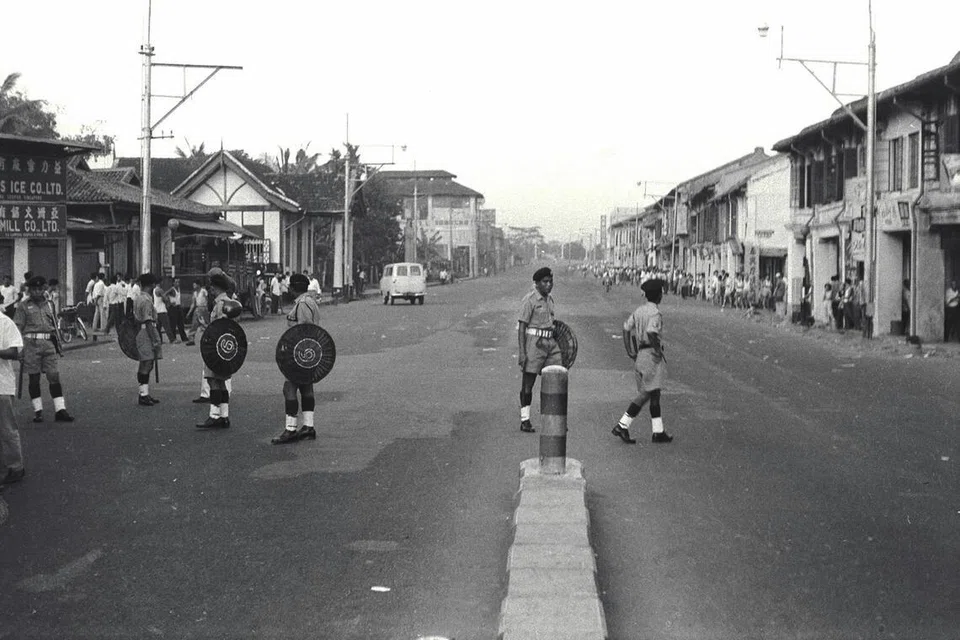
Race and religion are markers of Singapore’s social life that have often turned violent. The Maria Hertogh riots of 1950 and the succeeding racial violence of 1964 and 1969 revealed just how fragile peace could be once it was confronted by visceral emotions roused to violent indignation by clever instigation. The 1964 riots were orchestrated by foreign elements inimical to the political evolution of Singapore society. The 1969 violence spilled over from abroad.
Since then, the ethnic peace and tolerance that Singaporeans have come to take for granted have not been achieved by a natural growth of inter-ethnic goodwill. They have resulted from the institution and application of laws that protect the peaceful majority from the ethnic machinations of the manipulative few
Laws that influence the operation of ethnicity in Singapore include the self-explanatory Maintenance of Religious Harmony Act. Those laws are backed by policies that go to the heart of everyday social life in Singapore.
The Ethnic Integration Policy that applies to public housing, in which the vast majority of Singaporeans live, ensures that ethnic enclaves do not form and that they do not solidify because of the purchasing power of the majority Chinese. Without that policy, laissez-faire economics could well have driven the minorities to the demographic margins of Singapore society, where they might have lived in a vicariously happy version of housing apartheid.
Ethnic enclaves are never good for society. France, where the far right is currently eyeing power after its electoral successes in the first round of parliamentary elections, was the scene of historic riots in 2005 when suburban fringes inhabited heavily by immigrants erupted in violence after two minority teenagers fleeing the police were electrocuted in a power substation.
The insurrection by an incensed French minority helped to rouse the political interest of semi-fascist French political forces whose collective political ambition have come now to the parliamentary fore. French banlieues – suburban neighbourhoods – are not a template of Singapore housing, and should never be.
Instead, Singaporeans need to work hard to ensure that they are not divided within their nation even as divisions proliferate outside their borders. The rise of countervailing ethnocentric powers in Asia, and the ethnic affiliations with them originating in Singapore’s own immigrant history, is cause for immense concern.
The Government owes citizens the existential duty of doing its best so that Singapore society is not fragmented by the centrifugal pulls of external national actors or by the divisive potential of external events over which it exercises no control. Whether it is the edgy contest for global supremacy between China and America, or the grinding war of attrition being waged by Hamas and Israel, Singapore must remain Singapore.
As Mr Shanmugam has warned, Singapore cannot afford to take a laissez-faire approach to race and religion. The Government must continue to intervene decisively and indeed pre-emptively so that this country remains home to all its citizens.
The writer is a former Straits Times journalist.