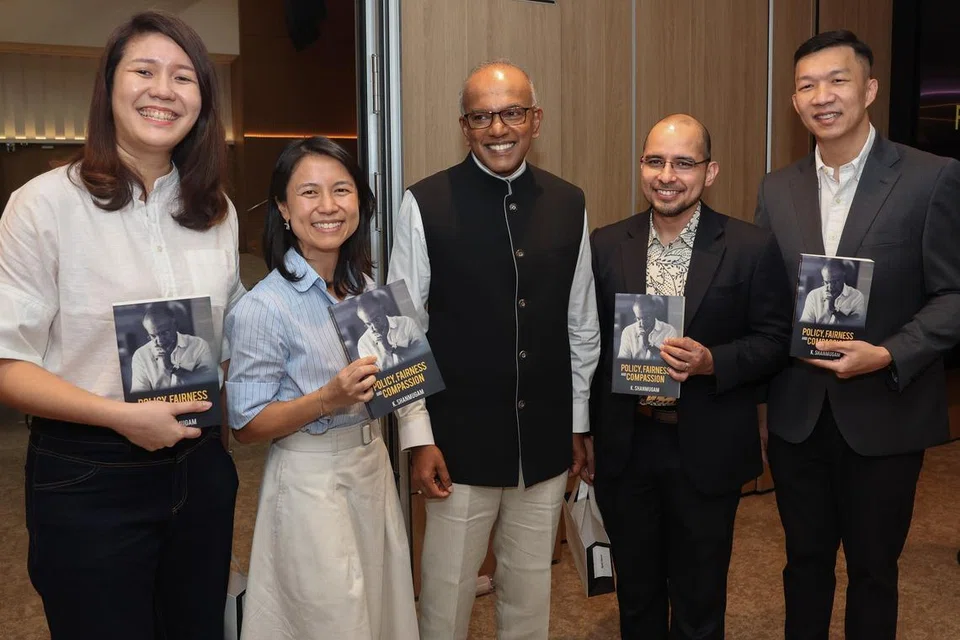

Singapore’s legal and social transformation over the past three decades is the focus of a new book by Coordinating Minister for National Security and Minister for Home Affairs K. Shanmugam.
Titled Policy, Fairness and Compassion, the book is a curated collection of Mr Shanmugam’s speeches, interviews and articles spanning his 38 years in politics. It captures his perspectives from different phases of his political career, including two decades as a backbencher and 18 years on the front bench.
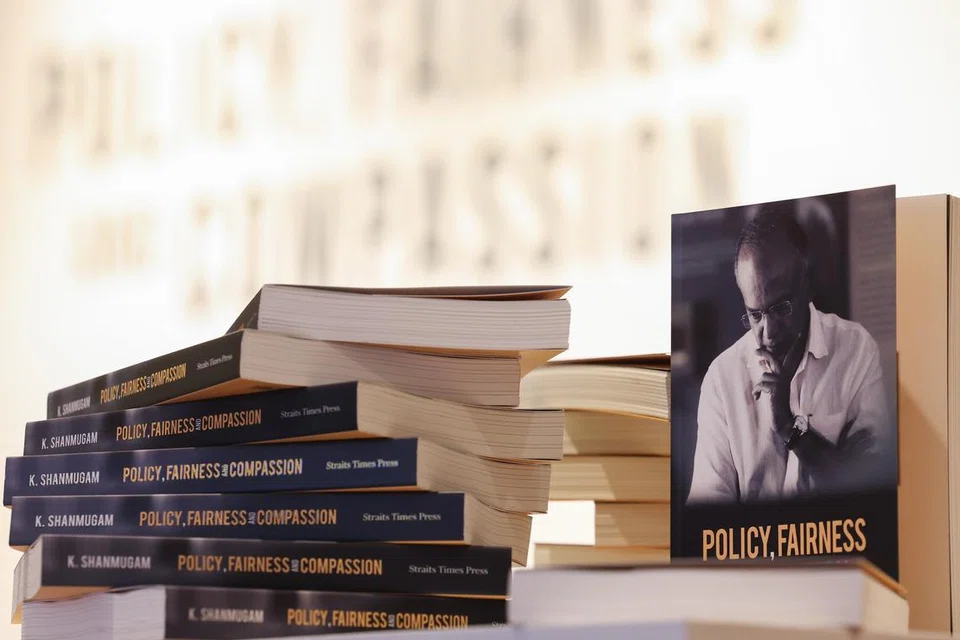
He highlights his advocacy for residents at the constituency level, his parliamentary interventions on social justice issues, and later, his role as a minister in strengthening Singapore’s legal framework.
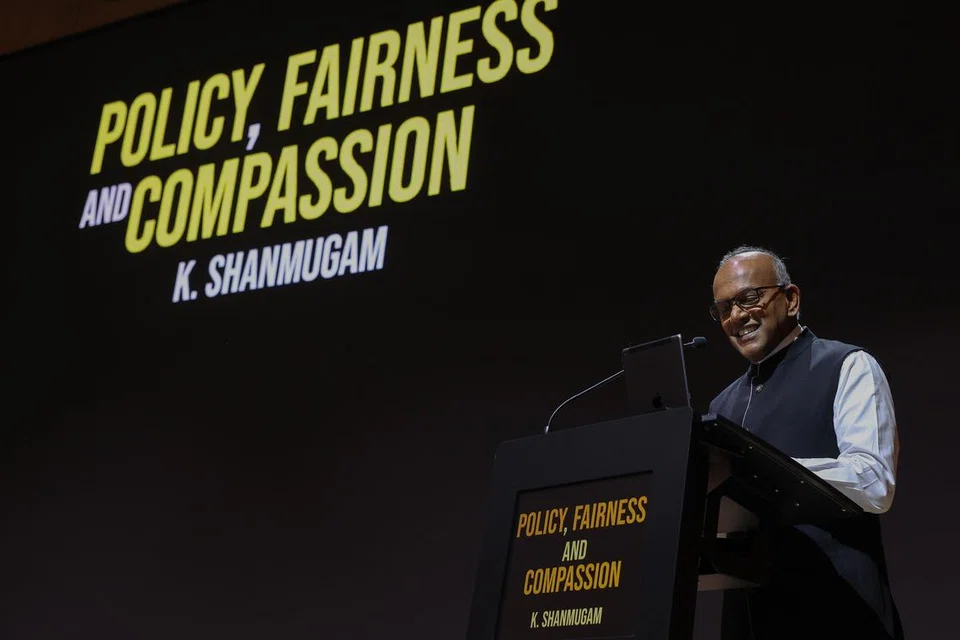
Emeritus Senior Minister Goh Chok Tong was the guest of honour at the launch, which was held at the SPH Media Auditorium on Feb 6. The event drew current and former political leaders, senior members of the legal fraternity, prominent business figures, and friends of Mr Shanmugam.
Speaking at the launch, Minister Shanmugam said the book was not meant to be a conventional memoir. “It is a resource for those seeking to understand Singapore’s development during a period of significant social, economic and geopolitical change,” he said.
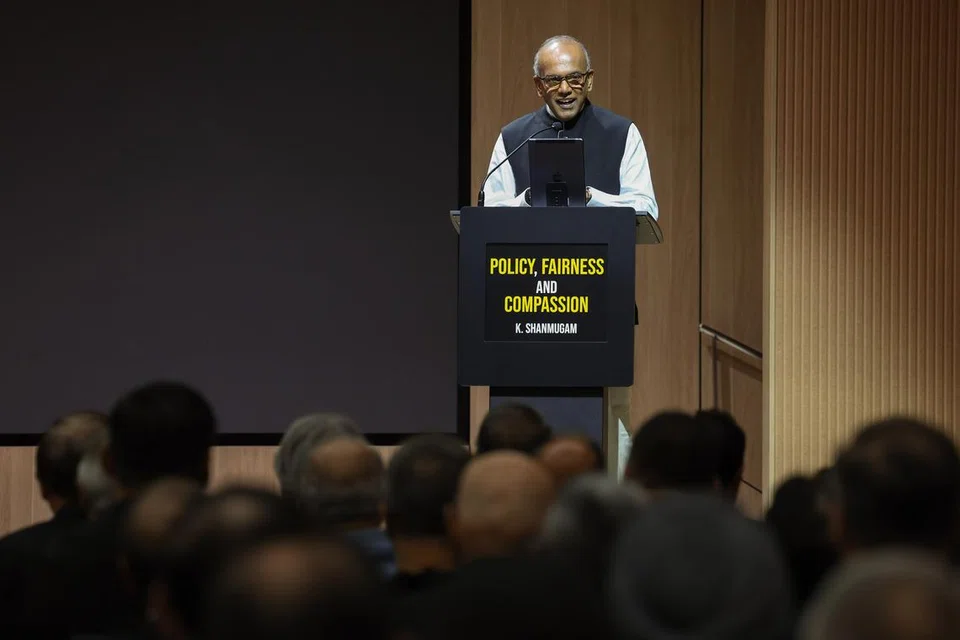
Having been in public life since 1988, he said he had been fortunate to witness Singapore’s social, cultural, economic and legal evolution firsthand. Mr Shanmugam served as Minister for Law from 2008 to 2025 and Minister for Foreign Affairs from 2011 to 2015.
“My views would provide a data point, a perspective for a future historian,” he said. “One perspective among many, for those seeking to understand the Singapore of this period.”
Raising funds for charity was another motivation for the book, he added.
In his first public speech since stepping down from politics, ESM Goh, who said he had known Mr Shanmugam longer than almost anyone else in Parliament, praised him for leaving a lucrative legal career to serve the country.
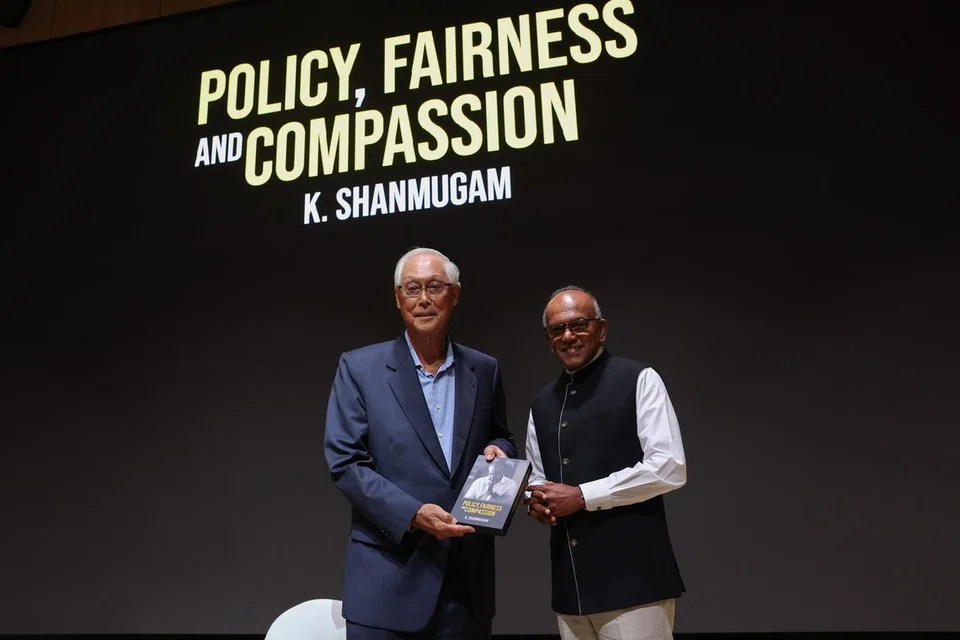
He cited Mr Shanmugam’s opposition in 2001 to mandatory jail terms for homeowners who sheltered illegal immigrants as an example of his strong sense of justice and compassion. The law was amended three years later to give courts greater discretion in sentencing.
Mr Goh also warned of the growing difficulty in attracting capable professionals into politics, stressing that Singapore’s long-term success depends on strong and responsible leadership across generations.
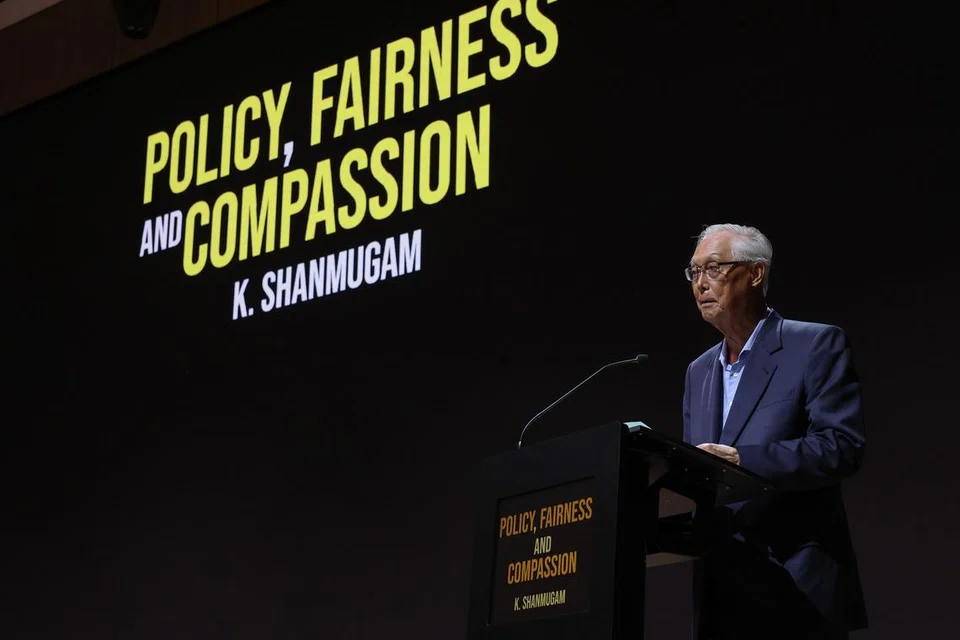
Money must never be the incentive for joining politics, but neither should it be the factor that keeps the best people from entering public service, he said.
“It will not be easy to find another Shanmugam who is willing to forgo tens of millions of dollars over a 20-year period as minister,” ESM Goh noted. “And the Cabinet needs more than one Shanmugam.”
During a fireside chat, Mr Shanmugam reflected on how his views had evolved over time, particularly on laws such as detention without trial. As a young MP elected to the Chong Pang seat of Sembawang GRC in 1988, the then 29-year-old private-sector lawyer publicly questioned legislation, including the Criminal Law (Temporary Provisions) Act (CLTPA), the Internal Security Act (ISA) and the Maintenance of Religious Harmony Act (MRHA).
With experience, however, his perspective shifted. As a minister, he strengthened the MRHA and repeatedly sought parliamentary approval to extend the CLTPA, arguing that such laws are necessary to preserve national security, public order and social cohesion.
“It’s an old adage – in your 20s, if you’re not idealistic, you don’t have a heart. In your 40s, if you’re still idealistic, you don’t have a head,” he said. “You should have both.”
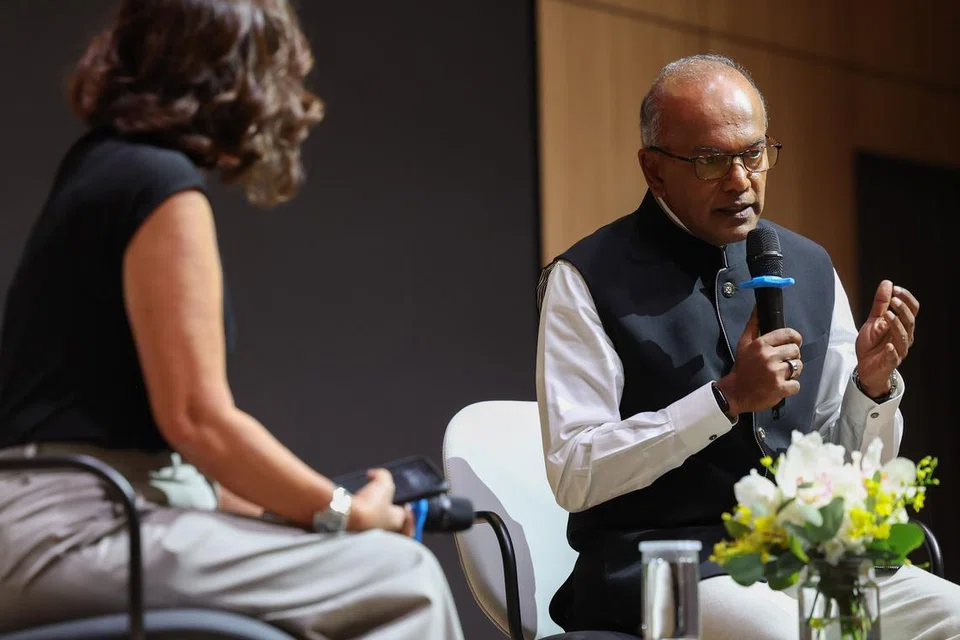
When asked whether the book signalled an impending retirement, Mr Shanmugam dismissed the notion, saying the publication had no connection to his political future.
“The publication of the book is neither an indication nor the decider,” he said. “I will retire in accordance with the way generations of ministers have retired.”