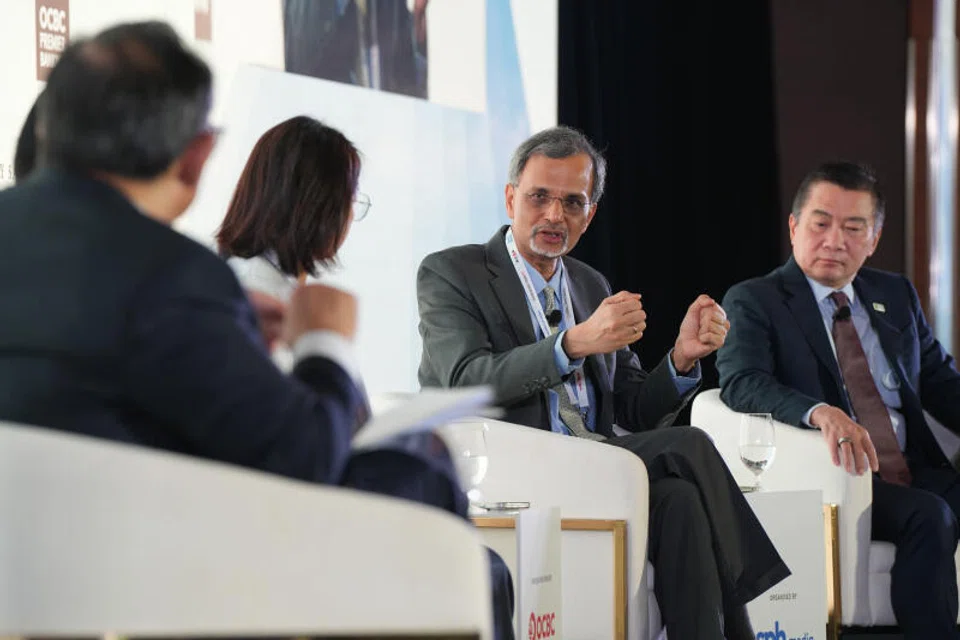
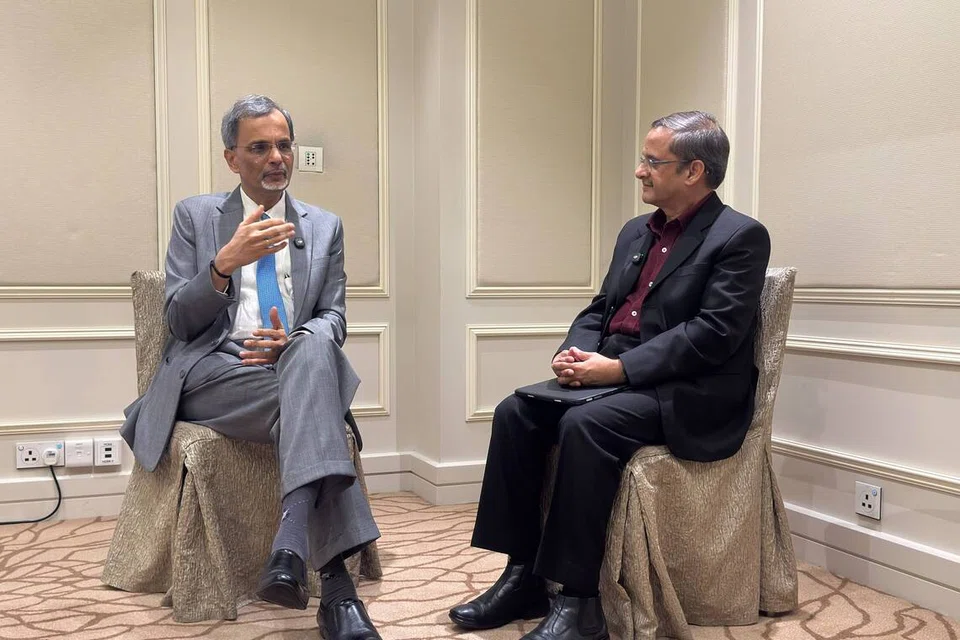
As India accelerates its drive to expand manufacturing and build underlying capital equipment capabilities, Singapore’s technical expertise in sectors such as semiconductors, chemicals, and electronics offers a vital avenue for bilateral collaboration, according to India’s Chief Economic Adviser, Dr V. Anantha Nageswaran.
Speaking in an exclusive interview ahead of the Asia Future Summit 2026, Dr Anantha outlined how Singaporean firms can tap into India’s next phase of economic expansion.
Noting that India’s growth is “not just in the top 10 metros,” he said, “now things are changing, most Indian state capitals have very good airports and very good international connectivity, and opportunities are emerging.”
While India has seen rapid growth in smartphone manufacturing, it is now moving up the value chain into areas like memory chips, where Singapore holds deep experience.
Similarly, even as India’s Production Linked Incentive scheme has propelled its pharmaceutical sector, Dr Anantha noted that “Singapore’s experience in chemicals is an area for India to collaborate.”
Beyond southern states, he urged Singaporean businesses to leverage their existing goodwill to branch out into northeastern and central India, as well as fast-growing Tier 2 and Tier 3 cities.
Targeting India’s expanding luxury segment
For Singaporean consumer brands unsure about how to price their offerings for the Indian market, Dr Nageswaran advised focusing unapologetically on the premium tier rather than competing on low prices.
Citing Singapore Airlines as a prime example, he noted that “most Indians love that” and willingly pay a higher fare for a superior experience.
Even if only 10 to 15 per cent of India’s population is currently willing to pay a premium, that still represents an absolute market of at least 140 million people—a figure he expects could reach 20 per cent within five years.
“For Singapore therefore to position itself as a source of premium products and services to the emerging rich India, it’s not a bad strategy in and of itself,” he said, noting that Singapore has already moved past lower-cost manufacturing into high-value offerings.
ASEAN Chairmanship and Global Shifts
Looking at the broader regional landscape, he described Singapore’s upcoming chairmanship of ASEAN next year as coming “at a very right time” amid global trade shifts, changing patterns, and tariff friction.
With India having eliminated extreme poverty and aiming to transition from a lower-middle-income economy to an upper-income nation by 2047, Dr Anantha highlighted that the atmosphere is ripe to deepen India-Singapore and India-ASEAN ties.
Singapore’s strengths in urbanisation, green energy, infrastructure creation, and governance serve as valuable models for the region, making its ASEAN leadership a timely springboard for stronger regional collaboration.
Coexistence with GIFT City
Addressing concerns that Gujarat’s GIFT City could rival Singapore as a financial hub, he dismissed the notion of a zero-sum game.
Given India’s scale, rising internal savings, and growing appetite among Indian companies to go public or access overseas markets, there is ample room for both centres.
“The good news is that Singapore’s track record, reputation, and experience can coexist with GIFT City’s growth as well,” he said. “It is a model where there can be both competition, coordination, cooperation, and collaboration. All four are possible.”
Ultimately, Dr Anantha’s overarching message to Singaporean enterprises navigating India’s 28 states and eight Union Territories is to stay the course.
Businesses that exit after two or three years of early friction often leave without seeing returns, whereas those that endure the initial effort find the payoff substantial.
“The important thing is to give yourself and to give India time and patience, because India eventually starts rewarding investors,” he pointed out.
Interview by: Raja Segar, Supervising Editor of tabla! Written by: Venga Subramaniam, Editor of tabla!