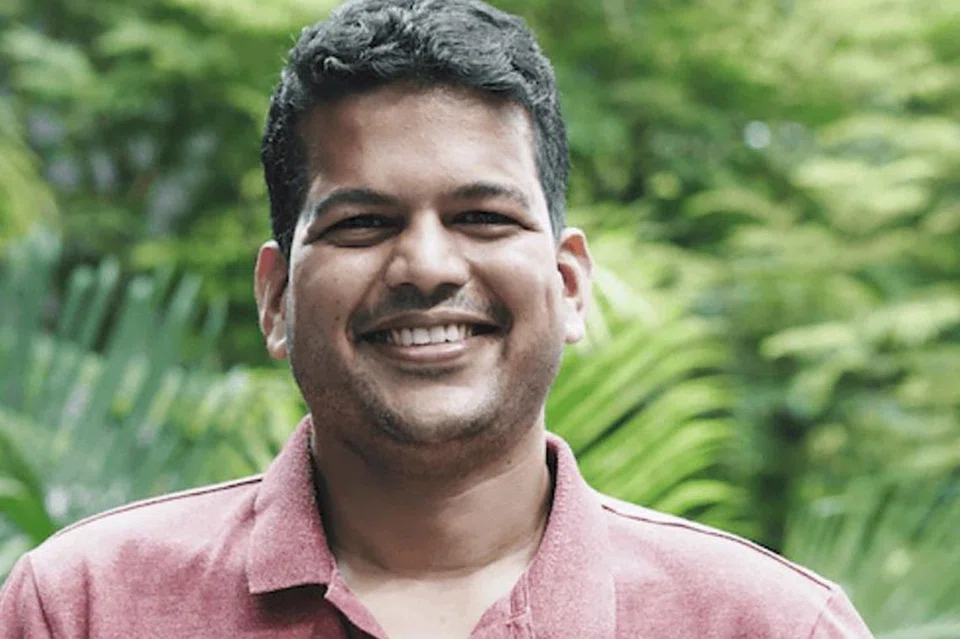
An Indian expatriate has generated a degree of media interest by posting about his desire to relocate to Bengaluru after seven years in Singapore.
Mr Aakash Dharmadhikari, co-founder of a company named Realfast, says: “Partly we are shifting to Bangalore to get my daughter used to uncertainties of life. Singapore is just way too perfect, and we thought it’s making her soft. Unfortunately we also had forgotten what the Indian chaos feels like... turns out we have also become soft.”
Mr Dharmadhikari has touched on a point that is extremely important for Singapore. The Republic might not be “just way too perfect”, but it does come close to that ideal in terms of the efficiency and probity with which the Government conducts the affairs of the nation, the high standards of delivery of public services and other expectations that people have of life in advanced nations.
Singapore has made the transition from Third World to First in a way that few could have foretold. Given its paucity of natural resources, Singapore has been able to achieve so much since its independence in 1965 because it is what I can only call a “willed nation lying within a destinarian state”.
There was no Singapore nation in 1965 but only a largely plural society (one in which race corresponded with economic function). The nation was willed into being by the economic imagination of its founding fathers, who sought to provide every citizen a common social stake in a fledgling country.
To do that, they adopted a political destination: that of Singapore as a successful state. Carrying the willed nation on its back, that destinarian state crossed one milestone after another on the international highway to success.
What helped was the ability of Singapore’s political and administrative leadership to put nation above ethnic and partisan self, and the energetic approval of voters for severe laws and powerful institutions that made it possible for an island city-state to adopt a globalising strategy of survival and success.
The willed nation residing in a destinarian state did not signify softness but its opposite. That opposite was embodied in the belief of the leadership that the world did not owe Singapore a living. Singapore must progress or perish.
I arrived in that Singapore from India in 1984. Mr Dharmadhikari would have arrived in 2017 in a very different Singapore. Hence his concerns that his daughter might be spoilt by the ample comfort zone provided by this country. Hence his desire to give her a reality check by way of introducing her to the “uncertainties of life” in India.
I wish the family well, but I do not think that the Singapore-India binary holds true. That is because both countries are part of a single international trajectory in which the competitiveness of nations is decided by impersonal and extra-national forces that take no interest in geographical borders. Globalisation does not respect the past but thrives on an expansive view of the future. That can be a cruel view.
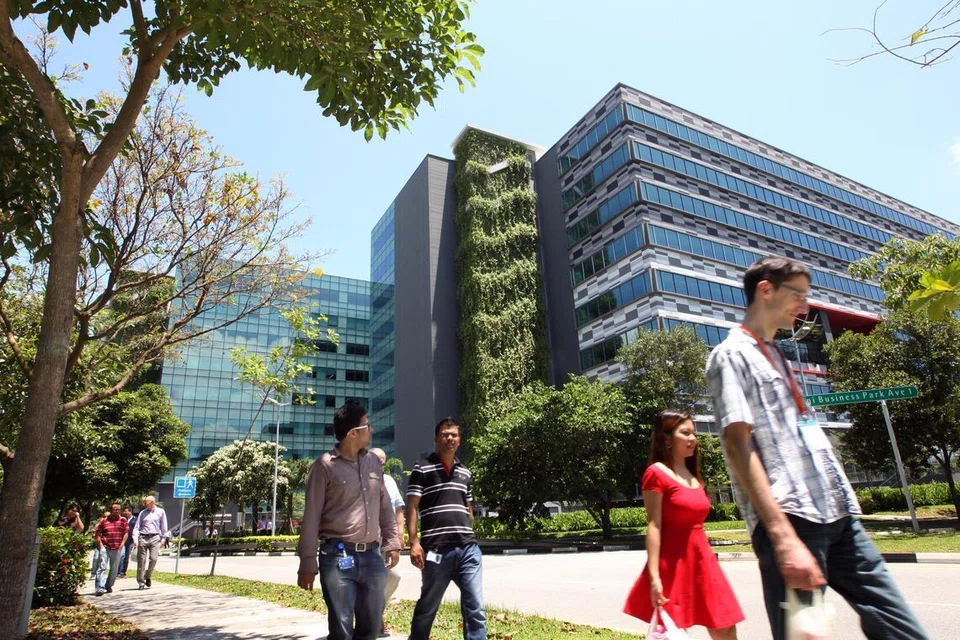
A small but pertinent example: Changi Business Park. A recent Bloomberg article carried by The Business Times said that it was emptying out as global tech and finance layoffs take a toll on it. This news would come as a shock particularly to Indian expatriates, who are more than familiar with what some locals call Chennai Business Park or Changalore.
Softness? What softness? The business park’s fortunes are cyclical: There is no structural softness in it. It was set up for a good reason (to reduce economic concentration in the Central Business District), is meeting international headwinds and will have to recover its position in a globalised Singapore economy.
The same holds true for globalised India, whose economic future resides in cities such as Bengaluru where talented graduates from elite institutions such as the Indian Institute of Technology congregate because of the economic ecosystem that the cities provide.
Bengaluru’s success has spread to Hyderabad and other cities which are now a part of the same trajectory of success that includes Shanghai and Singapore.
In time to come, Bengaluru might spoil Mr Dharmadhikari’s daughter in a way that he fears Singapore might have done. That does not mean that Bengaluru would have gone soft. It would have reached its optimum level of performance. That is all.
All this said, there is no way in which Singaporeans can or do imagine that they can go soft on themselves. They can preserve their place in the world only by being realistic about their own chances of survival. No one owes Singapore a living.
No one owes Bengaluru a living, either.
Perhaps Mr Dharmadhikari’s daughter will return to Singapore in the years to come, strengthened by her residence in Bengaluru.
The writer is a former Straits Times journalist.