When his wife went missing in the Nepal floods on Aug 26, he hoped that she would have somehow survived and return safely.
But Selvaganesh, who wanted to be known only by his first name, says he has since accepted that his spouse, Shalinny Deavy, is gone.
Said the 43-year-old: “There were many people who contacted me saying they believed she would come back safe. But I know she is gone. She’s not coming back.”
Shalinny, a State Courts employee, is one of nine Singaporeans still missing after the Nepal floods.
The 40-year-old was on a pilgrimage there and last spoke with Selvaganesh over the phone at around 9am on Aug 26.
She told him she was at the Gyirong Port immigration building and was about to cross the border into Tibet.
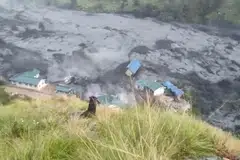
A viral video of the building being swallowed up by a raging torrent of water and mud as people tried in vain to run away has been viewed many times.
Selvaganesh said: “She was supposed to call me once she had crossed the border, which would have taken about four to five hours. But she never did.”
The 12-minute call was to be the last for the couple, who have been married for 10 years.
About two hours after the call, floods and landslides swept through parts of central Nepal and Tibet, killing more than 1,450 people and leaving over 5,000 missing.
That night, Selvaganesh struggled to tell their seven-year-old daughter about what had happened.
He said: “All I could tell her was that ‘Amma (mother) is missing’. I didn’t know what else to tell her.”
By the next day, he said he knew Shalinny was gone.
The last recorded location of her phone was at the immigration building.
Any remaining hope evaporated when the authorities confirmed later that day that there was no record of Shalinny crossing the border.
Selvaganesh said: “She was right smack in the middle of ground zero. I knew then that she was definitely not coming back.”
Final rites
That night, Selvaganesh and his daughter cried together.
He said: “For half an hour, both of us cried our hearts out. We looked through many photos and videos of the fun times we’ve had as a family, and we laughed.”
Selvaganesh said his daughter has been coping well with help from a school counsellor.
He said: “I have broken down many times in front of my daughter, but she has been very strong and has been consoling me. She has the qualities of her mother: strong, courageous, devoted and kind. That gives me the strength to carry on.”
But he still needed closure.
So, on Oct 9, he held the final rites and prayers for Shalinny.
The private event was attended by family, loved ones and colleagues, including judges from the State Courts.
Selvaganesh said: “With the evidence I had that she was truly gone, I didn’t want to deprive her of the proper rituals her soul deserves.”
He said Shalinny believed in volunteering and helping the community.
She was involved in grassroots organisations such as the Punggol 21 Community Club Women’s Executive Committee and the Punggol Shore Racial and Religious Harmony Circle.
She also shaved her head twice for Hair for Hope to raise funds and awareness for childhood cancer, and has been involved in monthly donations for food and education in India for the past three years.
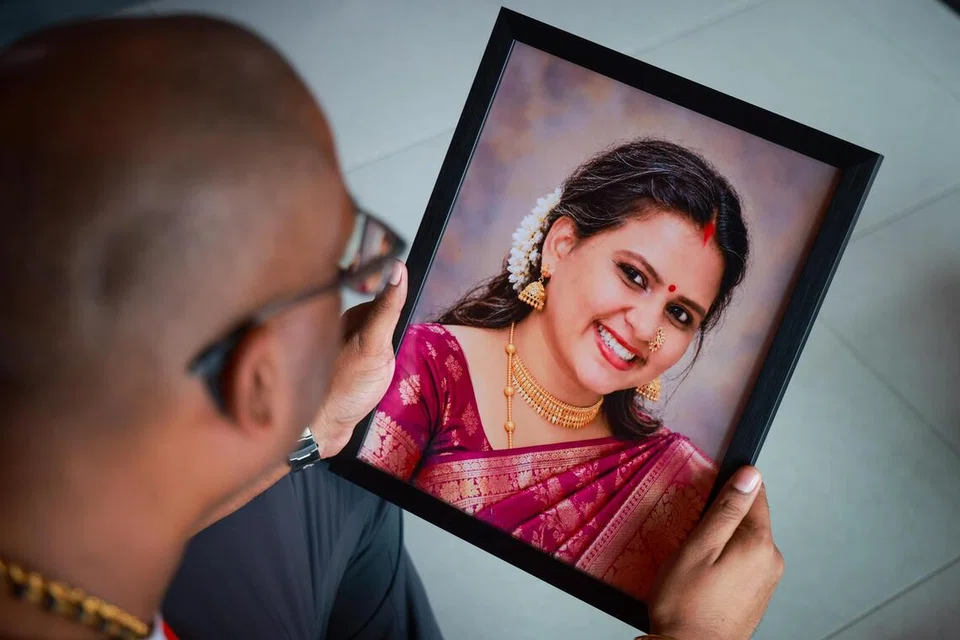
During the rites, the family framed a picture of Shalinny they generated with artificial intelligence using her recent photos.
Selvaganesh had initially been sceptical of the technology, after AI images of his wife that did not look like her were previously circulated.
But the framed picture was an accurate depiction, he said.
He said: “I wasn’t really expecting anything. But when we saw this particular picture, I cried and my daughter went silent. It was exactly her, white hair and all.”
Unresolved issues
Despite having performed the rites, Selvaganesh said there were several unresolved issues, such as their monthly finances and administrative matters.
Because Shalinny has not yet been legally declared dead, he still has to pay her insurance premiums and her share of their home loan.
Selvaganesh said that while the authorities have been helpful, their hands remain tied because they cannot do anything without an official death certificate.
Previously, under Nepalese law, a person had to be missing for 12 years before he or she could be legally declared dead.
But on Oct 9, the same day the rites were performed, it was reported that Nepal’s President had shortened that waiting period to about 1½ months for declaring missing disaster victims dead, paving the way for death certificates to be issued soon.
Selvaganesh said he was relieved to hear the news.
He said: “I’m hoping to hear from the authorities about this soon so we can properly move on.”
The Straits Times