Two ministers have spoken out against a wave of inflammatory online content targeting Singapore’s Indian community, urging Singaporeans to stay vigilant and reject narratives seeking to divide the country along racial lines.
The Ministry of Home Affairs (MHA) said narratives began circulating in “the Chinese information space” in May, suggesting Singapore is displaying anxiety over its cultural identity and ethnic politics. Shortly after, content emerged containing inflammatory narratives about Singapore’s cultural diversity, alleging the country was being overrun by Indians.
These narratives include claims that Singapore’s multiracial policy is a facade meant to appeal to Western values, and that the country’s stability stems not from its multiracial policy but from its majority Chinese demographics.
The content also alleged that the growing number of ethnic Indian politicians in Singapore would act in favour of Indian immigrants, and that the Government’s approach of distancing itself from China while ignoring the supposed threat of a growing Indian community would lead to a negative outcome.
MHA noted that the content made selective use of images and footage of crowded streets in Little India – most likely taken on weekends, when migrant workers have their day off and contained derogatory and demeaning language to refer to the Indian community, including comparisons of increases in their numbers to “concentration of curry”.
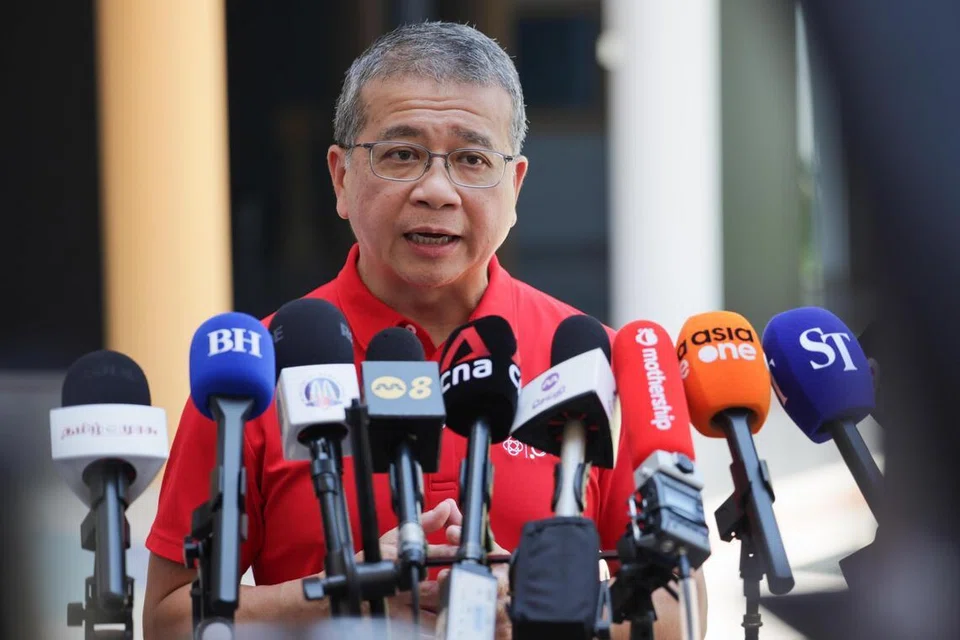
Minister for Culture, Community and Youth Edwin Tong described the posts as “offensive and problematic”, saying the underlying message is that the Chinese ethnic group has a greater right to belong in Singapore than other ethnic groups.
“We don’t tolerate any narratives at all that seek to undermine the racial harmony that we enjoy and that we protect, especially when they are propagated by foreigners,” he said. “And many of these posts are of foreign origin, so our priority right now is to take down these posts.”
Mr Tong said the videos attack Singapore’s multiracial society and attempt to divide people based on race. “This, however, is not who we are. Every community in Singapore here is valued, and everyone has an equal place,” he added.
MHA echoed this, urging Singaporeans to be “discerning when consuming and disseminating information online, and to reject all attempts to divide our society”. Minister for Digital Development and Information Josephine Teo, speaking to media on June 6 on the sidelines of a community event in Balestier, urged Singaporeans not to circulate the videos further if they have received them.
Ms Teo, who is MP for Jalan Besar GRC, which includes Chinatown, noted that one video used a photo of a religious procession of Indian devotees on Pagoda Street, implying Indians are not welcome there. She pointed out that anyone familiar with Chinatown would know that Buddhist and Hindu temples, a mosque and a Methodist church all sit within a short walking distance of one another.
While action by the authorities to remove the videos is important, Ms Teo stressed that daily community-level efforts to strengthen ties matter just as much.
“We must always remember that the cohesion we have in our society is very precious. It has taken a very long time to build up, but it can be broken if we are not careful,” she said, adding that the posts do not reflect the views of Singaporeans. “So, stay alert and make sure that you don’t allow anyone to cast doubt on our national unity and also our very important multicultural identity.”
Ms Teo also warned that the current wave of posts may not be the last of its kind. “Today, they target the Indians and they pit the Chinese against them. Tomorrow, it will be other races, other communities. We must not allow that,” she told reporters.
In a Facebook post later on June 6, Ms Teo said Singapore’s multiculturalism is not merely demographic but is embedded in daily interactions, education and public institutions. Combined with its role as an international hub, this has shaped a population that is culturally grounded yet outward-looking.
“This may be difficult to grasp for those from more monocultural settings, where identity is often expected to be singular and one-dimensional,” she wrote. “Singaporeans, by contrast, have always been accustomed to moving between different cultural worlds. That is not a contradiction. It is a product of our history and environment. It is part of who we are.”