
It has become customary for Mrs Lalythambika Rice to visit Singapore at least once in four years.
The 74-year-old, who left the island in 1972 to settle in the United Kingdom with her parents and other members of her family, makes the trips to spend time with her elder sister Sarojini and relatives and friends who live here.
But the journey this June was special. She learnt the Indian Heritage Centre was organising a heritage trail tour of the Sembawang area and wanted to be on the bus to rekindle memories.
On June 22, her hearbeat quickened as she clambered aboard the bus, anxious to know what the place where she spent her childhood would be like.
“It’s totally different. I couldn’t recognise anything,” she told tabla!. “There was nothing there, except the old colonial bungalows where the British officers resided.”
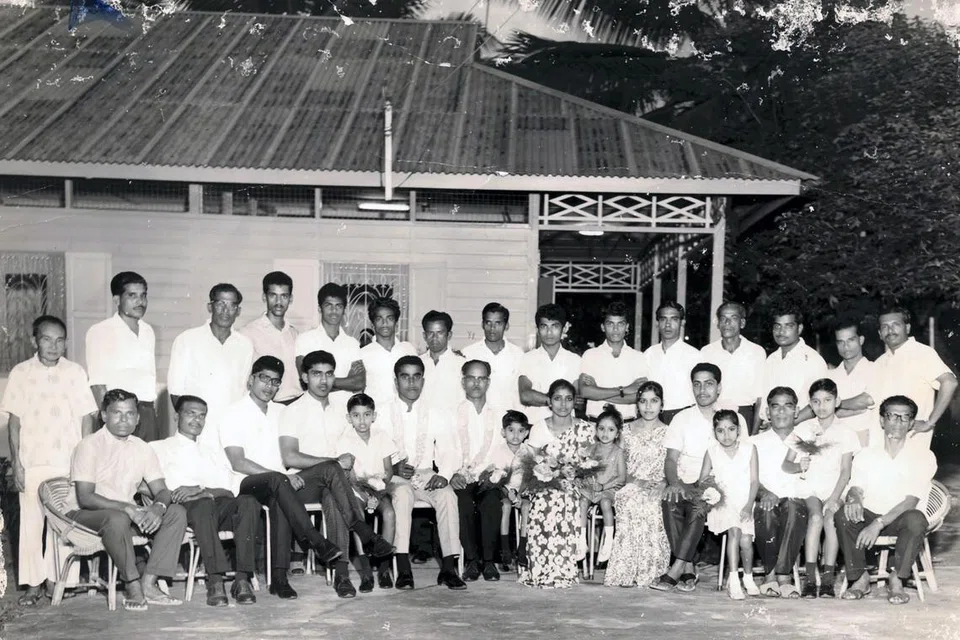
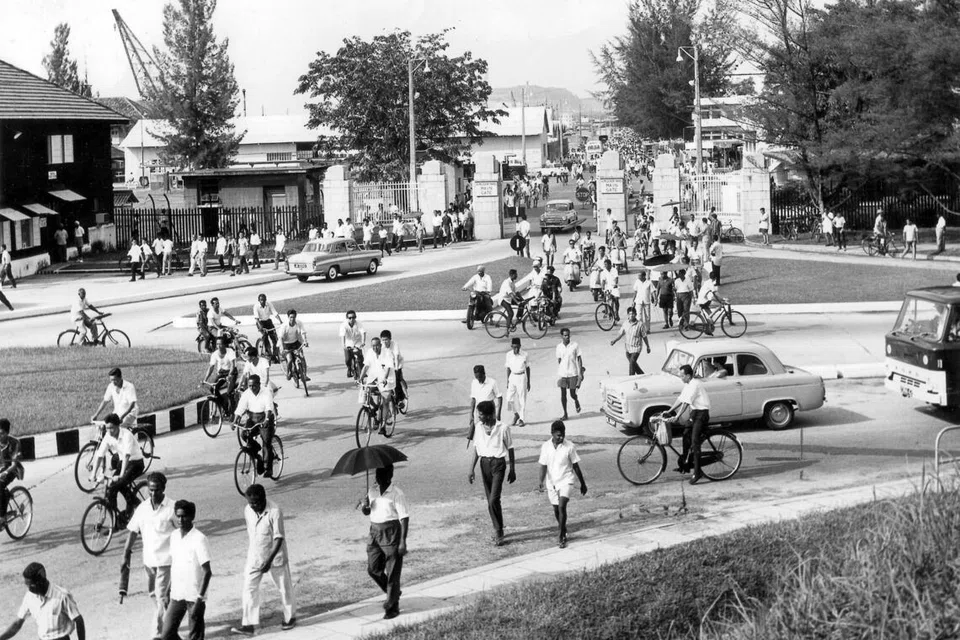
She was referring to the British naval base in Sembawang which in its heyday – from the 1940s to the 1960s – housed more than 4,000 Malayalee families, like her own. They were from Kerala, a state in South India. There were also several others from different Indian states such as Tamil Nadu, Andhra Pradesh and Punjab.
“My father V.S. Chellappan arrived from Varkala (a town in South Kerala) in 1938 to work at the naval base when he was 19 years old,” she said. “He was a bus driver and later married my mother Narasamma, who was from Andhra. Together they had three children, I and my elder sisters Sarojini and Chandramathi.
“All of us spent our lives at the naval base till 1972 when it closed. I cherish those memories. We lived a simple lifestyle but enjoyed the time spent with other Indians, Chinese and Malays in the sprawling area. There were several Malayalees and we were a close-knit group.
“I studied at the Canberra Primary School and the Naval Base Secondary school and was very active in the cultural scene, performing bharatanatyam and taking part in other social events.”
Like Mr Chellappan, thousands of Malayalees began arriving from Kerala in the early 1900s to work at the naval base in different capacities, ranging from dockyard workers to administrative clerks. The British, who ruled Singapore at the time, wanted a strong workforce and considered the Malayalees hardworking and dependable.
“Most of them got the jobs through word of mouth,” said Mr P.N. Balji, 75, the former editor of The New Paper who grew up in the naval base. “It was common for a Malayalee who worked there to bring family members or friends from Kerala to join him. Most of them came from South Kerala, districts like Trivandrum and Quilon. There were a few from North Kerala, like Malabar, from where my father hailed.”
Most men who came from Kerala were bachelors. Some had wives and children back home, while many married in Singapore later and had children.
All of them lived in blocks allocated by the British inside the naval base. There were separate quarters for bachelors.
“The naval base earned the name Kochu Keralam or Little Kerala because the Malayalees were dominant,” said Mr Balji. “They loved to portray their culture, and traditional festivals such as Onam and Vishu were celebrated with gusto. Even the British admirals took part in the festivities, sitting in the front row in their white uniforms along with their well-dressed wives.”
The naval base was self-contained, with its own schools, hospital, provision stores, movie theatres, police station, swimming pools and football fields.
“It was difficult for outsiders to enter the naval base without a pass,” said Mr Balji. “Even then a member of the household had to go to the gate and take them in with permission from the guards.”
According to independent researcher Marcus Ng, the naval base at that time was a city on its own, second only to Singapore’s city-centre.
“It was tucked away in the northern end of Singapore, but if you look at it closely, its development was central to the growth of Singapore and the region at large,” he said.
“The King George VI dockyard, when it opened in 1938, was the biggest in the world, servicing naval ships all the way up to Australia. And the naval base spread up to 54 sq km, all the way from Sembawang to Woodlands, ending near the Causeway and taking up almost the entire northern shoreline of Singapore.
“It was a major urban centre, well-developed, bustling with activities and multi-racial.”
Mr Ng pointed out that more than 10,000 people worked at the naval base in the 1950s and 1960s with some staying in nearby Nee Soon, Chong Pang and Yishun.
“The Malayalees had a strong identity,” he said. “Important to them was education, culture and literacy. They liked to speak Malayalam and dressed traditionally. Some wore shorts. They also had classes for students to learn the Malayalam language and the traditional dances.”
Mr R. Asokan, personal care officer at the Sree Narayana Mission who studied at the Naval Base Secondary School, said that the Malayalees were also strong unionists. “There were rival unions and the leaders were mostly Malayalees,” said the 72-year-old. “They stood up for the workers’ rights and made big demands. It was typical of them because communism was then popular in Kerala and most of them came from a proletarian background.”
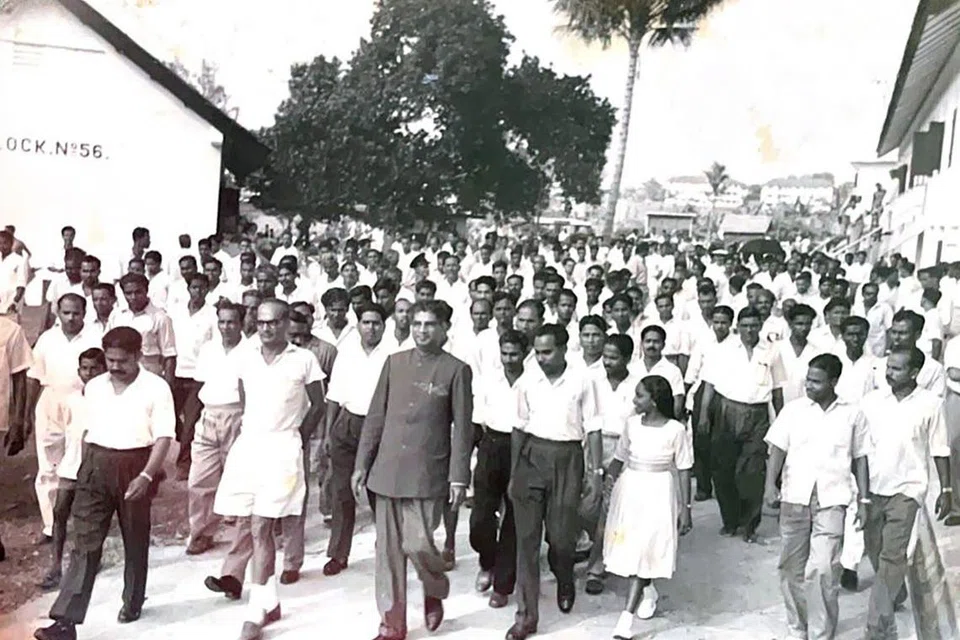
Political leaders from Kerala used to be looked up to then. Some even visited the naval base, including Mr Raman Sankar in 1961. He became Kerala’s chief minister in 1962 and held the post till 1964.
Mrs Lalythambika has a photo in her album which shows her dressed in a skirt and walking alongside Mr Sankar along with other Malayalees when he toured the naval base.
All the unions, however, were disbanded by the government in 1963 and the leaders arrested.
Similarly, all the housing blocks in the naval base began to be demolished from 1972, soon after the British left Singapore in 1971. The dockyard had been handed over to Singapore ownership in 1968 and was renamed Sembawang Shipyard.
“The Malayalees at the naval base had to make a decision, whether to return to India, take up British citizenship and move to the United Kingdom or stay in Singapore,” said assistant curator at the Indian Heritage Centre (IHC) Liviniya P, who helped put together an exhibition called Ente Veedu, My Home: Malayalees in Singapore which is on at the IHC till September. “Some went back to Kerala and some moved to the UK, while a big chunk preferred to stay in Singapore.”
Some of those who went back to Kerala struggled to find jobs and lived miserable lives, according to reports. Those who went to the UK, like Mrs Lalythambika’s family, settled in East London, which soon earned the moniker Little Kerala. She now lives in Milton Keynes with her English husband Dr Lory Rice, who was attached to the Medical Research Council and Oxford University’s physics department, and their two children.
Those who remained in Singapore, like Mr Balji’s family, took up local jobs, with their children adapting to life here.
“The Sree Narayana Mission, Kerala Library and Singapore Kathakali Yogam are the naval base Malayalees’ legacies,” said Ms Liviniya. “They spent a lot of their time in these institutions, and it is where they still continue to meet in their old age.”