
ALI KASIM
Dec 8, 2013 was a Sunday just like any other for Mr Sakthivel Kumaravelu, a construction worker from Tamil Nadu.
Like others from his home town, the 33-year-old would head to Little India on his day off to eat and drink with friends before returning to his dormitory in Jurong on a private bus that departed from Tekka Lane in the evenings.
It was raining that night, and Mr Sakthivel boarded the bus around 9.30pm. Several workers complained to the bus timekeeper, Madam Wong Geck Woon, that he had jumped the queue and was drunk.
Madam Wong then saw that he had walked towards the back of the bus with his trousers around his knees. She told him to pull them up and demanded he alight, citing a rule which prohibited the bus from ferrying drunk passengers.
After refusing a few times, Mr Sakthivel eventually complied, and the bus moved off slowly towards Race Course Road. Less than a minute later, however, he reappeared, walking next to the bus and looking in through the front door, pleading with the driver to let him back on.
When the driver waved him off, Mr Sakthivel was undeterred, now almost running alongside the bus. His dorm was located more than 25km away, and public transport would have been difficult to manage for a highly inebriated man.
Moments later, he slipped on the wet road and fell face down into the path of the front left wheel of the bus. Although the driver stopped the bus almost immediately, the wheel had already gone over the worker’s head and torso, killing him instantly.
A crowd of migrant workers surrounded the vehicle when they realised a man had been run over.
And that’s when it all happened so quickly.
Some of the workers got upset. They thought Mr Sakthivel had been pushed off the bus by Madam Wong. That false narrative spread like wildfire among them – from the scene of the accident to a tavern nearby called “Kodai Canteen”, where migrant workers would congregate to drink liquor. Soon, patrons of the tavern joined the commotion, instigating others that one of their own had been killed.
When the bus driver and Ms Wong stayed in the bus and shut the doors, it enraged the crowd even further. “Kill the woman, burn the bus,” they chanted in Tamil, as they punched and kicked the vehicle. They flung shoes, bottles, and even metal drain covers at the bus, shattering its windows.
The ensuing riot along Race Course Road left 54 officers and eight civilians injured, and some 30 vehicles damaged. Police cars were overturned and burned. An ambulance was set on fire. Hundreds of residents in nearby HDB flats stood outside their corridors and stared in disbelief at the carnage happening below. They were witnessing a scene they had never imagined would be seen on a Singapore street.
Yet, if you visited the area the following morning, you could hardly tell that Singapore’s worst major public order incident since the racial riots in the 1960s had occurred the night before. Debris had been swept up, burnt cars towed away, barriers were put in place – no one even crossed the road for most of the day. That’s Singapore for you. Even when the unprecedented occurs, the clean-up is prompt.
The aftermath, however, wasn’t as quiet. Immediately, a temporary ban on the sale and consumption of alcohol in Little India was implemented. The ban was then extended for six months, and in 2015, a designated Liquor Control Zone was established, prohibiting the public consumption of alcohol – outside of licensed establishments – in Little India from 7am on Saturdays to 7am on Mondays.
The area also saw a stark increase in surveillance. The number of police cameras deployed in the district rose from 34 in 2016 to about 200 in April 2020.
Mr Paul Ganapathy, 60, a resident at Chander Road, said the riot, ironically, led to improvements in the area. He pointed to the new bus interchange in Tekka Lane, which allows migrant workers to board buses in a more orderly fashion.
“If you’re drunk, they won’t even let you on the bus to begin with,” he said. “In a way, (the riot) changed things for the better. Before, there were no proper places for buses to pick up or drop off workers to and from the dormitories, or areas for people to sit or stand. So the workers would just sit in groups in the open field, sometimes even when it rained.”
“Sundays now are also a lot quieter. From my flat, I don’t hear any more drunken fights happening on the streets.”
While the consequential rulings and infrastructure have indeed improved things for migrant workers in Little India, things took an uncomfortable turn for many of them soon after the riot.
For almost everyone in the Indian migrant worker community, Little India means so much. The food, the sights, the smells, the sounds – all of which remind them of home. Then almost overnight, they had become persona non grata, in their own enclave.
Naturally, Little India saw a salient increase in police presence immediately after the incident. And some workers felt the brunt of it, so to speak.
“We were looked upon suspiciously by the police whenever we hung around the area,” said Mr Marimuthu, an Indian national who is a chef at a renowned restaurant in Race Course Road.
“Even when we weren’t drinking or doing anything suspicious, we would be asked to leave the area if there were too many of us in a group.”
Small business owner and former construction worker Nadanasigamani Sendhil said he felt some hostility from the locals after the incident.
“There were some who did not wish to sit next to workers, or stand near us on public transport. I did feel embarrassed and ashamed over what happened,” said the 48-year-old.
“Colleagues of other races at work asked me, ‘Why are Indians like this? Coming to our country to riot. We have not had this since the 1950s’.
“But they fail to understand the situation of these workers. After a week of hard manual labour, many of us go to Little India to relax. What led to the riot was not so much because of the alcohol as much as it was due to misplaced anger that a life was lost.”
Today, Little India is the same vibrant area it was before 2013, albeit with some adjustments.
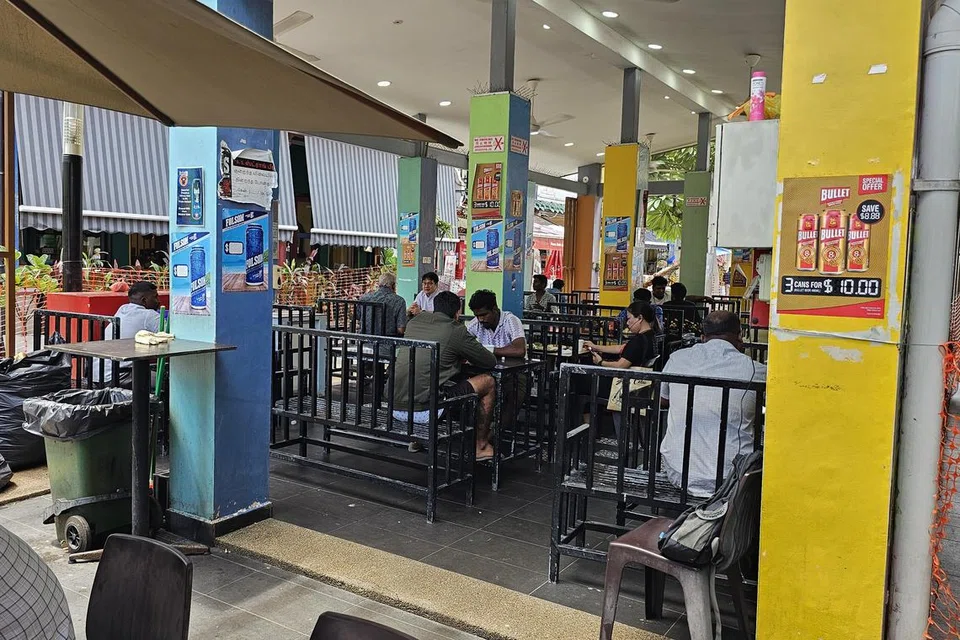
The Kodai Canteen, though still in business, has changed ownership more than twice since 2013. It looks very different now, more of a quiet food court than a boisterous tavern. The place is still frequented by workers, but they leave the premises after dinner. No longer are there sights of beer bottles flooding the table tops.
At the new Tekka Lane bus interchange, around 9.30pm, workers board the buses with ease and order. No one is too drunk to ride.
Ten years on from the night Little India burned, you could walk along Race Course Road and not imagine such bedlam once took place there.
Then again, you couldn’t tell the day after either.
Additional reporting by K Janarthanan