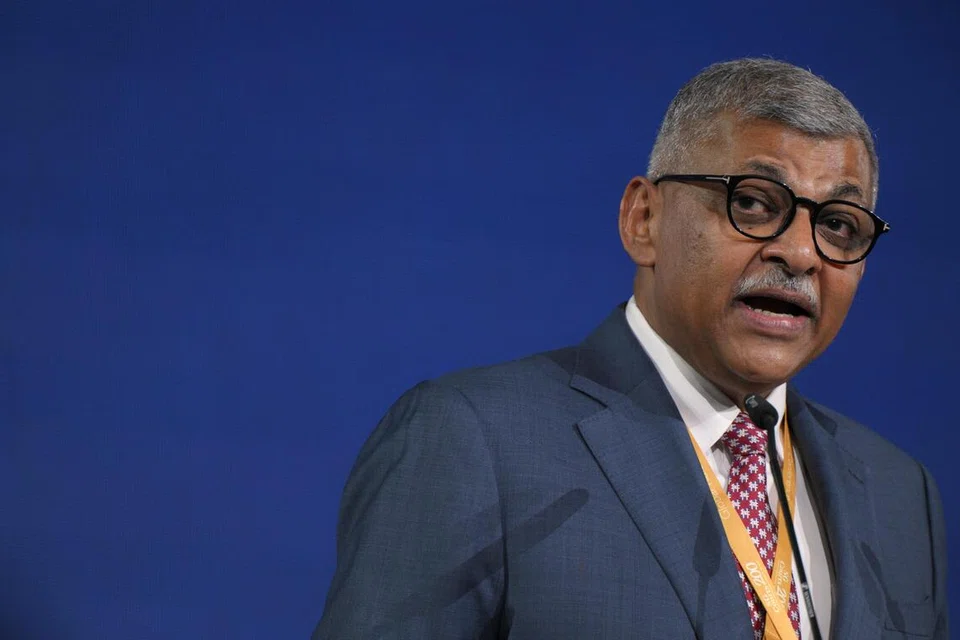
Without natural resources or a large domestic market, legal certainty and institutional integrity is important for Singapore to attract foreign investment, Chief Justice Sundaresh Menon said in his keynote address on Wednesday (Nov 25) at the Global Rule of Law Conference, which marks 200 years since the Second Charter of Justice.
The country depended on trade and foreign investment, and “therefore had to earn the confidence of businesses and investors”, he said.
Thus, what Singapore can offer is reliable institutions, honest public administration and a legal system in which commercial commitments could be trusted and enforced.
By being more stable and secure than its neighbours, Singapore set itself apart as a place to do business, said the chief justice.
This approach has paid off. In 2025, foreign direct investment inflows across Singapore’s economy amounted to S$197 billion, he noted.
Building trust
Legal certainty lets people and businesses plan with confidence, but it “does not mean that private economic rights (are) inviolable”, said CJ Sundaresh.
He cited the example of the Land Acquisition Act 1966, which allowed private land to be compulsorily acquired for housing and industry, with the law defining the purposes, process and compensation.
Collective sale rules were later amended so that a supermajority of owners, rather than all of them, could approve redevelopment.
Another pillar of this trust was suppressing corruption, said CJ Sundaresh. Corruption damages the institutions and systems the community depends on, even where no identifiable victim exists.
For a small state reliant on foreign investment, a reputation for bribery or arbitrary administration are risks it cannot afford. This is because investors making long-term commitments value predictability and the assurance that public institutions follow known rules rather than private interest, he added.
CJ Sundaresh also pointed to cross-border commercial justice, which an open economy relies on for investor confidence.
Singapore courts have respected arbitral tribunals’ power to rule on their own jurisdiction, and recognised that issues already decided by foreign courts are, in some circumstances, final in Singapore too.
A communitarian approach
These examples, said CJ Sundaresh, reflect his broader point that Singapore’s understanding of the rule of law has a “distinctly communitarian emphasis”, shaped by the circumstances of its independence.
He said this emphasis finds expression in three areas: economic, social and political.
Law, he said, “had to do more than constrain public power” – it had to help build institutions, economic foundations and the conditions for peaceful existence.
The communitarian view starts from the idea that no one flourishes in isolation, he said, and is concerned with sustaining the conditions in which everyone can exercise freedom meaningfully.
It differs in emphasis from a rights-centred liberal individualist view – though the contrast should not be overstated, he said.
Appeals to the public interest do not make every exercise of state power lawful, and without safeguards such as equality before the law and an independent judiciary, communitarianism “can become rule by law”, said CJ Sundaresh.
“There is no single model of the rule of law that every society must adopt,” he said. That individual interests must sometimes yield to the collective was “not by any reasonable measure antithetical to the rule of law”.
On the social front, CJ Sundaresh said law helps sustain cohesion in a plural society, citing measures such as Group Representation Constituencies in Singapore’s political system, the reserved presidency and the ethnic integration policy for public housing.
Politically, he said fundamental liberties such as free speech are not absolute and can be restricted on grounds including public order, while courts keep the executive within legal limits. THE BUSINESS TIMES