ALI KASIM
As soon as Mr Andy Lim sits down for our interview, he inquires if I speak Tamil.
I tell him the few basic phrases that I know, and he repeats them – only, with much better pronunciation.
“Ours is like broken English and Tamil, substituting the vocabulary here and there,” he says.
By “our” he means himself and the people he works with in India. “Tamilish”, he further explains, is the Tamil-English patois he uses to communicate with people in Chennai, where the 42-year-old has been working for the past 17 years.
“I needed to learn the language as soon as I got there,” Mr Lim says. “Most of the engineers speak English, but the drivers and others, speaking to them in English is not going to work.”
He goes on to list the cities and states in India he has worked in or visited, from Mumbai to Mizoram, dropping a footnote for the places he found fascinating, and it soon becomes clear Mr Lim is no ordinary Singaporean Chinese.
When he graduated with a diploma in electronics, computer and communication engineering from Singapore Polytechnic in 2006, Mr Lim, then 25, made the rather unusual decision to begin his career in India.
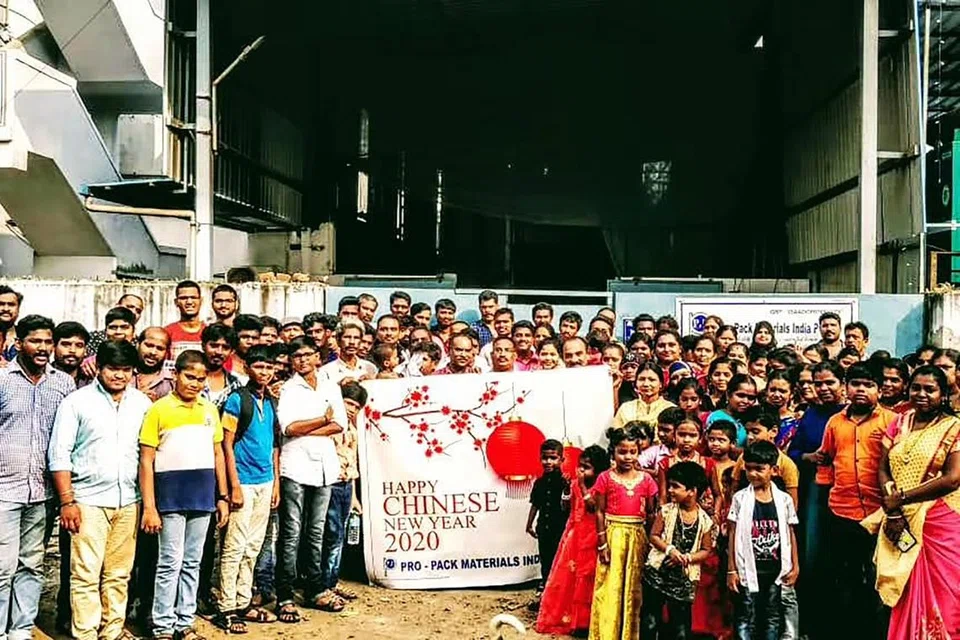
His company at the time, Pro-Pack Materials, which manufactured clean room and electrostatic products, needed a Singaporean to oversee first-hand its sales portfolio in the Indian market.
Young and yearning for experience, Mr Lim knew India would offer opportunities that he would not have here.
“With my educational background, I would have been at the bottom of the organisational ladder somewhere. In India, I got a chance to prove myself,” he explains.
Naturally, the change in time zone, climate and culture required some acclimatising to in the beginning.
“When I went (to India), I didn’t really know what to expect, so I simply had no expectations.,” he said. “The biggest problem I had initially was with diarrhoea. I had it almost every day, and couldn’t figure out why – was it the water, the food or the air.
“It took three to four months for me to get used to it. And when I came back to Singapore, I had diarrhoea again, because my stomach had to switch back.
“A lot of people think food in India is dirty, but that’s not true. It’s just that we have different bacteria in our body. A lot of Indians when they come here, they get diarrhoea on the first day too.”
After spending one year in a comfortable serviced apartment in Bengaluru, Mr Lim realised he needed to step out of his comfort zone if he wanted to maximise his output. So he moved to very basic living quarters next to the company’s office in Ambattur – an industrial zone an hour’s drive from the heart of Chennai.
There, he had to get water from a hand pump, travel 50km by rickshaw to meet customers at times, and put up with a litany of privations, especially in regard to obtaining registrations for work.
His first “welcome to India” moment, though, came when he boarded a train.
“I was carrying a lot of equipment with me, and had to use the toilet in the train. I remember getting shocked when I saw that the toilet bowl was just a hole, there was no flush or anything,” he said.
“And then you have people clinging onto the side of the train and on top of it – I had never seen such a thing before, so it was quite a culture shock.”
The first step towards assimilation, he thought, was to learn the local lingo, and he duly picked up conversational Tamil and a smattering of Hindi.
“Language always helps to break the ice. People always appreciate the effort I made to learn their language and eat their food,” Mr Lim says.
Mr Manjokumar Sivam, 33, who has been working with Mr Lim since 2016, said he was impressed with Mr Lim’s ability to converse in Tamil right from the moment they met.
“It really helps because as our boss we can always go directly to him when we have an issue,” said Mr Manojkumar, who is based in India.
He rates Mr Lim’s proficiency in Tamil as eight out of 10.
“I speak with him in Tamil all the time. The others too,” said Mr Manojkumar. “But it’s not just the language, he also understands our culture, how we live and work, and that’s something (foreigners) don’t always do.”
The lack of food options was a concern for Mr Lim in the beginning. Outside the traditional banana leaf fare – “I love it but I can’t eat it every day,” Mr Lim rationalises – restaurant variety was slim pickings in Ambattur.
“In Ambattur, there was this roadside fried rice, from a very dirty and dusty stall,” he said. “But they charged 25 rupees ($0.40) for chicken fried rice, and so in the beginning I would eat it very often. I loved it; you can’t find it anywhere else. Then in 2009, KFC opened in Chennai, so that became my go-to eatery.”
In the end, his decision turned out to be a wise one. In his first four years, he expanded Pro-Pack Materials’ client base from a handful to more than 100. Today, as director of Statfree, a company he formed in 2022 dealing in the same services as Pro-Pack, he oversees several offices and manages a workforce of more than 70 people.