Along with Stamford Raffles, Indian Muslims from Bengkulu in Indonesia – then called Bencoolen – came to Singapore in 1819.
These traders, labourers and settlers – who lived in Bencoolen Street, Prinsep Street and Waterloo Street – built an attap-roofed structure in Bencoolen Street in 1825 to serve as a mosque for their growing community, marking the establishment of Masjid Bencoolen, or Bencoolen Mosque.
Over the decades, the mosque has been redeveloped several times. Following the latest renovations, it reopened in 2024 and can now accommodate up to 1,100 congregants at a time, a far cry from the few dozen worshippers back in 1825.
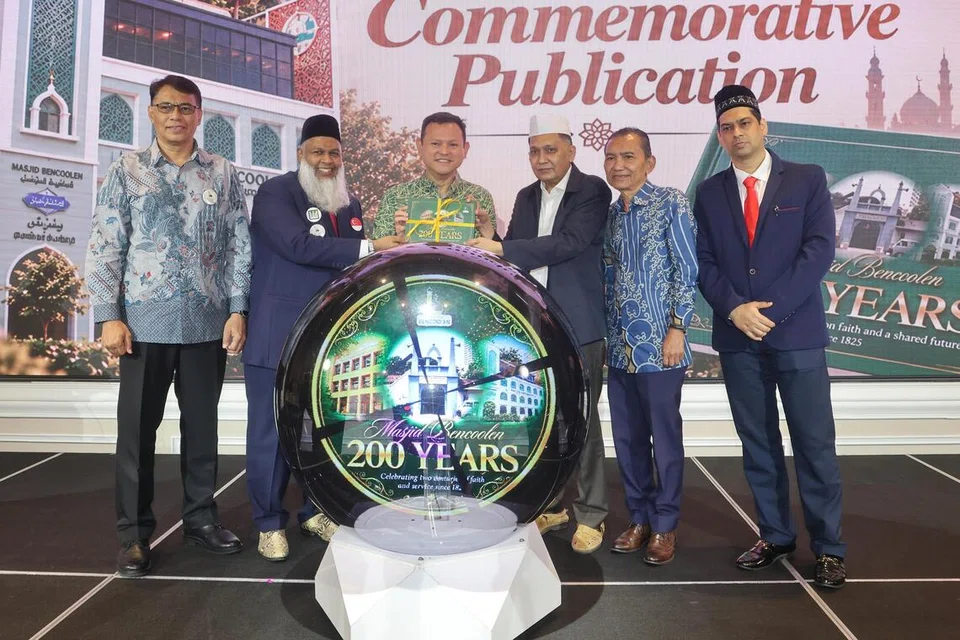
Bencoolen Mosque’s bicentennial was celebrated on Oct 18 with the launch of a book tracing its journey, and the contributions of the Indian Muslim community hailed by Zaqy Mohamad, Acting Minister-in-charge of Muslim Affairs and Senior Minister of State for Defence.
The mosque, which has become a key centre of Islamic learning in Singapore, is one of the oldest in the country.
Three other mosques here are around two centuries old: Omar Kampong Melaka Mosque, Sultan Mosque and Jamae Mosque.
Speaking at Orchard Hotel at an event marking Bencoolen Mosque’s 200th anniversary, Acting Minister Zaqy said the Indian Muslim community has played a significant role in the development of Singapore and has enriched the heritage of the country’s Muslim community.
Referring to the early Indian Muslim settlers, he said: “They built this mosque not just to be a place of worship, but as an anchor for their community to find its footing in a new land.”
Through years of giving, service and philanthropy, the community sustained the mosque and ensured that it continued to serve the changing needs of its congregants, he said.
Mr Zaqy added that Bencoolen Mosque has been at the heart of the Indian Muslim community’s deep and enduring contributions to Singapore’s social, cultural and economic fabric by nurturing individuals who serve their families, community and faith.
“These contributions are not just simply part of the Indian Muslim history – they are an important part of the Singapore story, of the rich and diverse heritage of our Muslim community here in Singapore,” he said.
Acting Minister Zaqy also highlighted the Islamic concept of “amanah”, which he said has sustained Bencoolen Mosque for two centuries and which must continue to guide its future.
Amanah refers to the responsibility entrusted to people to care for what they have inherited, and to leave something meaningful for those who come after.
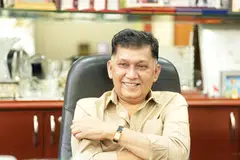
Mr Zaqy said the journey of individuals like Bencoolen Mosque’s vice-chairman, Mohamed Abdul Jaleel, embodies the spirit of amanah.
While Mr Jaleel was born in Singapore, his family moved to Chennai in India before returning in 1964 when he was six years old.
His father ran a small convenience store in Singapore, with a young Jaleel helping him and taking on whatever work was needed to support the family.
At Bencoolen Mosque, he and his family found a sense of community, belonging and faith, and he became a mosque volunteer in 1972.
He later founded property and logistics solutions company MES Group, where he is still chief executive, and engaged in philanthropic work supporting students, ex-offenders and the preservation of the Tamil cultural heritage.
He has served as Bencoolen Mosque’s chairman and is now the mosque’s vice-chairman.
Mr Jaleel, now 68, noted that the Indian Muslim community is a minority here – there are seven Indian mosques among the more than 70 mosques in Singapore.
Even so, he believes that in time to come, the community will be able “to do better not only for their families, but also for Singapore and their culture and heritage”.
Bencoolen Mosque chairman Mohamed Rafeeq Mohamed Yusoof said: “One of our key priorities is nurturing the next generation of mosque leaders and volunteers. Our vision is to see more youth come on board, not just as participants, but as stewards of Masjid Bencoolen’s legacy for the next 200 years.” THE STRAITS TIMES