


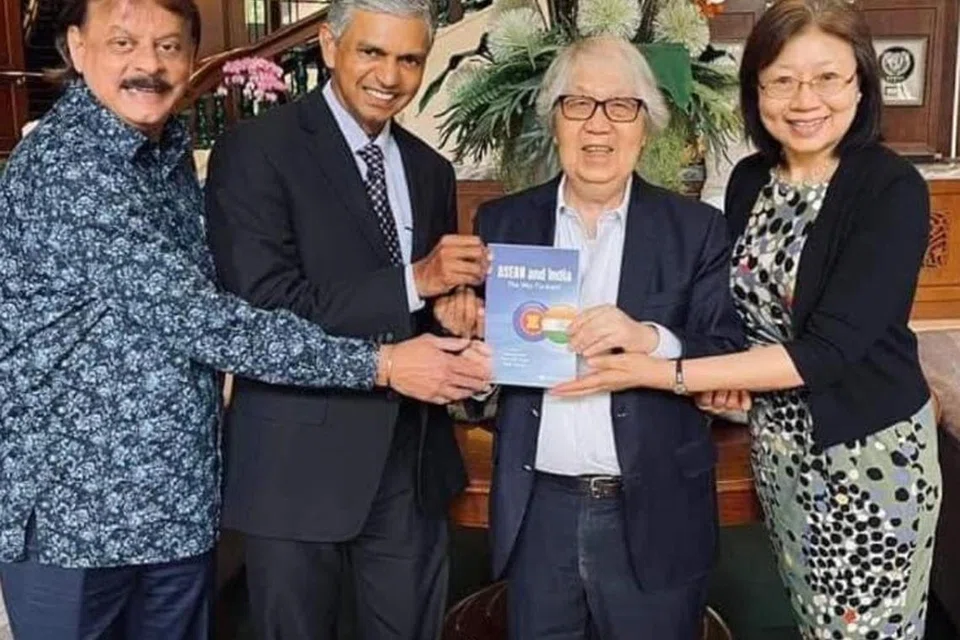
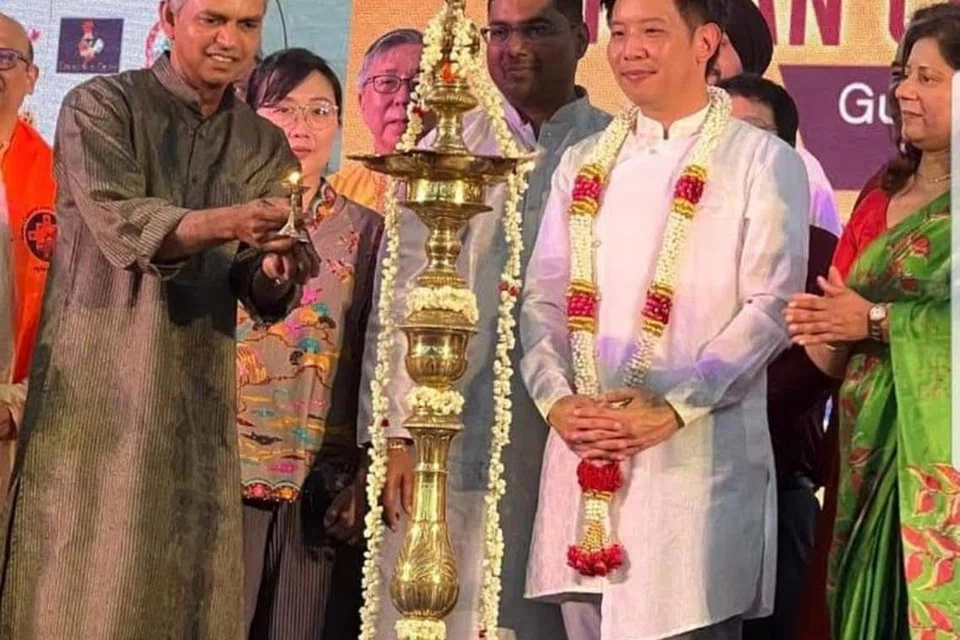
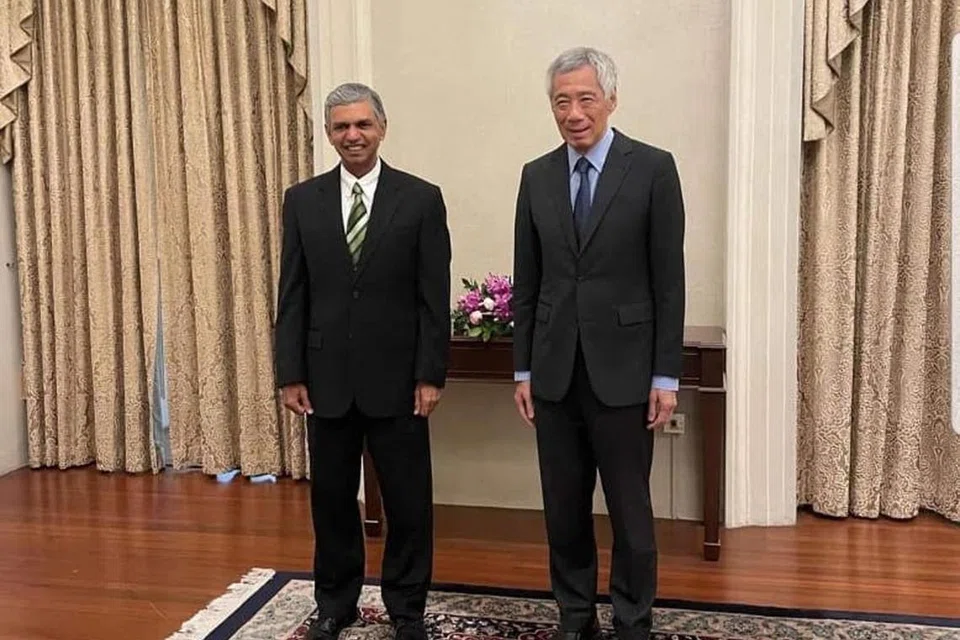
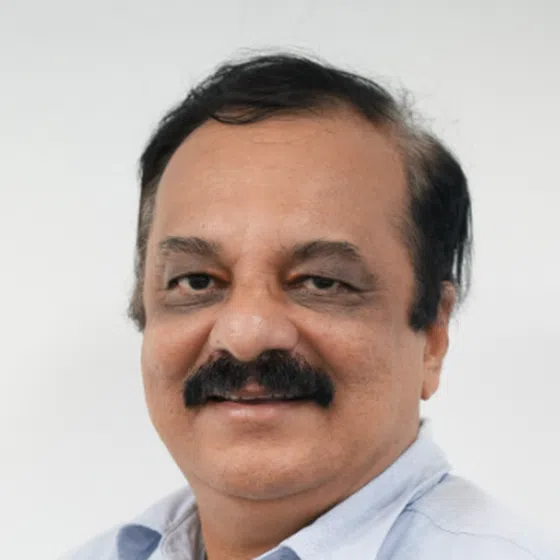
Former Indian High Commissioner Periasamy Kumaran has said his three years in Singapore was “reasonably productive” despite the “difficult circumstances” he found himself in on his arrival in July 2020.
“The situation then was very difficult, with Covid-19 raging and vaccines still undeveloped. It was difficult to go out and meet people,” he told tabla!, adding that he estimated the number of Indians and Indian Singaporeans here to be about 700,000.
“I wanted to meet as many of them as possible to build a rapport for the next three years but I couldn’t.”
The situation was made worse by incidents such as Delhi Chief Minister Arvind Kejriwal claiming that a “very dangerous” Covid-19 strain was prevalent in Singapore and a Changi airport Covid-19 cluster wrongly attributed to a family that arrived from India.
“Those incidents were only small niggles in the India-Singapore relationship,” said Mr Kumaran, who left Singapore last Saturday to take up the post of secretary at the Ministry of External Affairs in New Delhi.
“What was more troublesome during the pandemic was the restricted movements. One of the greatest attractions for the Indian community is the short distance between India and Singapore and the excellent connectivity. Once you remove that from the equation, Singapore becomes less attractive.”
Mr Kumaran is glad that passenger loads have returned to pre-Covid levels and 16 Indian cities are connected to Singapore by air.
He recalled how ministerial visits were few and far between during the first-half of his tenure. “But the situation changed after the first visit by External Affairs Minister S. Jaishankar in September 2021,” he said.
“We’ve had several ministerial visits since then, including Chief Minister M.K. Stalin coming from Tamil Nadu recently.”
Mr Kumaran, a 1992-batch Indian Foreign Service officer, described the India-Singapore ministerial roundtable in September 2022 as a memorable milestone in which both sides identified growth engines such as digitalisation and trade facilitation.
“Digitalisation is the first pillar – connecting payment systems and facilitating data transfer are among the areas we are working on.
“The second is green economy, which is very promising with commitments by both sides. India is a big source of green energy and we are looking to connect the grids directly between India and Singapore, as well as with Asean.
“We also have green hydrogen and ammonia supply chains. There is a pilot project whose success will mean we can scale up in a big way, procuring green hydrogen and using it in Singapore.”
The third pillar is skills development, which is an area of interest to India.
“Singapore has been extremely successful in setting up an ecosystem for skills development. It is remarkable how the syllabus is constantly improved to deal with new technologies,” said Mr Kumaran.
“India has a young population and we need to train them, help them get jobs, optimise our skills development ecosystem. Singapore is a very good partner for that.”
Food security, the fourth pillar under the ministerial roundtable, is of interest to Singapore and India, which is one of the largest food producers in the world, said Mr Kumaran.
“During the pandemic, some countries closed their agricultural exports for fear of internal shortages but India kept the supply lines open because the fear of Covid-19 spreading in villages was far lower.
“So Singapore thinks it will be good to have a food security partnership or a food corridor to try and work with India. But how we are going to lay the plan for the food corridor is still being worked on.”
Collaboration between India and Singapore will continue in “standard areas”, such as urban solutions, smart cities, waste management and fintech. “There is talk about how we can develop new industrial parks in India. The Tamil Nadu government has already signed an agreement to help redevelop industrial parks and it wants them to be redeveloped vertically, like Singapore does.”
With regard to the locals fearing job loss due to more work permits being issued for Indians to work in Singapore, Mr Kumaran stressed that “we should be sensitive to local sentiments”.
He explained: “At the top end of the job market, where there is a need for world-class talent, Singapore will continue to be an open place. At the lower end, many jobs do not pay well enough for Singaporeans, so that is not an area of contest. It’s only the middle segment, with both Singaporeans and Indians vying for the jobs.
“You can’t help but admire the way things are so well-organised here. Singapore also has one of the best Indian diasporas in the world – extremely well-qualified, well-to-do and successful.
“When you go to a high-level discussion, the quality they bring to the table is exceptional. With about 5,000 Indian Institutes of Technology and Indian Institutes of Management graduates, Singapore might have the highest concentration of high-value professionals in the world.”
Mr Kumaran also found Singapore’s connectivity with the region “very exciting”. “Unfortunately, my family (wife Ritu and sons Aditya and Mayank) and I could not travel much because of the pandemic and the second-half of my tenure was busy.”
“We have made many new friends over the last three years and we plan to keep in touch with them. We thoroughly enjoyed our stay in Singapore,” he added.
India’s new High Commissioner, Dr Shilpak Ambule, presented his credential to President Halimah Yacob on Tuesday.
“It is going to be an exciting time as we have a new high commissioner who’s so close to Foreign Minister Jaishankar,” said Mr Kumaran.
“Dr Ambule is from the 2002 IFS batch and has done postings in China and Sri Lanka. He is one of the best Chinese speakers in the foreign ministry and has been Dr Jaishankar’s staff officer when Dr Jaishankar was ambassador in Beijing, later as foreign secretary and now as foreign minister. They have worked together for about 10 years.”

