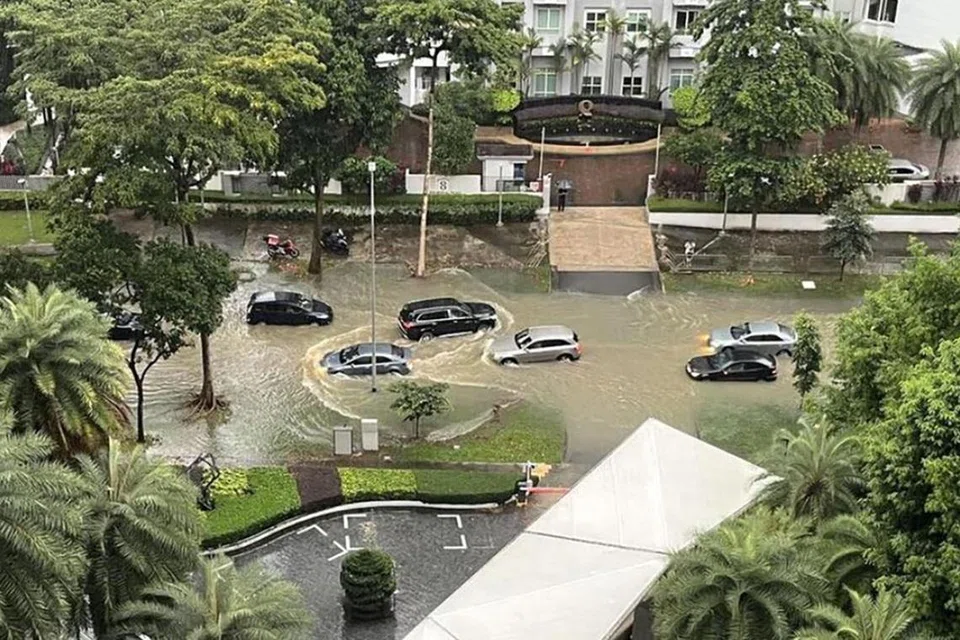
Amid the north-east monsoon and record rainfall events over the past few months, flash floods have hit Singapore on at least three occasions.
The most recent occurred in the evening of Dec 29, when several places including Dunearn Road, Bukit Timah Road near King Albert Park and Balmoral Road were inundated.
Cars were stranded along many of the affected roads.
The rainy north-east monsoon season, in particular, made November Singapore’s wettest since rainfall data collection began in 1980. This wet phase of the monsoon is expected to persist until late January 2025.
“We are unable to predict the intensity of these showers far ahead of time, as rainstorms can develop quickly in Singapore’s climate,” said Mr Maurice Neo, director of the catchment and waterways department at national water agency PUB.
“However, extremely heavy rainfall over a short period can sometimes exceed the capacity that the drains are designed for. That is when flash floods – small and localised floods that typically do not last for more than an hour – may occur.”
The rainy season, which lasts through January, is not expected to let up any time soon. The La Nina climate phenomenon, which brings wetter and cooler conditions to the region, is forecast to return some time between now and March 2025, causing rain to extend beyond the monsoon season.
Climate change is also expected to bring heavier, more intense and frequent storms. This could lead to more flash flooding.
The Straits Times