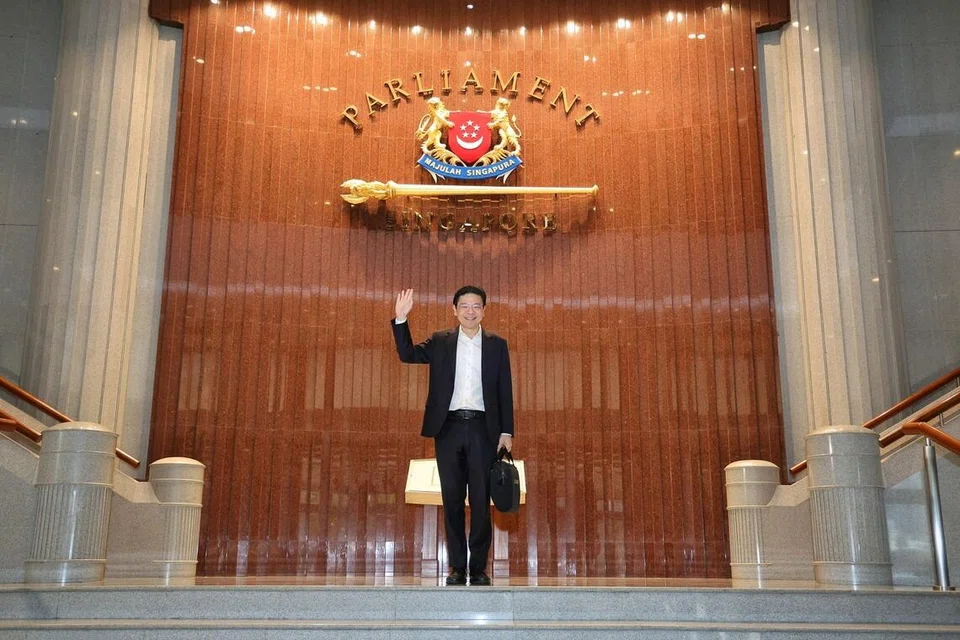

Singapore’s Budget 2026 has drawn largely positive reactions from tax, legal, and business advisers, who say Prime Minister Lawrence Wong has struck a careful balance between near-term relief for businesses and households and long-term investments in competitiveness and resilience.
Across the expert community, the dominant themes emerging from the Budget are artificial intelligence, internationalisation, research and innovation, and the need to strengthen Singapore’s position in an increasingly fragmented and uncertain global environment.
Mr Dilpreet Singh Obhan, partner at tax and regulatory advisory firm Dhruva Advisors, said the strong emphasis on artificial intelligence across advanced manufacturing, connectivity, finance and healthcare was both timely and strategic.
He highlighted the creation of a National AI Council chaired by the Prime Minister, the establishment of a larger AI park at one-north, and the launch of the “Champions of AI” programme as clear signals of Singapore’s intent to move beyond experimentation into large-scale enterprise transformation.
Measures such as a redesigned SkillsFuture platform, together with six months of free access to premium AI tools for Singaporeans taking selected AI courses, were also welcomed as practical steps to build workforce readiness.
On the business front, Mr Obhan pointed to the 40 per cent corporate income tax rebate and enhanced support for overseas expansion – including the Market Readiness Assistance grant rising to 70 per cent for SMEs and the higher cap for double tax deduction for internationalisation – as key enablers for local firms seeking new growth markets.
He added that significant allocations to Startup SG Equity, the Anchor Fund and the equity market initiatives, as well as a large investment under the Research, Innovation and Enterprise 2030 plan, would strengthen Singapore’s long-term growth engines.
“Overall, this is a Budget that seeks to grow the economy while ensuring no one is left behind,” he said, noting that support for families, mature workers and lower-income households complemented the business-focused measures.
Mr Abhijit Ghosh, managing director and head of tax for Southeast Asia at Alvarez & Marsal Tax, said the package clearly reflects Singapore’s intent to help companies diversify globally and integrate more deeply into regional markets.
He cited the corporate tax rebate, expanded overseas market grants, and higher limits for tax deductions on internationalisation expenses as important steps for businesses navigating geopolitical uncertainty.
More significantly, he said the Budget makes it clear that investing in AI is “no longer optional” for companies seeking sustainable growth. He noted the introduction of enhanced tax deductions for qualifying AI expenditure and stressed that firms which redesign operating models and upskill workers for human-AI collaboration would emerge as the real winners.
“The focus is not only to provide relief for the masses, but also to invest in long-term capability, competitiveness and national resilience,” Mr Ghosh said.
From a legal and private client perspective, Mr Varun Kalsi, director at Cyril Amarchand Mangaldas in Singapore, described the Budget as stable and progressive, pointing to its multi-pronged approach to easing cost-of-living pressures, the strong push for AI adoption, and a higher threshold for employment pass eligibility.
Mr Umakant Aggarwal, chief executive of Pecuniya Compliance Singapore, said Budget 2026 reflects a strategic pivot toward building durable economic strength in a more challenging global landscape.
He highlighted the emphasis on productivity, digital transformation and international expansion as measures that would help businesses manage rising costs and maintain profitability. He also said the S$1.5 billion injection into the Financial Sector Development Fund was well-timed to reinforce Singapore’s capital markets and asset management ambitions.
At the same time, he observed that refinements to social support – with more targeted assistance alongside fiscal discipline – would allow the Government to redirect resources towards defence, infrastructure and innovation.
Mr Amit Gupta, senior director for tax at Dell Technologies in Singapore, said the Budget aligns with expectations of moderate growth in 2026 amid global headwinds. He noted that the corporate tax rebate would provide short-term cost relief, while expanded overseas market grants and tailored support by the Economic Development Board would help anchor high-growth companies in Singapore.
Mr Gupta also welcomed the expansion of the Enterprise Innovation Scheme to include AI expenditure, enhanced worker training for an AI-enabled economy, and the formation of the new National AI Council.
Collectively, experts said Budget 2026 signals that Singapore is preparing for a more complex and uncertain global environment – not only by cushioning households and businesses, but by investing decisively in future capabilities, technology and talent.
santosh@sph.com.sg