
ALI KASIM
When he was eight years old, Ameya Meattle’s grandmother’s weakening vision piqued his interest in the visually impaired and the Blind Relief Association in New Delhi.
There, the Singaporean learnt how patrons of the association disliked being treated as “objects of charity” or considered “less than” able-bodied individuals.
This gave him the idea and impetus to launch an initiative – through stitching eco-friendly bags for sale – in 2022 that would provide visually impaired students with a sense of purpose.
In Singapore last year, he worked to that end with patrons of the Singapore Association of the Visually Handicapped (SAVH). He facilitated a workshop at SAVH where students were trained to make scented candles which Ameya then promoted and sold during the festive season.
“As I undertook this journey, I realised I needed to broaden my product range and customer reach,” said Ameya, now 15, and a student at United World College.
“I started engaging with Singapore-based outlets and was lucky to collaborate with Scoop Wholefoods to exhibit and sell products crafted by visually impaired individuals at their flagship store at Great World City.”
The pop-up exhibit runs until this Sunday, and features 23 different types of products ranging from various types of bags and placemats to scented candles and cushion covers.
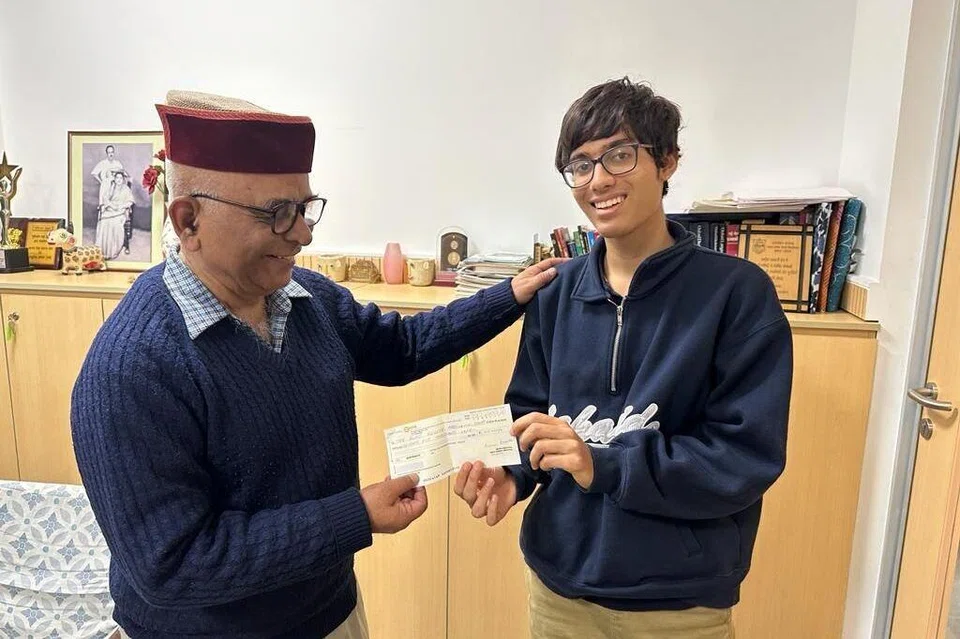
The venture has raised some $5,000, said Ameya, who has pledged 100 per cent of the proceeds to various non-governmental organisations (NGOs) in India, namely the Blind Relief Association, the National Association for the Blind and the Disha Foundation.
“The reception has been encouraging and will contribute to my target of achieving $10,000 by this calendar year. More than 50 blind patrons have been trained in this process,” he said.
“I feel proud to have made an impact in the lives of the visually handicapped. One out of every three blind persons in the world is Indian, as India has the world’s largest blind population. Hence, the scale of the issue in India is significant and demands attention.”
His mother Vandana, a lawyer in Singapore, said that as a young child, Ameya never thought of taking on such initiatives for commercial reasons.
“We need more children to be empathetic, and to that extent, I won’t be surprised if Ameya grows up to be a social entrepreneur – because now he has understood how the ecosystem works in Singapore and India, and also how to channel his energy to help others,” said the 49-year-old.
“The main thing for him is always ‘what do I do next?’”
Ameya said he is now looking to expand his customer reach.
“As a student, I have limitations, and so I’m evaluating marketplaces like Amazon and Shopify. Another idea would be to facilitate corporate gifts or hampers during festival season,” he added.
“As I love tinkering with tech, I’m also thinking of creating video games that are accessible to the visually impaired. All these initiatives give me a sense of purpose and I hope to continue creating awareness and fostering a sense of empowerment among visually impaired individuals.”