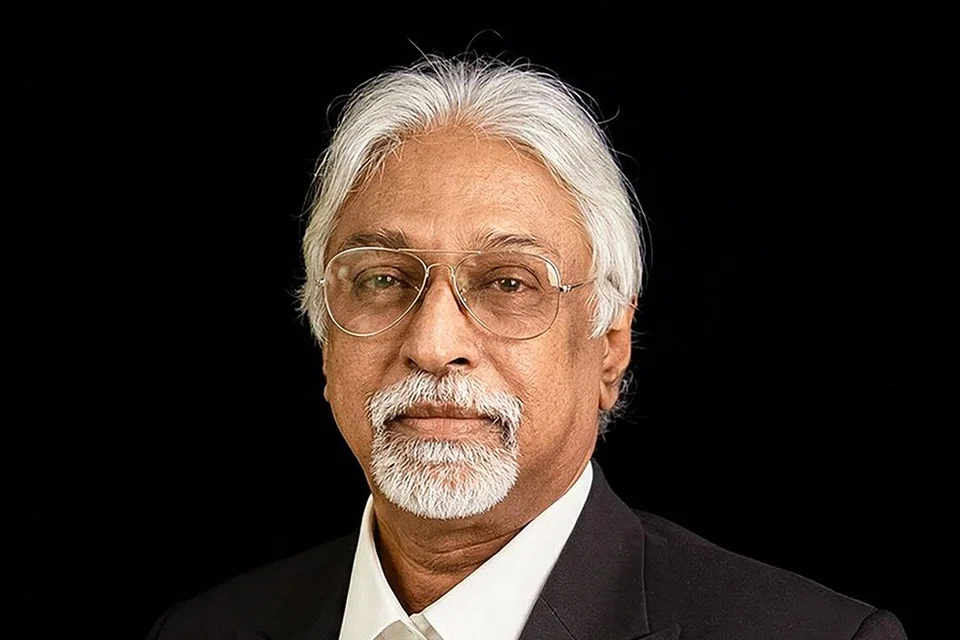

Interview with Dato’ T. Mogan, businessman and chairman of Dragnet Smartech, who is standing for the chairman’s post in the SICCI Electio ns 2026
Q: Your manifesto promises strict term limits and audited financials. How exactly do you plan to institutionalise these governance reforms without facing internal bureaucratic friction?
A: Good governance should never depend on personalities; it must be embedded in the institution itself. My approach is to codify term limits and financial transparency through constitutional amendments, clear council policies, and annual independent audits that are reported openly to members. Change management is equally important. I intend to engage past leaders, current Board directors, the newly elected Board members, and stakeholders early in the process so reforms are understood as strengthening SICCI, not targeting individuals.
When governance frameworks are transparent, predictable, and collectively owned, bureaucratic resistance naturally decreases.
Q: You have strongly stated that SICCI’s future “must be built, not inherited”. What concrete mechanisms will your administration introduce to ensure transparent, merit-based succession planning?
A: Succession planning must be structured rather than informal. We will establish a leadership pipeline programme that identifies emerging leaders from different sectors, age groups, and business sizes. Clear competency frameworks, mentorship opportunities, committee leadership experience, and transparent performance assessments will ensure future leaders are selected based on contribution, capability, and commitment. The objective is to create a culture where every member sees a pathway to leadership.
Q: The FLA has set a scoreboard target of facilitating 100 cross-border introductions a year. Which specific international markets or trade corridors will you prioritise to achieve this high volume of networking?
A: Our natural strengths lie in the Singapore-India corridor, but we must also leverage Singapore’s position as ASEAN’s gateway. I would prioritise India, Malaysia, Indonesia, Vietnam, and the UAE, while exploring emerging opportunities in Saudi Arabia and other growth markets. The goal is not merely volume but meaningful business outcomes. We will work with chambers, trade agencies, and industry partners to facilitate targeted introductions aligned with member interests and sector opportunities.
Q: Your team is pushing for an ambitious 70 per cent AI adoption rate among member companies. Given the diverse technological readiness of our SMEs, what tangible support will SICCI provide?
A: AI adoption must be practical and accessible. We will establish an AI Enablement Programme that includes introductory workshops, sector-specific implementation guides, mentorship from technology partners, and curated access to government support schemes. We will also create peer-learning communities where businesses that have successfully adopted AI can share real-world experiences. Our objective is to move members from awareness to implementation and measurable productivity gains.
Q: Your scoreboard also pledges the creation of 25 investor-grade companies. What specific metrics or criteria will you use to identify and accelerate these businesses?
A: Investor-grade businesses typically demonstrate strong governance, scalable business models, healthy financial discipline, market traction, and leadership capability. We will develop a structured assessment framework covering revenue growth, operational maturity, compliance standards, management quality, and investment readiness. Selected companies will receive mentorship, investor introductions, and capability-building support to help them reach the next stage of growth.
Q: How do you intend to bridge the gap between large, established corporate conglomerates and the micro-SMEs that make up the bulk of our local business community?
A: A chamber succeeds when businesses of all sizes benefit from participation. We will establish structured corporate-SME partnerships where larger companies can provide procurement opportunities, mentorship, expertise, and market access. At the same time, micro-SMEs bring agility, innovation, and niche capabilities. SICCI should become the platform where these complementary strengths create mutual value.
Q: In your experience as a Senior Adviser in the security sector, you drove deep industry transformation. How will you apply those exact workforce development strategies to upskill professionals within the SICCI network?
The most successful workforce transformations combine skills mapping, industry partnerships, and continuous learning. I would bring the same approach to SICCI by identifying future skills requirements, partnering with training providers, and creating structured professional development pathways. We must equip our members not only for today’s economy but for the industries of tomorrow.
Q: How do you envision balancing historical continuity with radical renewal at SICCI?
A: SICCI’s heritage is one of its greatest strengths. However, heritage should be a foundation, not a limitation. We will preserve the values, relationships, and credibility built over generations while modernising governance, member engagement, technology adoption, and leadership development. The challenge is not choosing between continuity and renewal – it is combining both.
Q: With local operating costs rising in Singapore, what active policy advocacy measures will you champion to protect and promote the interests of Indian-owned enterprises?
A: I believe SICCI should serve as a constructive bridge between businesses and policymakers. We will actively gather member feedback, identify common challenges, and present evidence-based recommendations on manpower, productivity, digitalisation, financing, and business costs. Effective advocacy starts with understanding the realities our members face on the ground.
Q: The FLA is heavily focused on the next generation of leaders. What specific outreach programmes will you launch to attract younger entrepreneurs and keep them engaged with the Chamber?
A: We will create dedicated youth and emerging entrepreneur platforms, mentorship programmes, startup showcases, and leadership development initiatives. Young entrepreneurs want access to opportunities, knowledge, and networks. SICCI must become a place where they can build meaningful connections and see tangible value in participation.
Q: How do you plan to increase active member engagement and retention among young professionals and next-generation entrepreneurs?
A: Engagement improves when members see relevance and outcomes. We will deliver targeted content, digital engagement channels, networking opportunities, peer communities, and leadership pathways specifically designed for younger professionals. The objective is to create an ecosystem where participation leads to growth and opportunity.
Q: How can SICCI better assist Singaporean businesses in capitalising on CECA and expanding into ASEAN and Indian markets?
A: Many businesses are aware of the opportunities but lack practical guidance. SICCI can play a stronger role by organising market briefings, regulatory workshops, business missions, sector-focused networking events, and advisory services. We must help members translate trade agreements into actual commercial opportunities. I intend to work closely with the Singapore Business Federation, and the various confederations from India and the ASEAN Business Council to achieve these objectives.
Q: The Indian business community is highly diverse. What targeted initiatives will you introduce to attract younger entrepreneurs while retaining the wisdom of legacy business owners?
A: Intergenerational collaboration should be one of SICCI’s strengths. We will create structured mentorship networks that connect experienced business leaders with younger entrepreneurs. This allows us to preserve institutional knowledge while encouraging fresh ideas and innovation.
Q: You have advocated for visionary leadership that builds strong internal teams. What changes will you make to streamline SICCI’s internal operations?
A: I believe in empowering teams with clear responsibilities, measurable outcomes, and accountability. We will review processes, strengthen committee structures, improve digital systems, and establish performance-focused work plans. Operational excellence is essential if we want to deliver greater value to members.
Q: How do you intend to strengthen partnerships with other chambers such as SCCCI and SMF to foster a more inclusive Singaporean business ecosystem?
A: Economic challenges and opportunities cut across communities and industries. I see tremendous value in closer collaboration with fellow chambers and industry associations. Through joint programmes, trade missions, policy dialogues, and capability-building initiatives, we can create greater opportunities for all Singapore businesses.
Q: Beyond just networking, how will you ensure SICCI acts as a stronger advocacy voice when engaging the government on national policy changes?
A: Advocacy must be informed, credible, and solutions-oriented. We will establish stronger feedback mechanisms, conduct regular member consultations, and engage policymakers with constructive recommendations backed by data and business realities. Our role is to be a trusted voice that helps shape better outcomes.
Q: For decades, SICCI leadership was chosen by consensus. This year, we see a full contest. Do you view this break from tradition as a healthy democratic evolution or a risk to unity?
I believe healthy competition and democratic participation can strengthen an organisation when conducted respectfully. Elections provide members with a voice and encourage discussion about the future. What matters is not the contest itself but how we conduct ourselves during and after it. Unity must remain our shared priority.
Q: Elections can sometimes bring emotional and bitter rhetoric. What steps will you take the day after the June 19 vote to heal divisions and ensure a unified front?
A: The day after the election, my focus will be on unity. I will reach out to all candidates and stakeholders, invite participation across different groups, and emphasise that we are all working towards the same goal: a stronger SICCI. The chamber’s success must always come before individual interests.
Q: How does a contested election change the way a Chairman must govern compared to previous uncontested tenures?
A: A contested election creates a stronger mandate for engagement and inclusiveness. A Chairman must listen more carefully, communicate more transparently, and ensure diverse voices are represented. Governance should become more collaborative, not less.
Q: If elected Chairman, what will be your key measurable goal for SICCI by the end of your term?
A: My primary goal is to create a more impactful, future-ready, and member-centric SICCI. Success should be measurable through stronger member engagement, greater business opportunities, improved governance standards, expanded partnerships, and a stronger pipeline of future leaders. Staff welfare is another area which must be looked into, as our secretariat staff are the backbone of everything that takes place in the Chamber on a day-to-day basis. This will be a priority area for my team and me, if elected, in strengthening the staff secretariat to meet the needs of our members effectively and promptly.
Q: How will you utilise your position to nurture closer partnerships with government agencies like Enterprise Singapore to secure more funding and grants for members?
A: We will proactively deepen engagement with government agencies and serve as a conduit between available support programmes and our members. By improving awareness, facilitating access, and providing guidance on application processes, we can help more businesses benefit from existing schemes and opportunities. Enterprise Singapore is a very important partner for our Chamber as they oversee the SME Centre@SICCI, which has a very critical role to play in addressing the business challenges of both our members and the SME community at large in addressing their business concerns in this ever-changing, volatile economic sphere.
Q: With an increasingly unpredictable global economy, what is your blueprint for making SICCI members more resilient against supply chain disruptions and inflation?
A: Resilience comes from diversification, digitalisation, capability building, and strong networks. SICCI can help members by facilitating new market access, sharing best practices, strengthening business partnerships, and providing timely market intelligence. Businesses that are adaptable and well-connected will be better positioned to navigate uncertainty. And here is where our business advisory services, and provides by the SME Centre@SICCI will continue to play important roles in providing that much-needed listening ear to our members and to refer them to the right government grants and departments to avail the various assistance programmes.