


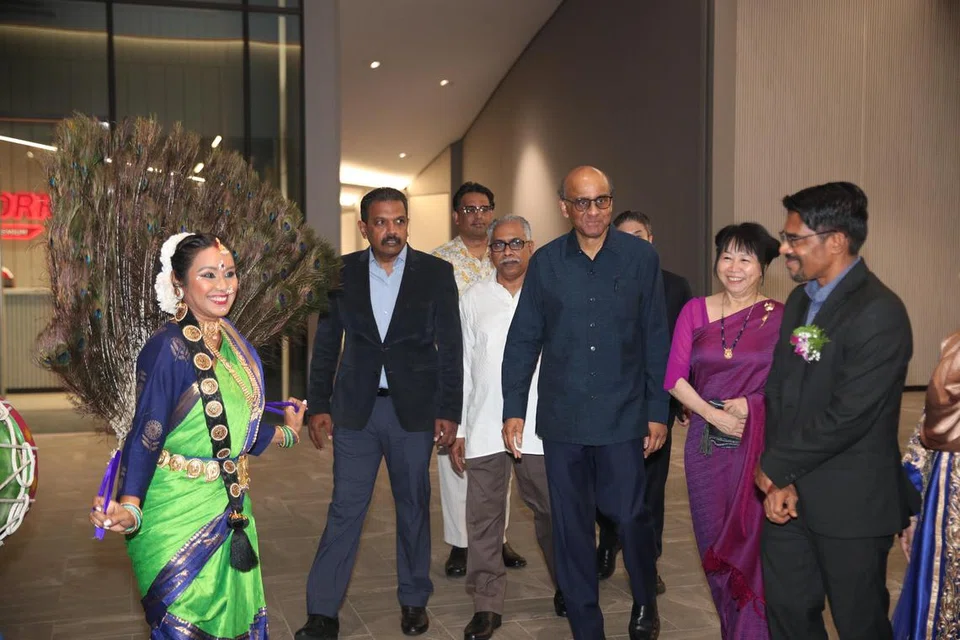
Learning one’s mother tongue should be a joyful experience, and it should be more relevant to people, said President Tharman Shanmugaratnam at a Teachers’ Day Dinner gathering on Sept 23 at the HomeTeamNS @ Khatib hall.
“In learning mother tongue languages, the singular objective should be making it a joyful experience,” he said.
“Integration of Tamil language and culture is one way in which learning Tamil can be made joyful and authentic.”
He recommended using teaching techniques that draw students in naturally, such as songs (particularly rap), movies, videos and games.
“Make it joyful. Make it relevant to their lives. Make it something they hum on their own. I think that’s the right approach,” said Mr Tharman.
He added that while curriculum changes throughout the years made a lot of sense, they also worry him a bit because there shouldn’t be more objectives for language teaching and learning.
“We should not burden mother tongue teaching and learning with too many objectives,” he said.
Mr Tharman also pointed out that the fundamental challenge is the same for all the mother tongue languages, which is their declining usage at home.
“The challenge is precisely because we have our ethnic integration policy in our neighbourhoods and schools. This policy is completely essential for Singapore. But it is a special challenge for Tamil language teaching and learning as there are fewer opportunities to use the language in daily life,” he said.
Guests at the event hosted by the Singapore Tamil Teachers’ Union (STTU) included Mr Vikram Nair, Member of Parliament and Chairman of the Tamil Language Learning and Promotion Committee (TLLPC); Mr Ng Chee Meng, Secretary-General of the National Trades Union Congress; and 470 Tamil teachers.
Mr Tharman said: “We have to start much earlier by getting young children interested in the language by offering authentic learning opportunities. STTU reaching out to the pre-school teachers is an excellent idea.”
He also lauded STTU for putting Singapore on the global map in Tamil language teaching and learning.
“Now you are among international leaders trying to advance Tamil teaching and learning, especially in other countries where Tamils are a minority. You have converted a challenge in Singapore into an opportunity,” he said, citing former STTU leaders such as Mr S. Samikannu, Mr A.R. Mashuthoo and Mr V.R.P. Manickam as deserving of credit.
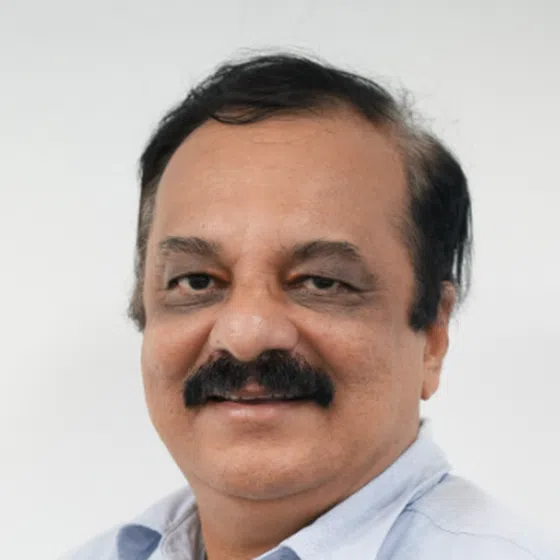
A new leadership team led by Mr Danapal Kumar is now taking the effort forward.
Mr Tharman commended Tamil teachers for their dedication and creativity in preserving the language and the various bodies working together to help students enjoy using the language beyond the classroom.
“Twenty years from now, the Tamil language will be a vibrant part of Singapore’s multicultural identity,” he said.

