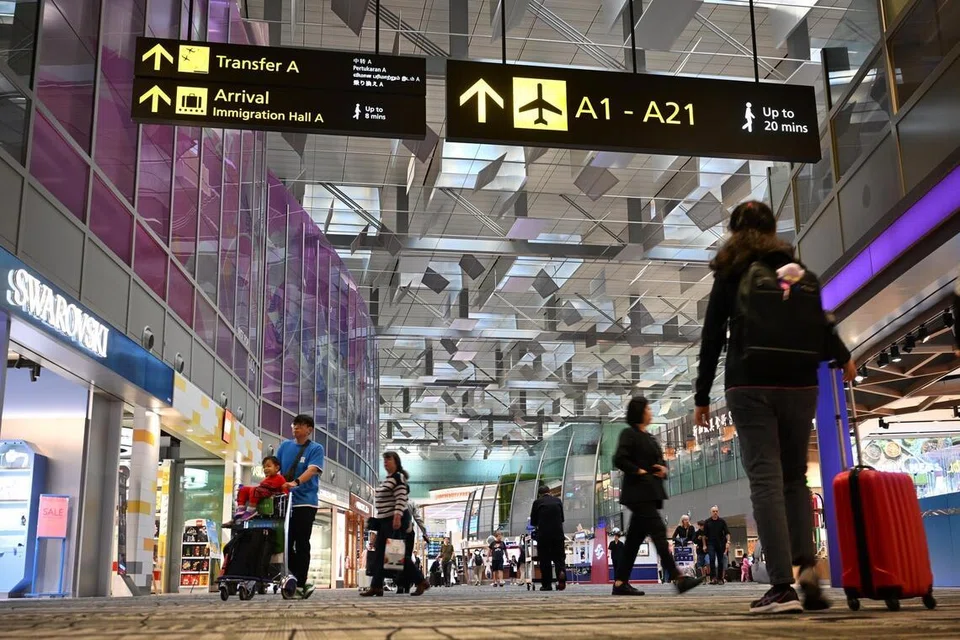
Singapore Changi Airport recorded an all-time high in passenger traffic in 2025, handling 69.98 million passenger movements, a 3.4 per cent increase compared to 2024. The strong performance reflects sustained recovery in regional and long-haul travel demand, supported by expanded air connectivity and capacity deployment by airline partners.
Aircraft movements, which include both landings and take-offs, rose 2.2 per cent year-on-year to 374,000 movements, underscoring higher flight activity across passenger and cargo operations. Airfreight throughput totalled 2.08 million tonnes in 2025, exceeding the previous year by 4.5 per cent and marking one of the strongest cargo performances in Changi Airport’s history.
December 2025 was the busiest month of the year, with 6.3 million passenger movements recorded amid peak year-end holiday travel. The busiest day fell on 20 December 2025, the Saturday before Christmas, when more than 223,000 passengers passed through Changi’s terminals, reflecting the airport’s ability to manage high traffic volumes while maintaining operational efficiency.
Commenting on the milestone, Changi Airport Group Chief Executive Officer Mr Yam Kum Weng said: “As we enter 2026, we look forward to creating new opportunities for airlines and businesses. Our goal is to ensure that Changi stays at the forefront of aviation, offering travellers exceptional airport experiences while serving as a key gateway to the region.”
Passenger Traffic Performance
Passenger growth in 2025 was broad-based across regions, underpinned by steady leisure and business travel demand, as well as Changi Airport’s expanded global network. The airport’s top five passenger markets for the year were China, Indonesia, Malaysia, Australia and India, together accounting for a significant share of total traffic.
China remained Changi Airport’s largest traffic market and recorded the strongest growth, with passenger movements increasing 12.2 per cent year-on-year, driven by the addition of new city links and increased flight frequencies. Vietnam and Japan were also among the fastest-growing markets, posting year-on-year growth of 9.8 per cent and 7.0 per cent respectively, reflecting rising travel demand within Asia.
The busiest routes in 2025 were Kuala Lumpur, Bangkok, Jakarta, Denpasar (Bali) and Hong Kong, highlighting the continued strength of short- and medium-haul travel within the region, as well as Singapore’s role as a key hub connecting Southeast Asia with Northeast Asia and beyond.
Expanding Global Connectivity
Changi Airport also achieved a record year for network expansion in 2025, adding 13 new city links to its global network.
These included Changchun, Harbin, Lanzhou, Yichang and Zhangjiajie in China; Labuan Bajo, Padang and Semarang in Indonesia; Vienna in Austria; Vijayawada in India; Kota Bharu in Malaysia; Ulaanbaatar in Mongolia; and Nha Trang in Vietnam. The airport additionally welcomed two new passenger airlines – MIAT Mongolian Airlines and Pelita Air.
As of January 2026, approximately 100 airlines operate more than 7,300 scheduled weekly flights at Changi Airport, connecting Singapore to over 170 cities across 50 countries and territories worldwide.