Despite the stronger Sing dollar, 39-year-old entrepreneur Farid Yaacob routinely drives more than 300km from Kuala Lumpur each month on a Friday evening for food, snacks and weekend events, armed with knowledge of where to find cheaper parking in Singapore.
“Sometimes, I think I know more about Singapore than Singaporeans,” he said. The Kuala Lumpur resident’s familiarity extends to the finer details of getting around Singapore, including where to park and when. At Sentosa’s Imbiah Lookout carpark, for instance, he knows the hourly rate of S$2.20 drops to a flat S$4 after 5pm.
Day-trippers like him are projected to contribute an additional S$756 million in annual visitor spending for the Republic once the Johor Bahru-Singapore Rapid Transit System (RTS) Link opens in February 2027, according to a July study commissioned by three business associations, including the Singapore Business Federation (SBF). Visitors from Singapore, meanwhile, are projected to generate S$1.05 billion in annual spending for Johor.
Mr Farid plans to be among the first to board the RTS Link at Bukit Chagar heading for Woodlands North.
Some regular visitors said that the draws are often less about major tourist attractions than hawker food, imported groceries and outings at local public parks.
Hawker hunts and supermarket finds
Melaka resident Nur’Afiah Ahamad Kamel, 38, recently sparked a discussion on Threads after sharing details of an impromptu Sunday trip on Oct 4 to Singapore for biryani and murtabak – a crispy flatbread stuffed with spiced meat and onions.
Her post drew questions about why Malaysians would visit the smaller, supposedly more expensive city-state for a day trip.
Her family drove to Larkin Sentral before taking a bus to Bugis for dinner at Singapore Zam Zam Restaurant, continuing a tradition started by her grandfather. They returned to Melaka that night, ahead of work and school the next day.
Nur’Afiah said that restaurant’s murtabak has a richer filling and crispier dough than the softer versions found in Malaysia. The family also visits eateries around Tekka Centre and Golden Mile Food Centre for sup tulang merah, or red bone marrow soup.
“Even though Malaysia hasmurtabak, I feel every place has its own identity and method of preparation. That is what makes travelling exciting – even dishes that look almost identical can offer an entirely different taste and experience,” she explained.
Mr Farid also seeks out food less readily available in Malaysia, including harum manis, a banana-topped sponge cake sold by local bakery chain Bengawan Solo, and Singapore-style mee siam, served in a tangy gravy rather than stir-fried dry as in Malaysia.
Malaysian shoppers are also drawn to Singapore’s range of imported food and snacks, with bargains to be found if they know where to look.
These include imported fruits, chocolates, nuts, Singapore-exclusive snacks, as well as imported groceries from China sold at chains such as Scarlett.
Johorean Loo Yong Tat, who works in Singapore, said he finds imported grapes and strawberries cheaper here. FairPrice was recently selling a pack of Egyptian red grapes for $3.95 and Australian strawberries for about S$4.95. Comparable produce at premium grocers in Johor where Mr Loo sometimes shops can cost upwards of RM20 (S$6.86), he said.
“Fruit can be cheaper in Singapore supermarkets, and even cheaper at heartland fruit stalls,” said the 37-year-old tour executive.
A check of Japanese retailer AEON’s Malaysian supermarket website found a pack of green Muscat grapes from China listed at RM11.90. By comparison, the fruit was on offer at S$2.95 online at FairPrice and in-store at S$2.25.
In Singapore, fruit importer Kelvin Lim, the second-generation owner of Ah Ho Fruit Trading Company, said that the Republic’s stronger currency gives importers a cost advantage, while its lack of local fruit farming encourages greater variety.
Although import prices may be similar, Malaysia’s weaker ringgit drives up capital and logistics costs, pushing up supermarket price tags, he said.
“Singapore is not a producer, so we have to get creative and source for more variety of fruits. In Malaysia, they have their local producers, so if they import more fruits, that would hurt local demand,” he explained.
Mr Farid, meanwhile, stocks up on discounted Ritter Sport chocolates, macadamia nuts and Singapore-exclusive JJ Drinks’ Uncle D’Jengot Bandung Rose Milk Drink, which are unavailable or less easily found back home.
“Shopping in a Singapore grocer is like shopping at the airport duty-free,” he said, referring to the wide variety of products available to shoppers in the city-state.
For KL visitor Lee Tuck Seng, 35, the draw is Singapore’s public parks and heartland hawker centres, which he enjoys exploring by public transport. Among his favourite spots are the Singapore Botanic Gardens and Bedok Interchange Hawker Centre.
“I am impressed by Singapore’s green spaces... which are clean and equipped with good facilities. Singapore is also very well-connected by public transport, making it convenient to get from one place to another. I also appreciate how pedestrian-friendly the city is as I enjoy walking outdoors,” he said.
Can the RTS bring more spending to Singapore?
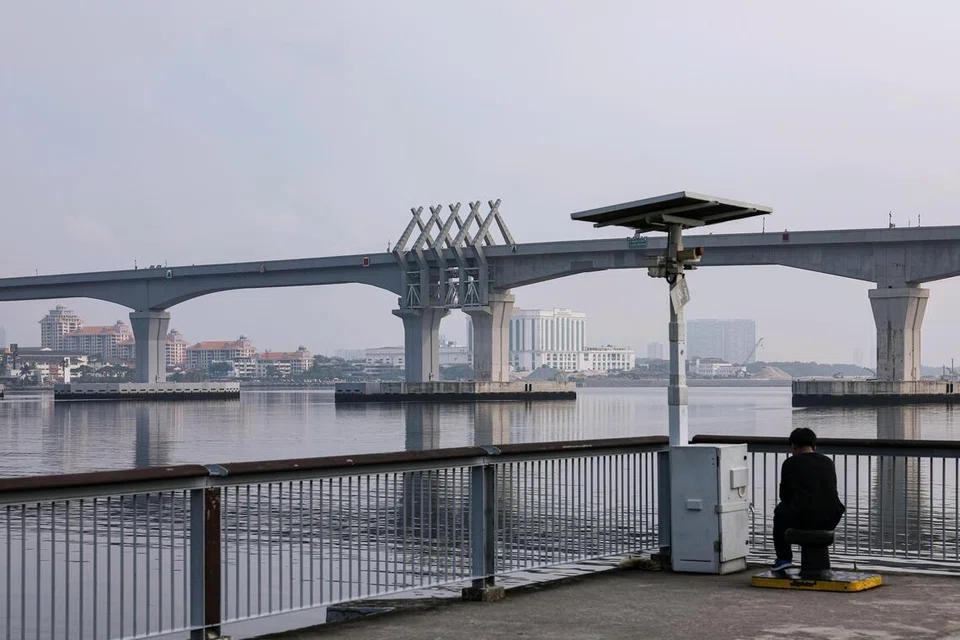
The RTS Link, which is expected to open in February 2027, will carry up to 10,000 passengers an hour in each direction, offers a five-minute journey across the border.
For Singapore businesses, the question is whether easier access will translate into more Malaysian customers and higher spending.
Lau Kong Cheen, head of the marketing programme at the Singapore University of Social Sciences, said the faster connection could make Singapore more accessible to Johoreans and visitors from further north, including Melaka.
The perception that goods are generally cheaperin Malaysia may be changing. Retail prices do not necessarily move in tandem with currency fluctuations, said the associate professor.
Product quality and value matter too. Affordable supermarket house brands produced in Australia and Europe can also offer more cost competitive options than imported goods sold in Malaysia.
“FairPrice’s freeze-dried and also 3-in-1 coffee are cheaper than Nescafe in Malaysia. I did my own shopping across the Causeway too for my day trips,” Mr Lau said.
But Singapore businesses are not actively banking on a surge in Malaysian customers, as they contend with rising rents and other operating challenges.
Mr Ali Abbas, founder and chief executive of Singapore Hospitality Group, said Malaysians account for about 100 to 150 diners a week at his restaurants, including Tarboush at Orchard and outlets at Village Hotel Bugis and The Landmark. Many are hotel guests or part of bus tour groups.
“They are not a significant majority. In fact, my experience shows that the numbers were actually higher before Covid-19,” he said. “It could be a change in preferences or spending habits when they come here.”
At Chinatown Complex Market and Food Centre, Malaysians make up an estimated 20% to 30% of patrons, said its hawkers association chairman, Cornelius Tan. Merchants need distinctive offerings and clear value for money to attract more Malaysian visitors, he noted.
“The variety and proximity they get for halal food, beyond Malay cuisine, actually amazes them,” licensed tour guide Kyanta Yap from Let’s Go Tour said.
Halal-certified non-Malay food is a major draw for Muslim Malaysian visitors, he added. In Singapore’s Kampong Gelam area, for instance, diners can find halal versions of Chinese, Vietnamese, Korean and Japanese dishes.
Johorean Norshikin Mohd Salleh, 44, finds some brands of big-ticket items like home appliances and sporting goods more readily available in Singapore. But she believes Johor’s expanding food-and-beverage and retail scenes, as well as e-commerce, are narrowing the gap.
“If there is a new release or an item that is not sold in Malaysia and I want it really quick, then I will come to Singapore to buy it,” she said. THE STRAITS TIMES