
It takes one success to recognise another.
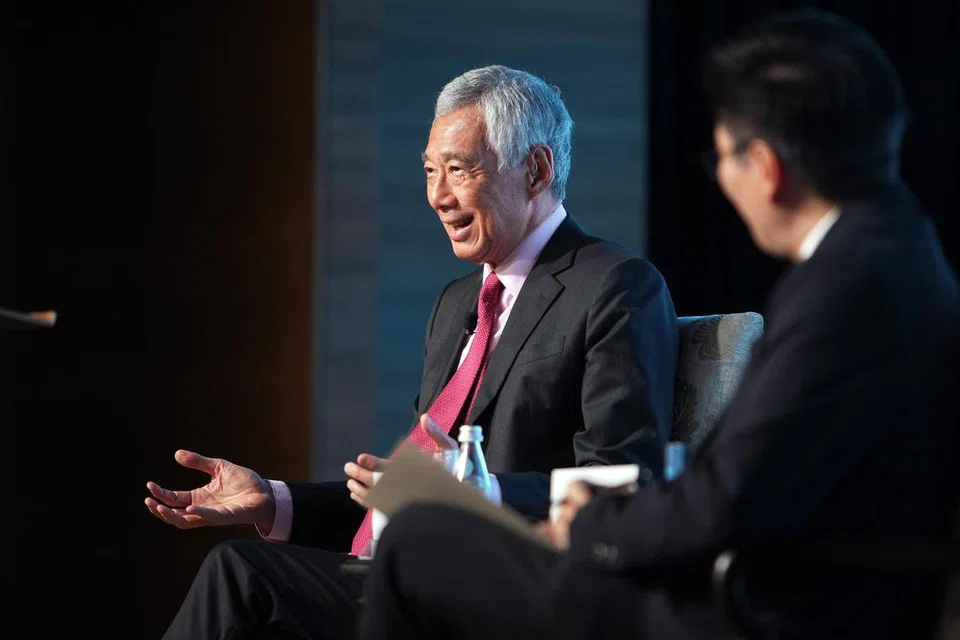
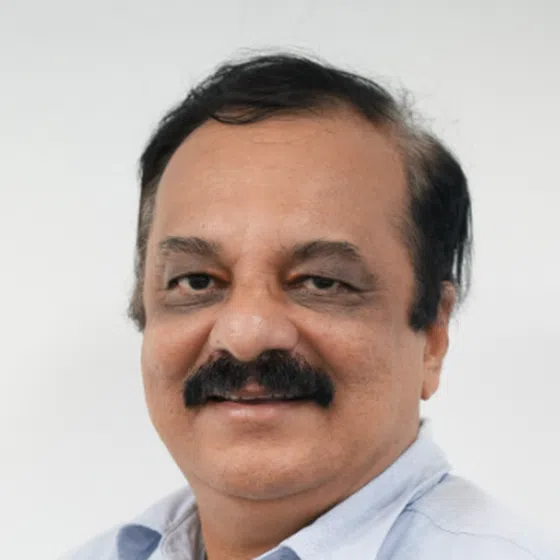
Infosys icon N.R. Narayana Murthy at the recent Asia Future Summit described Singapore as the best-governed country in the world. His remarks prompted me to ask Prime Minister Lee Hsien Loong a series of questions later at the conference, which was organised by SPH Media to observe the birth centenary of Mr Lee Kuan Yew.
I asked PM Lee how contemporary Singapore’s founding Prime Minister had set in motion a process that had produced this nation amid a dire international situation. As the fourth generation of Singapore’s leaders prepares to take over the reins, how would current international dissonance mould that generation? Shouldn’t Mr Lee Kuan Yew’s thoughts become almost biblical in dealing with the very nasty secular times that we live in?
PM Lee’s response reiterated the basis of Singapore’s success: hard work that transformed chance into destiny, the fortuitous electoral circumstances that allowed the ruling People’s Action Party to focus on economic and social development without political distraction, and a very high degree of national consensus on what the country had to do to thrive. These fundamentals now needed to be built upon in the face of new challenges.
Turning my extempore metaphor of biblical heritage into an idiom of contemporary possibilities, PM Lee said: “We are in the Garden of Eden state... and if you leave this, you are not going to come back in again. And our job is to try very hard to make people understand that and to work together to keep it going for as long as we can.
“We were lucky. We now have this tremendous asset and a difficult environment, and we have to make the most of it to make Singapore succeed in a very changed world.”
In a nutshell, Singapore needs to renew what India’s founding Prime Minister Jawaharlal Nehru called “a nation’s tryst with destiny” (in the context of Indian independence).
I dare say Mr Murthy would agree with PM Lee’s unsentimental realism. Infosys has come a long way to being almost everywhere that counts and Singapore has become a First World city-state without which Asia’s economic and political structure cannot be imagined.
Had Singapore not come this far, Infosys would not have set foot here. Had Infosys failed, Singapore would not have been in need of the Infosys footprint.
Mr Murthy is not given to hyperbole. He has the unsentimental job of ensuring that his company does not fall victim to circumstance. Equally, PM Lee and his party do not govern through the swaying power of rhetoric.
They need to be in charge of Singapore’s response to its external environment, particularly when it turns hostile because of great-power rivalry (such as the soured relations between the United States and China), the economic consequences of strategic dissonance (economic decoupling that disrupts supply chains for other countries), and the general feeling of ill-will from the falling out between chief pillars of the global system.
For both Singapore and Infosys, realism is the name of the game.
It is through the combo of cautionary political realism and economic radicalism that Mr Lee Kuan Yew turned a teeming cesspool of a colony into one of the iconic assertions of Asian independence and success. Looking ahead, his vision must continue to guide Singapore’s policy choices, although how it does so will depend on circumstantial options.
While Singaporeans need to sign on to the realism needed to take the country forward, its minorities must have an instinctive understanding of what they should do to be a part of the national effort.
The rule in Eden that forbade Adam and Eve from eating from the Tree of Knowledge does not apply to a knowledge-driven economy such as Singapore’s. Rather, it is in the temptation of tasting a dangerous unknown that the danger lies.
Ethnic-identity politics, the misuse of religion for political ends, fake news, devious narrowcasting on social media by exploiting algorithms – these are all intimations of an unknown that sells itself as liberating knowledge in a world characterised by dissonance and the distrust of legitimate authority.
Singapore is subjected to the interplay of events lying outside its control and sometimes beyond the comprehension of its more impressionable citizens. The orchestrated use of online disinformation from abroad to align the opinions of segments of its population with the interests of one foreign power or the other is a recognised phenomenon of Singapore life.
The people must be aware of and resist the temptations of what I would call “ethnicised news and views” to abjure siren calls from abroad to become a part of some religious project or the other, news of which seeks to rationalise itself as the normal communication of ethnic information.
Everybody has a stake in the continued well-being of Singapore.