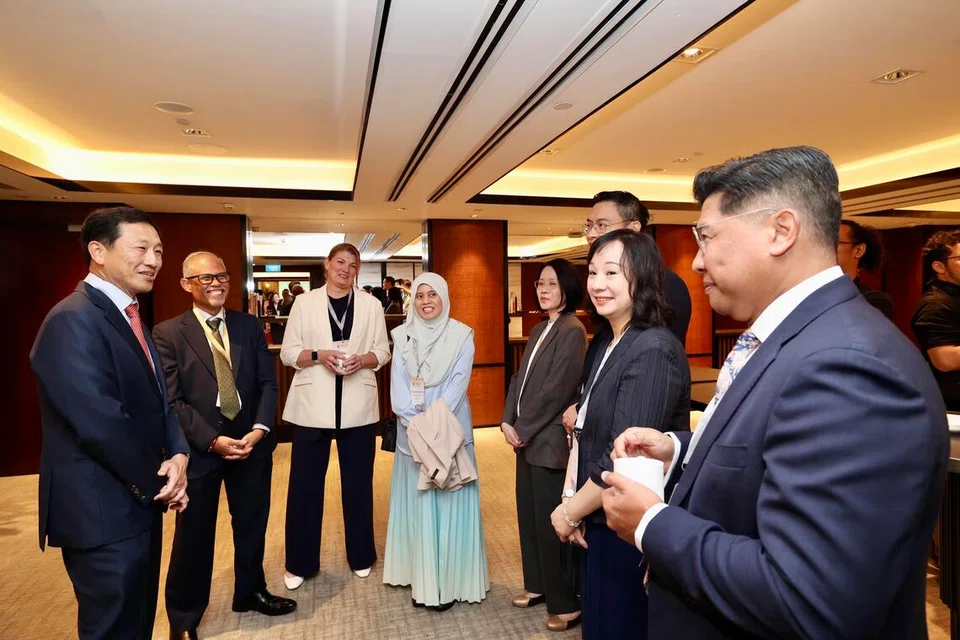

To provide a regional perspective for family support, the first-ever State of ASEAN Families Report was launched on Tuesday morning (Nov 17) at the Asian Family Conference 2026 by Minister for Social and Family Development Masagos Zulkifli.
“I am delighted to launch the inaugural State of ASEAN Families Report. For the first time, we have a regional picture of how ASEAN families are changing and how they are faring,” Mr Masagos said.
He explained: “This matters because much of today’s family research draws on Western experiences, which may not fully reflect the lived realities of Asian families. Without common data and shared indicators, however, our research risks becoming fragmented.”
Families Are Evolving
Sharing key findings from the report, Mr Masagos said: “First, families are evolving. Across most ASEAN Member States, people are marrying later and fertility rates are declining. We must understand these changes and respond thoughtfully.”
He noted that populations are ageing, family sizes are shrinking, younger generations hold different aspirations, and technology is reshaping how we live, work and interact with one another.
“These trends place new pressures on families as they balance work, caregiving responsibilities and family life.”
How family resilience strengthens ASEAN communities
Despite those changes, the Minister said the second finding gave him great encouragement as it showed “families are resilient and family ties are strong. Across the region, families in ASEAN Member States generally report moderate to high levels of well-being and good quality of life. More resilient families also tend to have better outcomes.”
On the third finding, he said families have different strengths and experiences: “Nuclear and three-generation households generally report stronger outcomes in family resilience, well-being and quality of life. Our task is to build on these strengths, while giving greater attention to families who need more support to thrive.”
One Family, One Team
Mr Masagos also spoke about the need to change how support is given to families in need, from separate services for separate problems, to one coordinated system built around the whole family.
He outlined a shift towards a new paradigm: “First, we want to take a whole-family view and better organise support around families. This involves shifting from interventions organised around individual programmes to one coordinated system where professionals and Social Service Agencies work together to support families.”
He added: “Second, we want to intervene earlier rather than focus only on remedial work. Third, we need to move away from professionals working in silos towards one interprofessional team to support families. Ultimately, we want families to experience support that is coordinated around them, rather than around individual programmes.”
Not The End, But The Beginning
Closing his address, Mr Masagos said: “This report is not the end point. It is the beginning of a longer-term effort.”
He said future waves of research will allow ASEAN to track family trends over time and keep policies responsive, and the data will spur further research on how parenthood and caregiving shape family resilience.
He also announced that in conjunction with Singapore’s Chairmanship of the ASEAN Socio-Cultural Community (ASCC), Singapore will convene the inaugural High-Level Forum on Technology in April next year, alongside a Technology Showcase.
“When harnessed well, technology can transform how social services are delivered and strengthen their impact.”He concluded: “Strong families form the foundation of strong communities, and strong communities build a strong and resilient ASEAN”.
“The State of ASEAN Families Report is an important milestone, but its real value lies in what we do with it. If we continue to learn from one another, translate evidence into action, and reshape how we support families, we can help them thrive amidst change.”